



Staff Reporter
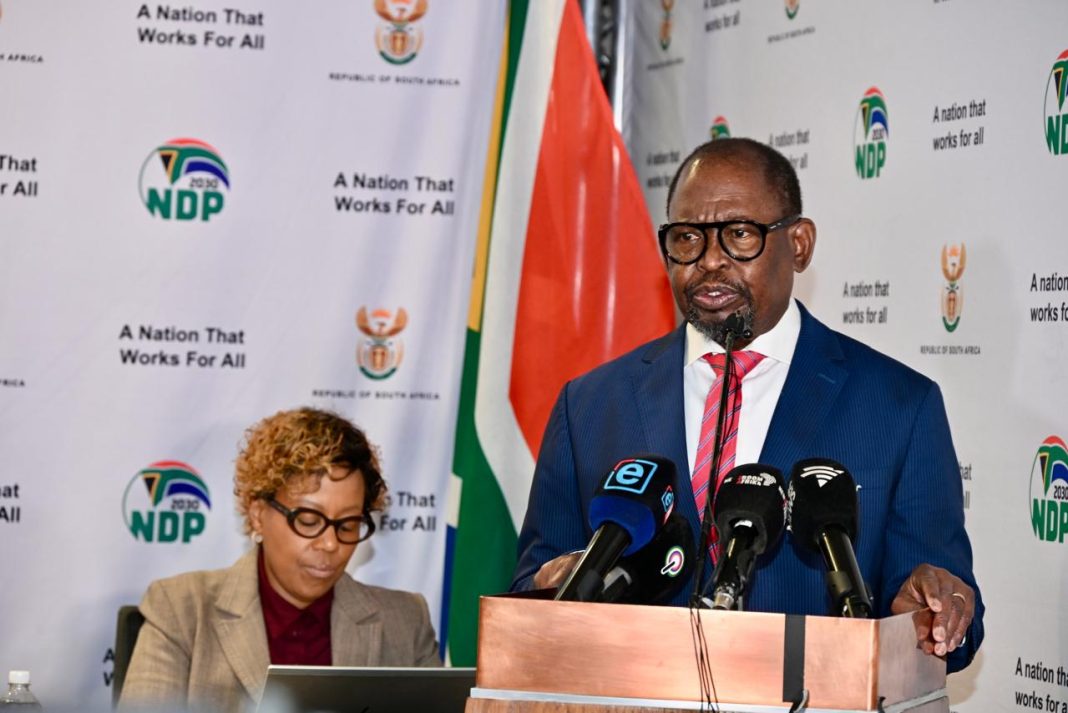
Sugarcane growers have again called on Finance Minister Enoch Godongwana to scrap the sugar tax when he delivers his Medium-Term Budget Policy Statement on Wednesday.
SA Canegrowers said on Monday that the Health Promotion Levy (HPL), introduced in 2018 to reduce the consumption of sugary drinks, was contributing to job losses and weakening an industry already struggling with cheap imports and uncertainty over the future of sugar producer Tongaat Hulett.
ALSO READ: OPINION | Durban’s protest violence is the ANC’s chickens coming home to roost
SA Canegrowers, which represents about 27,000 small-scale and 1,250 large-scale growers in KwaZulu-Natal and Mpumalanga, said the industry had endured two years of competition from imported sugar, particularly from Brazil, Thailand, India and Eswatini.
It welcomed government’s decision to adjust sugar import protections in August, but said that the levy continued to undermine efforts to stabilise domestic production.
“Government has shown this year that it understands what is at stake for South African growers and for the rural economies they help sustain,” said SA Canegrowers chairman Higgins Mdluli in a statement.
“Increasing tariffs on sugar entering our ports and ensuring Tongaat Hulett did not liquidate were welcome steps in the right direction. But the sugar tax continues to work against us. We’re now seeing that the dtic (Department of Trade, Industry and Competition) is working hard to ensure a sustainable sugar industry, while the HPL undermines this effort and levels of support,” he said.
Tongaat Hulett, which serves about 18,000 sugarcane growers, narrowly avoided liquidation following interventions by the dtic and Industrial Development Corporation.
SA Canegrowers said a study commissioned by the National Economic Development and Labour Council (Nedlac) found that the industry lost more than 16,000 jobs in the first year after the levy was introduced.
But research conducted by the South African Medical Research Council (SAMRC) and the University of the Witwatersrand has challenged the sugar industry saying that the levy is responsible for substantial employment losses.
In March 2025, Professor Susan Goldstein, director of the SAMRC/Wits Centre for Health Economics and Decision Science, said research had found no statistically significant association between the levy and employment changes in sugar-related industries.
ALSO READ: Malema says EFF could join GNU if DA and FF Plus withdraw
She said that beverage manufacturers had responded to the levy partly by reducing the sugar content of their products rather than cutting production and employment.
Goldstein also cited research showing that the average sugar content of taxable beverage purchases fell from 16.25 grams per person per day before the levy was announced to 10.63 grams in the year following implementation.
A separate study published in April 2025 through the Southern Africa — Towards Inclusive Economic Development research programme, using tax-return data from manufacturers and importers, found that the levy reduced sugar consumption through taxable beverages by an estimated 33% within two years of its introduction. But it also found a shift towards untaxed beverages, highlighting limitations in the policy’s coverage.
Public health advocacy group the Healthy Living Alliance (HEALA) has opposed concessions to the sugar industry and called for the levy to be strengthened.
Following the 2025 budget, HEALA criticised Treasury’s decision to cancel the planned increase in the levy, arguing that higher taxes on sugary drinks would help reduce the burden of preventable disease.
The organisation has supported increasing the effective tax burden on sugary drinks towards 20%, substantially above the current level.
Treasury has previously acknowledged the difficulties facing the sugar industry.
In its 2025 budget, government cancelled the planned inflation-linked increase in the levy to give the industry more time to restructure in response to regional competition.
The levy was subsequently increased by about 3.4% in the February 2026 budget.
It currently stands at 2.21 cents for each gram of sugar exceeding four grams per 100 millilitres of a taxable beverage.
According to SARS’s 2025 Tax Statistics, the levy generated R2.42 billion in revenue during the 2024/25 financial year.






