
By Levy Masiteng
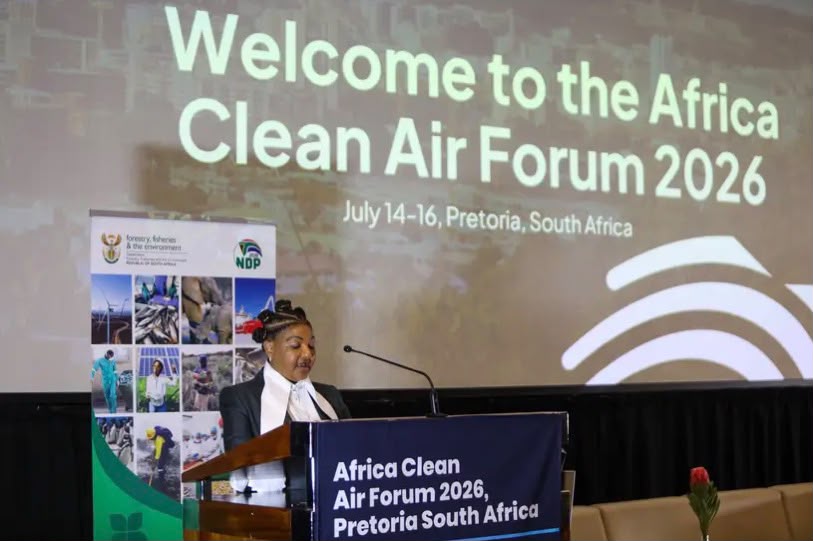
Deputy Minister of Forestry, Fisheries and the Environment Bernice Swarts has called for the establishment of an Africa-wide air quality information system as governments confront pollution that is damaging public health, economic productivity and development across the continent.
Delivering the keynote address at the Africa Clean Air Forum in Pretoria, Swarts said millions of Africans continued to breathe air that failed to meet internationally recognised health standards.
“It is a public health emergency, a development challenge, a climate issue and a matter of environmental justice,” Swarts said.
She said poor air quality was contributing to respiratory and cardiovascular illnesses, increasing healthcare costs and reducing productivity. Women, children, older people and vulnerable communities were bearing a disproportionate share of the burden, she said.
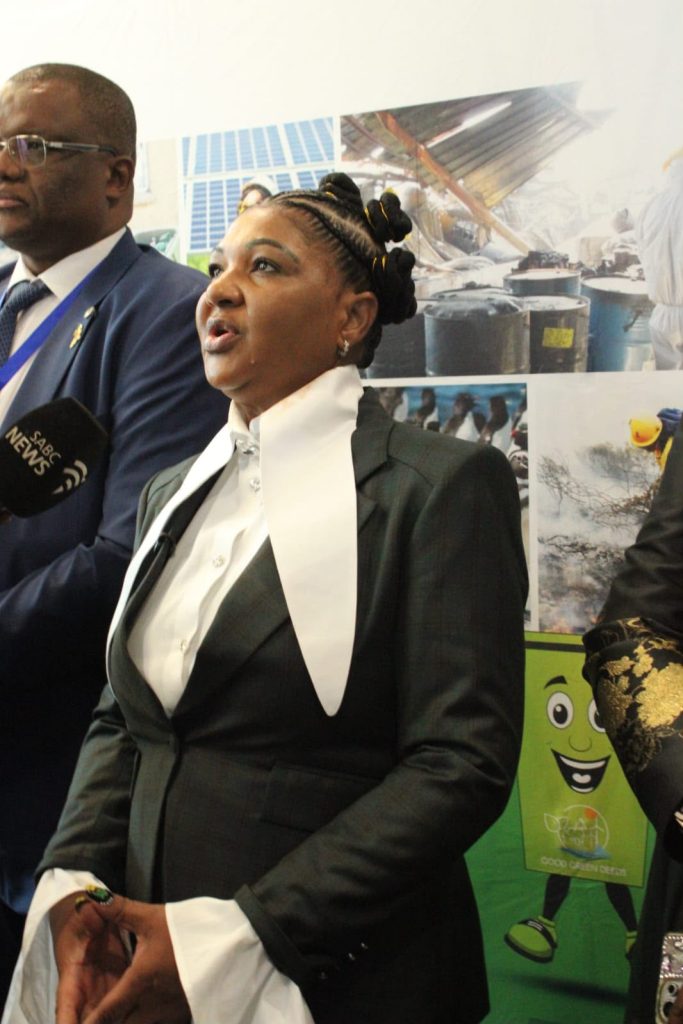
Swarts proposed the development of an African Air Quality Information System to help countries collect, analyse and publish pollution data. She said this would also strengthen cooperation between environmental authorities and give communities better access to information about the air they breathe.
She said Africa’s pollution challenges could not be addressed by individual countries acting alone, as dust, wildfire smoke and emissions linked to regional economic activity frequently crossed national borders.
Governments should strengthen monitoring networks, improve emissions inventories, share technical expertise and coordinate their responses to transboundary pollution, she said.
The Africa Clean Air Forum is being held at the CSIR International Convention Centre from Monday to Thursday under the theme “Investment Case for Clean Air and Healthy Cities”.
The forum brings together policymakers, researchers, industry representatives, civil society organisations and development partners to discuss air-quality monitoring, pollution modelling, cleaner technologies and sustainable financing for clean-air programmes.
Swarts said South Africa would use the gathering to promote implementation of the Cape Town Ministerial Declaration on Air Quality, mobilise investment for African clean-air initiatives and strengthen regional cooperation.
The declaration, adopted during South Africa’s G20 presidency in October 2025, promotes improved monitoring, reliable public data, citizen participation, knowledge sharing and cooperation between governments and other sectors.
Air Quality Act
Swarts said South Africa had strengthened its air-quality governance through the National Environmental Management: Air Quality Act, national ambient air-quality standards, controls on industrial emissions and the expansion of monitoring systems.
However, the government’s record on air pollution has faced sustained legal scrutiny, particularly in the Highveld Priority Area, which stretches across parts of Mpumalanga and eastern Gauteng and contains coal-fired power stations, mines and heavy industry.
In March 2022, the Pretoria High Court ruled that poor air quality in the area violated residents’ constitutional right to an environment that was not harmful to their health and wellbeing. The court also found that the environment minister had a legal duty to prescribe regulations to implement and enforce the Highveld Priority Area Air Quality Management Plan.
The Supreme Court of Appeal largely upheld that finding in April 2025, dismissing most of the minister’s appeal and confirming the duty to prescribe regulations considered necessary to implement and enforce the plan.
Swarts has previously acknowledged that communities in the Highveld remain affected by pollution from industrial activity, domestic fuel use, waste burning and transport, and that concerns persist about the pace of implementation, transparency and government accountability.

She told the forum that progress would require political leadership, sustainable financing, effective institutions, scientific cooperation, community participation and shared accountability.
Swarts said governments, industries, researchers and communities would all have to move beyond policy commitments and implement practical measures capable of delivering cleaner air and healthier cities.





