

By Bhekizenzo Zonele
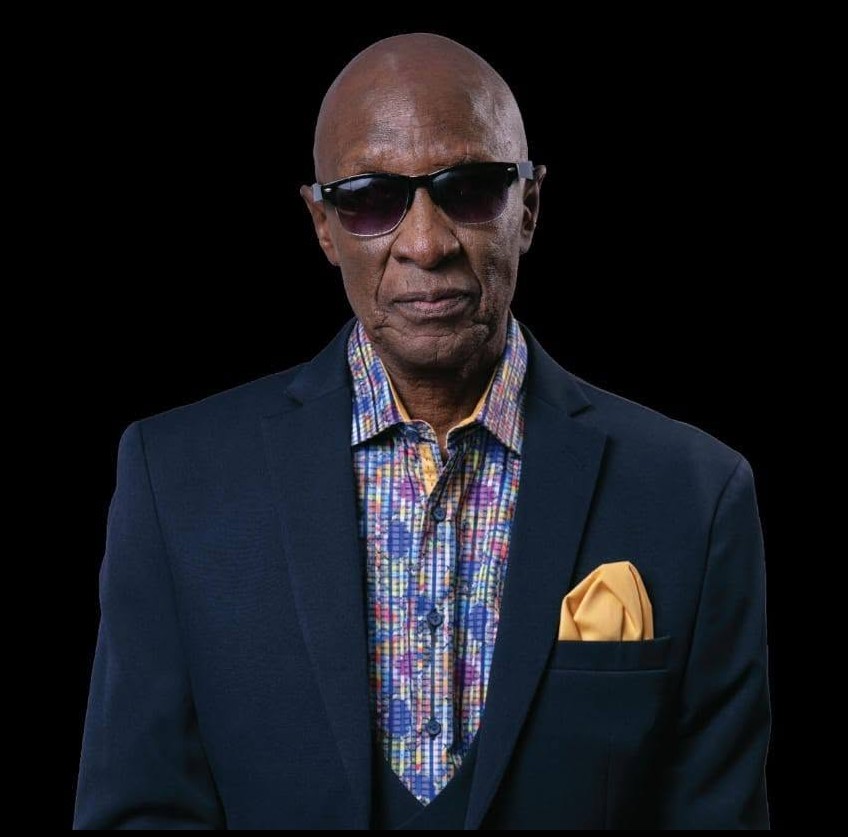
South African music veteran Babsy Mlangeni has died at the age of 83 following a short illness, bringing to an end a career spanning almost six decades.
Mlangeni died on Thursday night, leaving behind a catalogue of music that made him one of the country’s best-known veteran performers.
He was known for songs including “Bua Nnete”, “Sala Emma”, “Botsotso”, “Lonely Man” and “Umadlembathini”, and recorded music in isiZulu, Sesotho and isiXhosa.
Born in Soweto in 1943, Mlangeni lost his sight when he was about three years old after becoming seriously ill while staying with his grandmother in Daggaskraal.
An archival profile published by Learn and Teach in 1983 recounts how his family took him back to Johannesburg for medical treatment, but doctors were unable to restore his sight.
He was later sent to the Athlone School for the Blind in Cape Town, where he learnt to read Braille and developed an interest in music.
Mlangeni began playing guitar after the school received a collection of musical instruments. A fellow pupil, Henry “Koloi” Lebone, helped teach him to play, and music soon became central to his life.
After leaving school in 1961, he returned to Soweto and began performing before joining several former schoolmates to form the All Rounders.
The group took its name from the fact that its members could play more than one instrument and initially performed at schools, clubs, weddings and other events while trying to establish themselves professionally.
Mlangeni met his future wife, Emma, in 1966 and the couple married two years later.
After briefly working as a switchboard operator, he returned to music and revived the All Rounders.
He later wrote “Sala Emma” about his wife. The song became a hit and helped establish Mlangeni and the group as recognised performers, predating the string of recordings that would broaden his national profile during the 1970s.
Mlangeni went on to become a singer, guitarist and composer whose distinctive voice became closely associated with South African popular music of the 1970s and 1980s.
His career continued for decades, and he also helped nurture younger musicians, including visually impaired singer Steve Kekana.
His contribution to South African music was formally recognised in 2017 when he received a Lifetime Achievement Award at the South African Music Awards alongside Rebecca Malope and Don Laka.
Parliament also acknowledged Mlangeni’s place in South African cultural history.
During a National Assembly debate in December 2018, he was named alongside artists including Miriam Makeba, Dorothy Masuka, Mahlathini and the Mahotella Queens in a discussion about musicians and artists whose work reflected life under apartheid and carried messages of suffering, resistance and hope.
INSIDE POLITICS