By Marcus Moloko
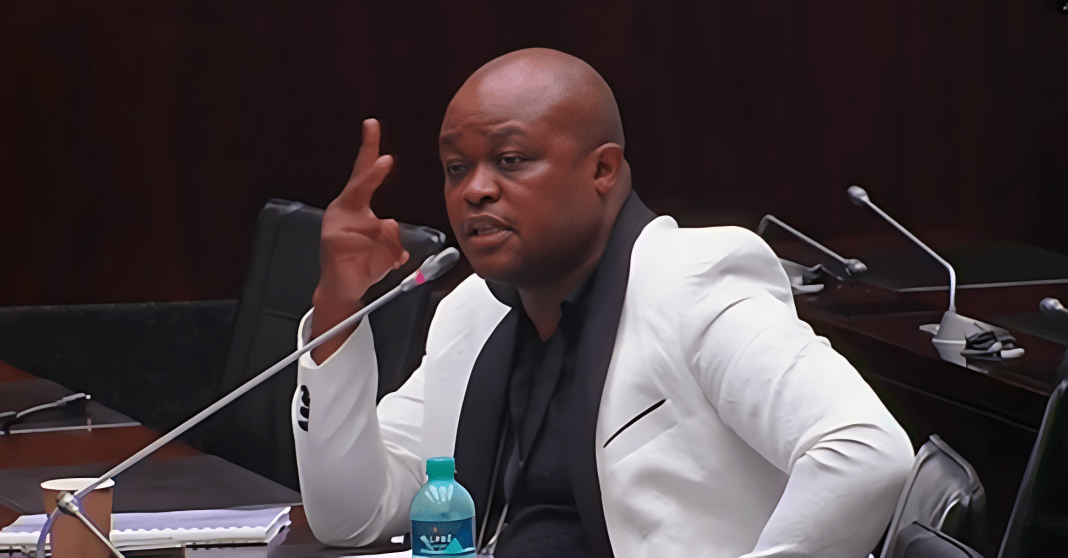
North West businessman Brown Mogotsi, who describes himself as a Crime Intelligence “contact agent”, appeared before Parliament’s ad hoc committee on Tuesday, where MPs questioned him about a 2010 fatal altercation and his claimed links to police intelligence.
Mogotsi told the committee he was involved in a fight in Mmabatho in 2010 in which a man died, and said a murder charge against him was later withdrawn.
He also maintained he had links to Crime Intelligence at the time, a claim MPs pressed him to explain.
The committee, established after explosive allegations made last year by KwaZulu-Natal police commissioner Lieutenant-General Nhlanhla Mkhwanazi, is hearing testimony as it assesses whether the claims put before it point to broader problems in the criminal justice system.
Below are five key points Mogotsi raised or confirmed under questioning during his appearance.
ALSO READ:Mogotsi grilled by MPs over claims he was SAPS crime intelligence asset
An altercation in Mmabatho in 2010
Mogotsi confirmed his involvement in a fight in Mmabatho, North West, that led to a man’s death.
He described the incident as a physical struggle during which the victim “fell on his neck”.
Mogotsi denied using a firearm or acting in self‑defence during the altercation, insisting the death was accidental.
His actions after the fight
According to Mogotsi, he personally transported the injured man to a nearby clinic, where the victim later died.
While he framed this as an act of responsibility, critics argue it underscores his direct involvement in the chain of events leading to the death.
Questions remain as to whether due process was followed and whether his actions were later shielded by political or intelligence connections.
A murder charge
Mogotsi told the committee that he was charged with murder but pleaded not guilty.
The case was withdrawn before trial, which he attributed to a lack of witnesses.
Mogotsi’s status as a crime intelligence operative
Economic Freedom Fighters (EFF) leader Julius Malema challenged Mogotsi’s credibility at the hearing, questioning how he could present himself as someone who “investigates” alleged criminals – including Vusimuzi “Cat” Matlala – while facing accusations that he used proximity to targets and politically connected figures for personal benefit.
Malema suggested Mogotsi was less an intelligence operative than a political “comrade” with access to sensitive discussions, and implied that such access could be abused.
Mogotsi also told MPs he was registered as a Crime Intelligence “contact agent” at the time of the 2010 Mmabatho incident — a claim that drew sustained questioning.
MPs probed whether any intelligence links could have affected accountability in that murder case.
Contact agents are generally informal sources who provide information to law enforcement rather than sworn members of the police.
Mogotsi’s self-description — and the committee’s questioning — raised the issue of whether such links can create leverage or perceived protection.
Mogotsi’s testimony at the committee
By admitting to these events, Mogotsi placed himself at the intersection of crime, intelligence, and politics.
“So you’re quite comfortable with being in trouble with the law… This is not the first time,” said DA MP Glynnis Breytenbach.
“You have a criminal record, no need to ask what I am implying. You’re a skelm. You’ve been convicted of GBH (grievous bodily harm), which has elements of murder, only that he did not die,” Breytenbach added.
Mogotsi’s testimony suggests that individuals with intelligence affiliations may have been able to evade full legal scrutiny.
He confirmed he worked for the #CR17 campaign and added he had President Cyril Ramaphosa’s number. Mogotsi said he had previously messaged the president but received no response.