
By Charmaine Ndlela
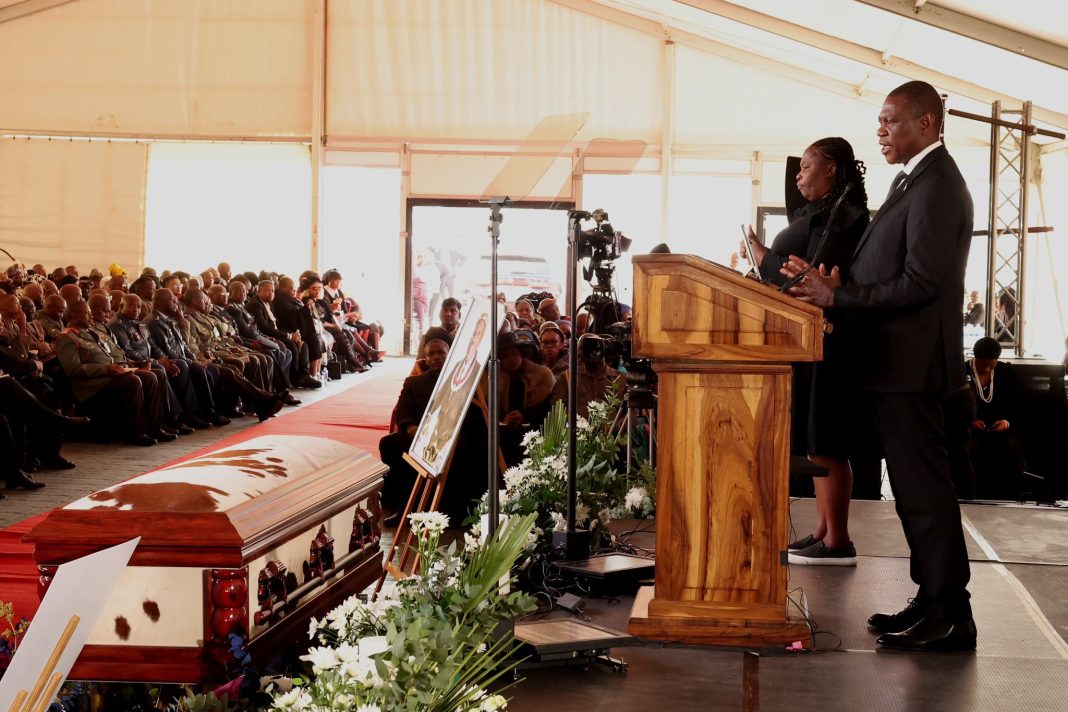
Deputy President Paul Mashatile on Sunday paid tribute to late amaNdebele King Enock Makhosonke II Mabhena, describing him as a visionary traditional leader whose four decades on the throne were devoted to preserving culture, advancing education and uplifting communities.
King Mabhena died last week at the age of 65 after leading the amaNdebele akwaManala since 1986.
Delivering the eulogy at a special memorial service at Solomon Mahlangu Stadium, Mashatile said the monarch’s legacy was rooted in service, cultural preservation and nation-building.
“The grave might have claimed his mortal body, but it could never steal his legacy, which stands as a reminder that dignity, culture and unity are the pillars upon which nations stand,” Mashatile said.
He described King Mabhena as a leader who understood that traditional leadership and democracy were complementary pillars of governance.
Mashatile said the king played a central role in preserving the customs, language and identity of the amaNdebele people while ensuring that cultural heritage remained relevant to younger generations.
He highlighted the monarch’s role in institutionalising the annual Komjekejeke cultural celebration in honour of King Silamba, which became a symbol of unity, resilience and cultural pride.
“A mighty tree has fallen, and its shade no longer shelters the amaNdebele people,” Mashatile said.
“Ascending the throne in 1986, His Majesty led with dignity and humility for four decades, preserving the sacred traditions that kept amaNdebele songs, murals, and rituals vibrant. He viewed heritage as a living force that shapes identity and strengthens community.”
“His Majesty’s presence strengthened his people, his wisdom guided them, and his devotion united them, giving voice to their heritage and anchoring their unity.”

The deputy president also praised King Mabhena’s support for safe customary initiation practices and the implementation of the Customary Initiation Act of 2021.
“Today we have thousands of young men undergoing safe medical circumcision because he took action and said, ‘Let them go and return alive’,” Mashatile said.
He said the king championed education through initiatives that enabled more than 100 students to pursue bachelor’s, master’s and doctoral degrees.
“King Makhosonke II understood that education was essential for the future of his people and invested in young leaders who would contribute to the development of their communities,” he said.
During his lifetime, King Mabhena served as chairperson of the Enkangala District House of Traditional Leaders, deputy chairperson of the Mpumalanga Provincial House of Traditional Leaders and a member of the inaugural National House of Traditional Leaders.
He also chaired the Majesties Forum, which brought together recognised kings and queens to strengthen traditional leadership and cooperation with government.
Mashatile said government would honour the king’s legacy by deepening its partnership with traditional and Khoi-San leaders, noting that the Constitution recognised the important role of traditional leadership within South Africa’s democratic system.
He said structures such as the National House of Traditional and Khoi-San Leaders provided a platform for traditional leaders to participate in discussions on land rights, socio-economic development and other issues affecting their communities.
Mashatile also revealed that a national review of remuneration and benefits for traditional leaders was under way, with recommendations expected to be submitted to President Cyril Ramaphosa by the Independent Commission for the Remuneration of Public Office Bearers.
“The process aims to provide clarity and fairness regarding the support provided to traditional leaders,” he said.
He called on traditional leaders to continue working with government on the implementation of the Comprehensive Approach to Migration Management, which seeks to strengthen border security, enforce immigration laws fairly, combat corruption and close policy loopholes.
Mashatile urged South Africans, particularly young people, to honour King Mabhena’s legacy by participating in democratic processes and contributing to the development of their communities.
“As we honour his memory, we must also honour his vision by continuing to build stronger communities, preserve our cultural heritage, expand opportunities for youth and ensure future generations inherit a more prosperous and united society,” he said.
Ramaphosa ordered that the national flag be flown at half-mast throughout the weekend in honour of the late monarch.

INSIDE POLITICS





