By Johnathan Paoli
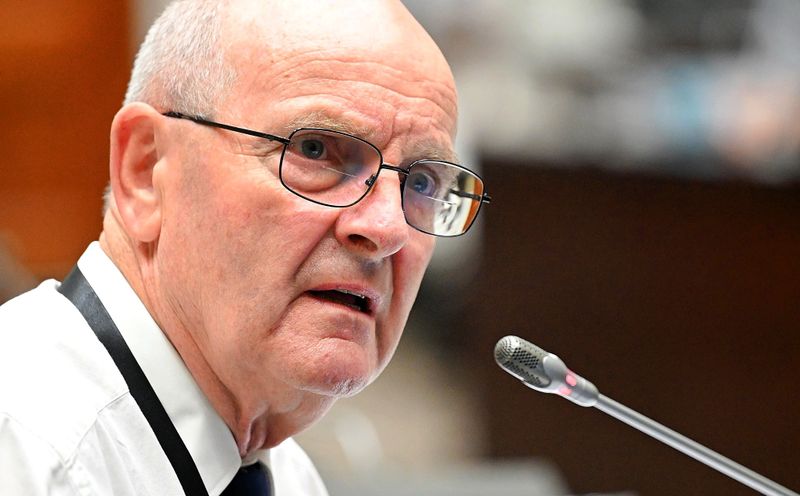
Forensic examiner Paul O’Sullivan returns to Parliament on Thursday for another round of questioning before Parliament’s ad hoc committee probing allegations of police corruption, criminal infiltration and political interference in the criminal justice system.
O’Sullivan’s appearance follows a combative and unfinished testimony earlier this month, which was cut short after he complained of severe back pain.
ALSO READ: BUDGET 2026 | Godongwana holds the line on income tax, increases excise and fuel levies
Committee members are expected to resume questioning him on his professional background, his alleged influence within law-enforcement structures, and his relationship with former Independent Police Investigative Directorate (IPID) head Robert McBride.
O’Sullivan will be followed on the witness list by former acting national police commissioner Khomotso Phahlane, who is also returning to the committee to conclude evidence he was unable to finish during his previous appearance.
ALSO READ: O’Sullivan back in the hot seat to complete his engagement with Parliament’s ad hoc committee
Thursday’s hearings come just days after controversial businessman and information broker Brown Mogotsi appeared before the committee, where MPs grilled him over his claims that he was an intelligence asset and questioned his credibility and business interests.
During his earlier testimony in February, O’Sullivan clashed repeatedly with MPs and at one point told the committee he was unwilling to be interrogated about allegations made against him by people he described as criminals.
Despite this, MPs pressed ahead with questioning, focusing on his business background, his education, and his alleged role in influencing police and IPID investigations.
EFF leader Julius Malema questioned O’Sullivan about how he accumulated wealth shortly after arriving in South Africa.
“Where did you get the money to invest in the property investment, because you were just from school, went to Military Intelligence and then the next thing you come to South Africa for tourism and you love the place,” Malema asked.
ALSO READ: BUDGET 2026 | Social grants increase in April, SRD unchanged
MKP MP Sibonelo Nomvalo accused O’Sullivan of making unsubstantiated claims.
“When you come with an allegation, you must come with proof. We are not just investigating for the sake of investigating,” Nomvalo said.
O’Sullivan responded by claiming that some MPs were themselves in illegal possession of phone records linked to witnesses, including McBride.
Central to O’Sullivan’s earlier evidence were allegations that he infiltrated IPID and deliberately targeted Phahlane to clear the way for McBride to become national commissioner, claims he strongly denied.
“It’s a blatant lie. I have not infiltrated IPID,” O’Sullivan told the committee.
He said his involvement stemmed from opening a criminal docket against Phahlane in February 2016.
“What happened very simply was that I opened a docket against Phahlane in February 2016, and for 10 months IPID flatly refused to investigate that docket,” he said.
O’Sullivan claimed IPID’s reluctance was linked to broader political interference.
“The reason they refused to investigate was because IPID was part of what I call the state capture project,” he said, adding that he only approached McBride after the latter was reinstated.
He also rejected claims of a coordinated plot against Phahlane.
Phahlane, who was removed from office in 2017, previously told the committee that his forced “step aside” by then-police minister Fikile Mbalula was unlawful.
However, it must be noted that Phahlane lost his appeal to have his dismissal overturned earlier in the month.
He requested additional time to respond fully to allegations against him.
The committee is scheduled to conclude its hearings on 31 March, with MPs expected to weigh sharply conflicting versions of events as they prepare their final report.