



By Johnathan Paoli
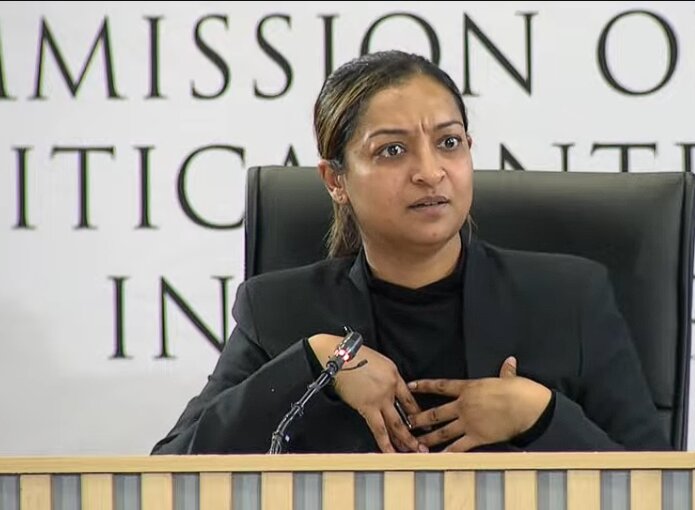
Investigating Directorate Against Corruption (IDAC) attorney Drushantha Ramsamy has told the Madlanga Commission of Inquiry that the investigation triggered by National Coloured Congress MP Fadiel Adams’ referral was effectively a rushed “fishing expedition”, with the confidential docket containing little more than “unsubstantiated allegations”.
Continuing her testimony on Thursday afternoon, Ramsamy said she repeatedly warned former IDAC head Andrea Johnson and chief investigator Dylan Perumal that Adams’ complaint lacked sufficient evidence to justify the aggressive investigative steps that followed.
After reviewing docket 403, which formed part of Adams’ allegations, Ramsamy said she found virtually no evidence to support the claims contained in the Section 27 referral.
“I reported that there is no substantiation in the dockets for the allegations contained in the Section 27 referral affidavit. Since the Section 27 referral affidavit referred to the dockets, I thought that what I would find in the dockets would be prima facie evidence of the allegations contained in the affidavit. It did not. In fact, it had no new details,” Ramsamy said.
The commission is probing the referral, investigation and arrest of suspended Crime Intelligence head Lieutenant-General Dumisani Khumalo and other senior officers over the appointment of Brigadier Dineo Mokwele as head of the unit’s Technical Support Services component, among other corruption allegations.
Johnson previously testified that the bundle of documents included receipts relating to a forklift purchase, an internal security vetting report concerning Major-General Nosipho Madondo, a statement by a Crime Intelligence official about the housebreaking at the home of Crime Intelligence chief financial officer Major-General Philani Lushaba and the involvement of the vetting unit, as well as media reports on the incident.
While the documents identified possible witnesses and suspects, Ramsamy said the names contained in them did not correspond with the list of individuals Johnson had earlier instructed her to include as suspects, further raising concerns about the integrity and evidentiary basis of the investigation.
She said she communicated those concerns directly to Johnson after reviewing the material, but that Perumal nevertheless insisted the prosecution plan proceed.
Ramsamy told the commission that although the original referral referred to allegations involving the Political Killings Task Team, a purported slush fund and polygraph examinations, the dockets themselves contained no material substantiating those claims.
In her affidavit, she described “everything about the process” as concerning, citing “the speed with which everything had to be done without any evidentiary basis” and the pressure to proceed despite her repeated objections.
According to her evidence, Perumal wanted the dockets collected the same day so he could take them home to the Eastern Cape, while Johnson insisted they be copied immediately after they were retrieved.
Ramsamy also testified that Perumal told her retired IDAC investigator Colonel Brian Padayachee had already been briefed on the matter before the Section 28 authorisation had even been signed.
“Clearly Mr Padayachee was briefed on an investigation that he knew would be authorised before it was authorised,” she said.
She also challenged Adams’ account that confidential Crime Intelligence documents had been slipped anonymously under the door of his parliamentary office.
Asked by Commissioner Sesi Baloyi whether she believed Adams’ version, Ramsamy said she had questioned him directly about the circumstances.
She testified that she asked Adams whether he appreciated the criminal implications of possessing classified Crime Intelligence documents.
According to Ramsamy, Adams responded that there were no surveillance cameras in the corridor outside his office.
She told the commission she ultimately did not believe the incident occurred.
Commissioner Sandile Khumalo questioned what offences might arise if confidential Crime Intelligence documents had indeed been abandoned outside an office.
Ramsamy noted that the documents were allegedly obtained in September, before a criminal case was opened in October and later referred to IDAC in November.
She said she was deeply uncomfortable after reviewing the confidential documents handed to investigators by Adams, describing them as internal Crime Intelligence material and vetting records.
Ramsamy further testified that when investigators met Adams in Cape Town on 6 January 2025, they informed him that his original statements across the various dockets were “wholly inadequate”.
“We informed Mr Adams that his A1 statements in all the dockets would have to be supplemented because they were wholly inadequate and what was required was actual proof of the allegations contained in his A1 statements and Section 27 referral affidavit,” she said.
The hearing also returned to Ramsamy’s broader allegations that Johnson exercised direct control over sensitive investigations.
She rejected Johnson’s earlier evidence that she merely received briefings and remained removed from operational decisions.
“Johnson was the dictator of the matter. Between Johnson and Perumal, they’d talk to and update each other about everything. It’s a lie that Johnson relied on briefings when she ran the project and gave instructions,” Ramsamy said.
She further alleged that Johnson insisted on urgently obtaining Lushaba’s bank records after receiving intelligence that R50 million from an alleged slush fund was about to be moved, despite what Ramsamy maintained was an absence of prima facie evidence to justify the request.
Proceedings were adjourned for the day, with Ramsamy expected to continue her testimony on Tuesday.
INSIDE POLITICS






