



By Charmaine Ndlela
The R1 billion UIF-NEF partnership must help build enterprises that can grow, enter value chains, access new markets and create sustainable employment, Deputy Minister of Trade, Industry and Competition Zuko Godlimpi has said.
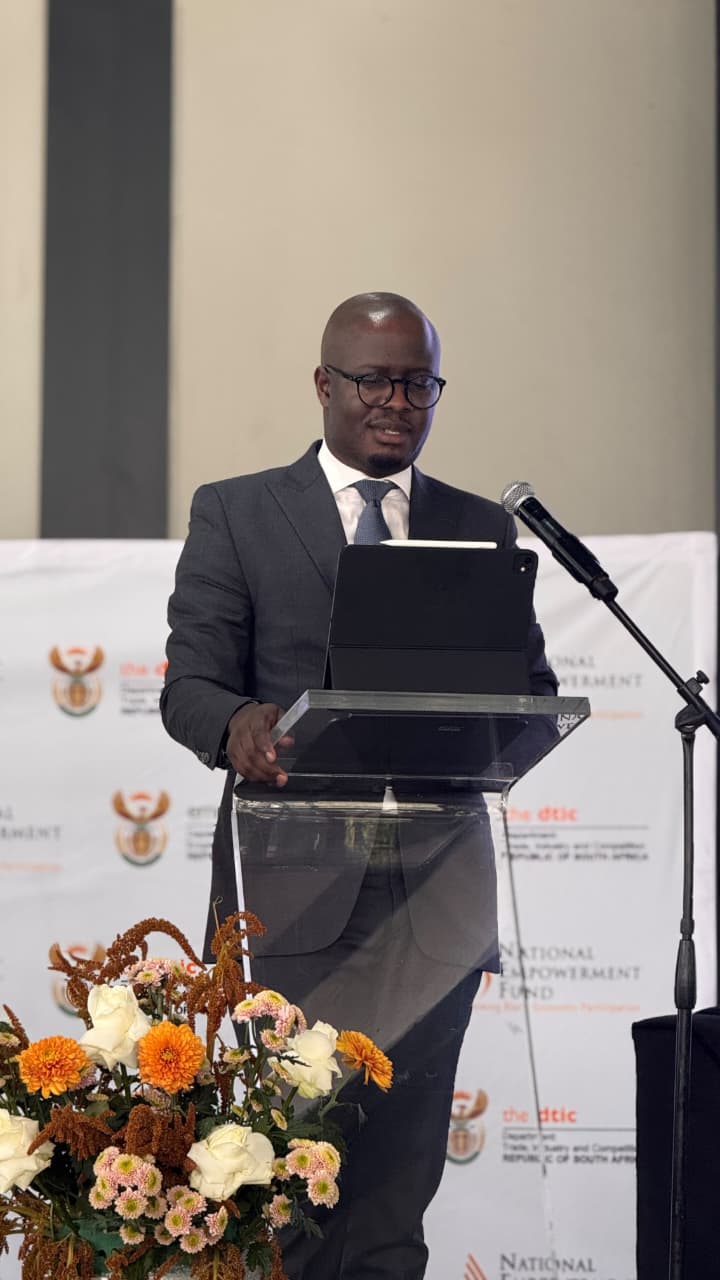
Godlimpi was speaking at the launch of the Unemployment Insurance Fund (UIF) and National Empowerment Fund (NEF) partnership in Fourways, Johannesburg on Friday last week, where the two entities each committed R500 million to a programme targeting the creation of 30 000 jobs.
ALSO READ: SIU secures R42.4 millioin in assets linked to alleged Tembisa Hospital bribery scheme
The five-year partnership is aimed at stimulating enterprise growth, expanding access to finance, supporting business sustainability, advancing transformation and strengthening development finance collaboration. The NEF will serve as the implementation partner.
Godlimpi said enterprise development could not be treated as separate from the country’s employment strategy, particularly given the scale of unemployment and the need to create more businesses capable of absorbing workers.
“Enterprise development has to be a central part of the employment agenda in South Africa,” Godlimpi said.
He said the focus should be on developing enterprises that could progressively improve their productive capacity, participate in value chains, enter new markets, become sustainable competitors and create jobs.
Godlimpi said the scale of unemployment required stronger coordination between institutions responsible for employment, skills development, enterprise finance, industrial development and economic infrastructure.
ALSO READ: Elevan people killed, 8 critically injured in horror N2 taxi and truck collission
“This fund has been structured to connect enterprise support directly with employment outcomes,” he said.
The partnership is designed to go beyond providing businesses with access to finance, with support also expected to include business development, skills development, mentorship, technical assistance and other interventions aimed at strengthening enterprises.
Godlimpi said this approach was particularly important in addressing youth unemployment.
“Sustainable youth employment cannot rely only on placing young people into existing vacancies. South Africa must also expand the number of enterprises capable of creating those opportunities,” he said.
He said the partnership provided an opportunity for institutions with different mandates to combine their resources and capabilities around a common objective.
“The UIF has a labour activation and employment mandate while the NEF brings enterprise-finance capability,” Godlimpi said.
He said the Department of Trade, Industry and Competition and its wider group of institutions also had instruments covering industrial development, investment, trade and enterprise development.
“Other departments and entities hold complementary resources relating to skills, infrastructure and sector development,” he said.
Godlimpi said bringing these different capabilities together was important because enterprise growth depended on more than access to capital.
He said the matching and leveraging approach being used through the programme would allow government institutions to combine their respective resources and programmes in support of businesses.
The partnership follows the government’s broader efforts to strengthen the contribution of small, medium and micro enterprises to economic growth and employment.
According to the Department of Employment and Labour, the UIF and NEF are each contributing R500 million to the R1 billion partnership, which is intended to directly stimulate enterprise growth and create 30 000 jobs.
Godlimpi said the programme needed to focus on enterprises with the potential to increase their productive capacity and become sustainable participants in the economy.
This includes businesses being able to enter supply chains, access new markets and develop the capacity needed to compete over the long term.
The emphasis on enterprise development also comes amid ongoing efforts by government to strengthen township and rural economies.
Godlimpi has previously highlighted barriers faced by informal and township businesses, including procurement challenges, limited access to formal distribution channels, infrastructure constraints and regulatory barriers.
At the UIF-NEF launch, he said stronger coordination between government institutions could help address some of the structural barriers that prevent enterprises from growing and creating employment.
He said institutions needed to work around a shared objective rather than operating independently where their mandates overlapped.
ALSO READ: Afrika Mayibuye commits to abolish the tender system if it’s elected to government after LGE 2026
The broader dtic portfolio also includes industrial development, investment, trade and enterprise-development instruments, while other government institutions have responsibilities relating to skills, infrastructure and sector development.
Godlimpi said combining these capabilities could strengthen the impact of the investment.
The programme also forms part of government’s preparations for the upcoming Job Summit, with enterprise development expected to feature as part of broader efforts to expand employment opportunities.
The government has said the UIF-NEF partnership is intended to advance employment, drive transformation and empower SMMEs, while expanding access to finance and supporting business sustainability.
Godlimpi said that the focus must now be on ensuring that enterprises receiving support develop the capacity to grow and become sustainable employers.
The partnership therefore places enterprise development alongside employment creation, with the R1 billion investment intended to provide businesses with a combination of finance and non-financial support.
Godlimpi said the collaboration demonstrated how institutions with different responsibilities could combine their resources around a shared employment objective.
He said that the ultimate focus should be on developing more productive and sustainable enterprises capable of creating employment opportunities, particularly for young South Africans.






