



Staff Reporter
The City of Tshwane has issued a boil-water advisory for Pretoria’s central business district and several surrounding suburbs after a burst sewer pipe contaminated the drinking water supply.
This as the municipality battles a separate water crisis in Bronkhorstspruit.
In a statement on Thursday, the city said tests conducted on Wednesday detected microbiological contamination in water supplied from Findlay Reservoir, prompting it to isolate the affected source and activate an alternative supply.
“Although the affected source has been isolated and an alternative supply activated, residents must continue to observe the boil-water advisory until further testing confirms that the water is safe for consumption,” the city said.
The latest contamination comes as the municipality faces public backlash over its handling of the Bronkhorstspruit water crisis, where 408 cases of gastrointestinal illness were recorded between 7 and 18 October, most involving children under the age of four.
Findlay Reservoir is normally supplied by a combination of groundwater and water from Rand Water.
“However, an unexpected sewer pipe burst allowed contaminated water to enter the water supply system, resulting in elevated microbial levels that exceeded the capacity of the existing chlorination measures,” the city said.
“Upon detecting the contamination, the City immediately isolated the affected source, emptied Findlay Reservoir and switched the Pretoria CBD and surrounding areas to an alternative supply from Salvokop Reservoir. Teams also began flushing the affected network to remove contaminated water.”
The areas affected are Arcadia, Asiatic Bazaar, Asiatic Bazaar Extension 1, Belle Ombre 636-JR, Cape Boys’ Location, Daspoort 319-JR, Elandspoort 357-JR, Marabastad, Phillip Nel Park, Pretoria, Pretoria Central, Pretoria Extension 1, Pretoria Extension 9, Pretoria Extension 11, Pretoria Extension 14, Pretoria Town and Townlands 346-JR, Pretoria and Townlands 351-JR, Pretoria and Tshwane, Prinshof 349-JR, Skougronde 648-JR, Sunnyside, Trevenna.
Residents and businesses have been instructed to discard stored tap water and ice made from tap water and to bring water to a rolling boil for at least one minute before drinking, cooking, preparing food or brushing their teeth.
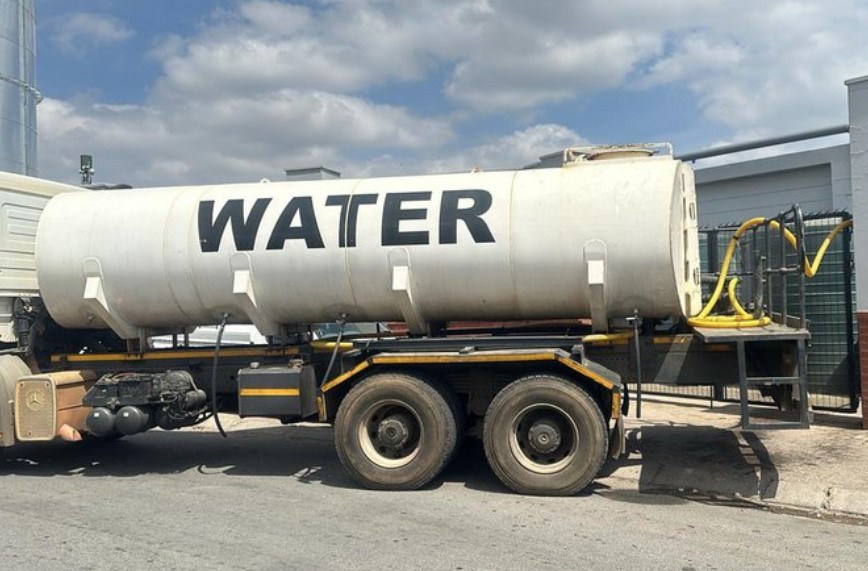
The city said water tankers would provide safe drinking water to affected communities, with locations and availability to be communicated to residents.
The latest incident follows revelations earlier this week that the city failed to chlorinate water supplied from the Bronkhorstspruit Water Treatment Works for three weeks because of problems with its chlorine supplier.
READ: Bronkhorstspruit residents warned about unsafe water after 408 fall ill
As previously reported by Inside Politics, Water and Sanitation Minister Pemmy Majodina said on Monday that an investigation found water from the treatment works had not been chlorinated between 24 September and 14 October.
The treatment works draws water from the Bronkhorstspruit River, which is polluted by sewage from dysfunctional wastewater treatment plants in the neighbouring Victor Khanye Municipality and faulty sewage pump stations in Tshwane.
Investigators also found that the municipality had failed to alert residents that the water was unsafe.
“The investigation also found that the CoT had failed to warn residents in the affected areas of Bronkhorstspruit that the water being supplied had not been chlorinated and therefore should not be drunk or used for cooking, washing or bathing, even after boiling, as required by the 2025 Compulsory Standards for Water Services issued under the Water Services Act,” Majodina said.
Laboratory tests detected extremely high levels of E. coli and other bacteria in water from the treatment works and nearby reservoirs.
Tests conducted by the National Institute for Communicable Diseases also detected norovirus, Campylobacter and Shigella in samples collected from patients suffering from gastrointestinal illness.
The outbreak affected communities including Bronkhorstspruit, Zithobeni, Rethabiseng, Dark City and Sokhulumi, with patients treated at Bronkhorstspruit Hospital and surrounding clinics.
Tshwane Mayor Nasiphi Moya attributed the failure to chlorinate water to a breakdown in negotiations with the city’s chlorine supplier following a price increase.
She said disciplinary action would be taken against officials responsible for managing the treatment plant and failing to alert the city’s leadership to the shortage.
The Department of Water and Sanitation has appointed the Water Research Commission to conduct independent testing and investigate the causes of the Bronkhorstspruit contamination, with a report expected by 28 October.
The Public Protector has also launched an investigation into allegations of maladministration and improper conduct by the municipality following complaints lodged over the handling of the crisis.
Unlike the latest Pretoria CBD incident, where residents have been instructed to boil water before consumption, those supplied by the Bronkhorstspruit system have been warned not to use tap water for drinking, cooking, washing or bathing, even after boiling. It may only be used to flush toilets.
INSIDE POLITICS






