



By Charmaine Ndlela
South Africa has vaccinated at least 90% of its national cattle herd against foot-and-mouth disease (FMD), exceeding the government’s 80% target ahead of the December 2026 deadline, according to Agriculture Minister Willie Aucamp.
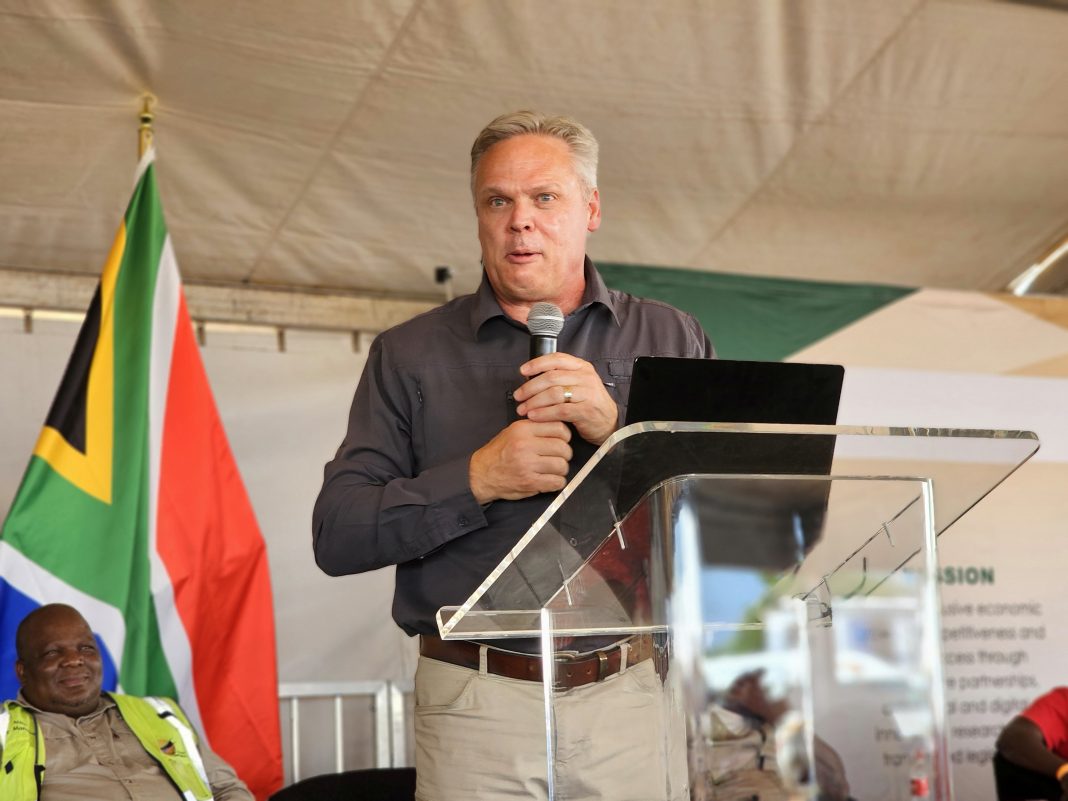
Aucamp announced the milestone during his keynote address at the Agricultural Writers SA National Awards in Muldersdrift, Gauteng, on Friday, crediting cooperation between government, farmers, organised agriculture and the private sector for accelerating the vaccination campaign.
The announcement comes as the agricultural sector continues to battle FMD outbreaks that have threatened livestock production, farmers’ livelihoods and the country’s red meat export markets.
“My predecessor John Steenhuisen set the target of us achieving an 80% vaccination of our national herd by the end of this year. Through collaboration with the private sector and agricultural organisations, I can proudly announce tonight that we have surpassed that figure and that we have really vaccinated at least 90% of the national herd,” Aucamp said.
According to the Department of Agriculture, more than 22 million vaccine doses have been purchased and distributed, with the private sector vaccinating approximately four million cattle and state veterinary services just under 11 million.
Despite the progress, Aucamp warned that maintaining sufficient vaccine supplies remained a major challenge.
He raised concerns about the Agricultural Research Council’s (ARC) capacity to manufacture FMD vaccines at the scale required to sustain the national vaccination programme.
“The ARC is supposed to produce FMD vaccines for us, but they are not producing them at scale,” he said.
Aucamp said he had engaged stakeholders about making intellectual property relating to vaccine antigens available to private manufacturers to expand domestic production.
“I called them in and I said that if we want to be successful with this, we’ve got to get the private sector involved with it. And I want you to make your IP, your antigen available to the private sector so that the private sector can also help us to manufacture these vaccines.”
He said the proposal initially encountered resistance before stakeholders reached a unanimous decision.
“There was a little bit of pushback, but at the end of the day that was a unanimous decision that was made,” he said.
Aucamp argued that increased private sector participation would strengthen vaccine manufacturing capacity and reduce pressure on state supplies.
With the initial vaccination target exceeded, the government says all provinces have entered the next phase of the campaign, which involves administering booster doses to maintain immunity against the disease.
State veterinary services will continue large-scale vaccination campaigns, while livestock producers can participate in voluntary self-vaccination programmes.
Farmers wishing to vaccinate their own cattle must register as authorised vaccinators through the Department of Agriculture, Red Meat Industry Services (RMIS) or Buffalo Analytics platforms.
The department has indicated that registered farmers can order vaccines through the online system, with deliveries expected within 24 hours.
Livestock owners have also been urged to maintain strict biosecurity measures to prevent further outbreaks.
Aucamp said the number of new outbreaks had declined substantially but warned against complacency.
“I am glad to announce that new outbreaks have declined drastically, and the department will keep on working in close collaboration with organised agriculture and every farmer to ensure that we keep on winning the fight against FMD,” he said.
He stressed that uninterrupted vaccine supplies remained essential to protecting the national herd and preventing further disruption to the agricultural sector.
Addressing agricultural journalists at the awards ceremony, Aucamp also warned about the spread of misinformation and sensationalism on social media.
He said credible agricultural reporting was essential to helping farmers understand new research, technological developments and changing industry conditions.
“There is no value for a farmer more than a good seed that you put into the ground. But I can tell you today that credible information has become as important as a good seed,” he said.
Aucamp urged journalists to report accurately on the challenges facing agriculture while recognising the contribution of farmers and agricultural organisations to the country’s economy.
“I might be subjective, but I think I’m still right if I say that we do have the best farmers in the world in this country,” he said.
He said cooperation between government, agricultural organisations and the media would remain important in combating misinformation and strengthening public confidence in the sector.
INSIDE POLITICS






