



By Staff Reporter
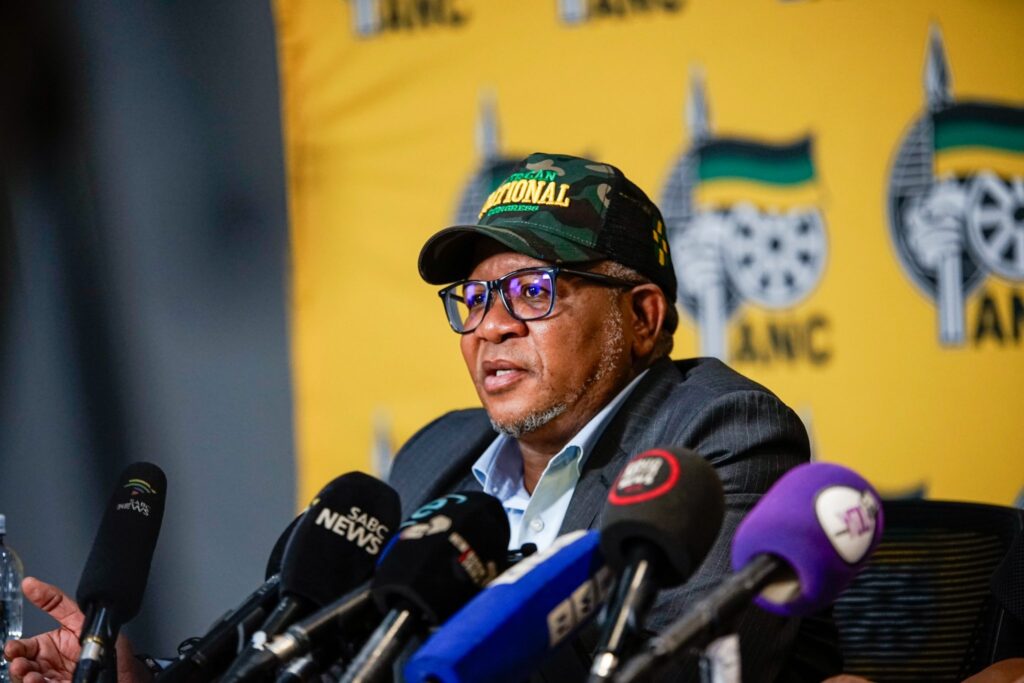
The ANC has appointed a national negotiating team led by secretary-general Fikile Mbalula to oversee coalition talks after its support fell to about 31% in the local government elections.
The African National Congress (ANC) announced the formation of the team on Saturday, 14 November, as it faces the challenge of negotiating governing arrangements in multiple municipalities where no political party secured an outright majority.
The party’s national vote share fell to approximately 31% in the 4 November elections, leaving it increasingly dependent on agreements with opposition parties to participate in municipal governments.
The ANC said all coalition negotiations would be centralised under the authority of the National Negotiations Team, which would conduct engagements in accordance with its mandate.
The ANC, as do all other parties, faces a tight deadline to conclude coalition negotiations, with newly elected municipal councils required to hold their inaugural meetings by 22 November, just 14 days after the election results were declared.
Mbalula will lead the 26-member team, which includes several senior ANC figures, among them national chairperson Gwede Mantashe, first deputy secretary-general Nomvula Mokonyane, second deputy secretary-general Maropene Ramokgopa and treasurer-general Gwen Ramokgopa.
Other prominent members include Finance Minister Enoch Godongwana, Justice Minister Ronald Lamola, Trade, Industry and Competition Minister Parks Tau, and former Gauteng premier David Makhura.
ANC national spokesperson Mahlengi Bhengu, who is also part of the negotiating team, said the party’s coalition framework would guide discussions aimed at establishing stable municipal governments.
According to the ANC, the framework prioritises stable, transparent and accountable governance, transformation, fighting corruption and improving service delivery.
The establishment of the national team follows an election in which the ANC remained the largest party nationally but failed to secure outright control of numerous municipalities.
The results have created a complicated political landscape, with coalition agreements likely to determine control of several of South Africa’s largest metropolitan municipalities.
Johannesburg, Tshwane, Ekurhuleni and eThekwini are among the major metros where parties must negotiate governing arrangements.
In Johannesburg, the Democratic Alliance (DA) emerged as the largest party, while the uMkhonto weSizwe Party (MKP) secured the largest share of seats in eThekwini.
The outcome means the ANC will have to negotiate with political rivals in councils where it previously exercised considerable influence.
The party has already indicated that its coalition engagements will extend beyond the major political parties to smaller formations, civic movements and independent councillors.
The negotiations will take place against tight statutory deadlines for the establishment of new municipal councils following the declaration of election results.
The composition of the ANC’s negotiating team also indicates the importance the party has attached to the process, bringing together senior national office-bearers, Cabinet ministers and experienced provincial leaders.
The party has not announced which political formations it will prioritise in negotiations or provided details of potential agreements in individual municipalities.
INSIDE POLITICS






