
- Advertisement -spot_img

ANALYSIS| High Expectations As Ramaphosa Prepares To Deliver State Of The Nation Amid COVID-19, Deepening Economic Crisis

- Advertisement -spot_img

Must read

THEBE MABANGA

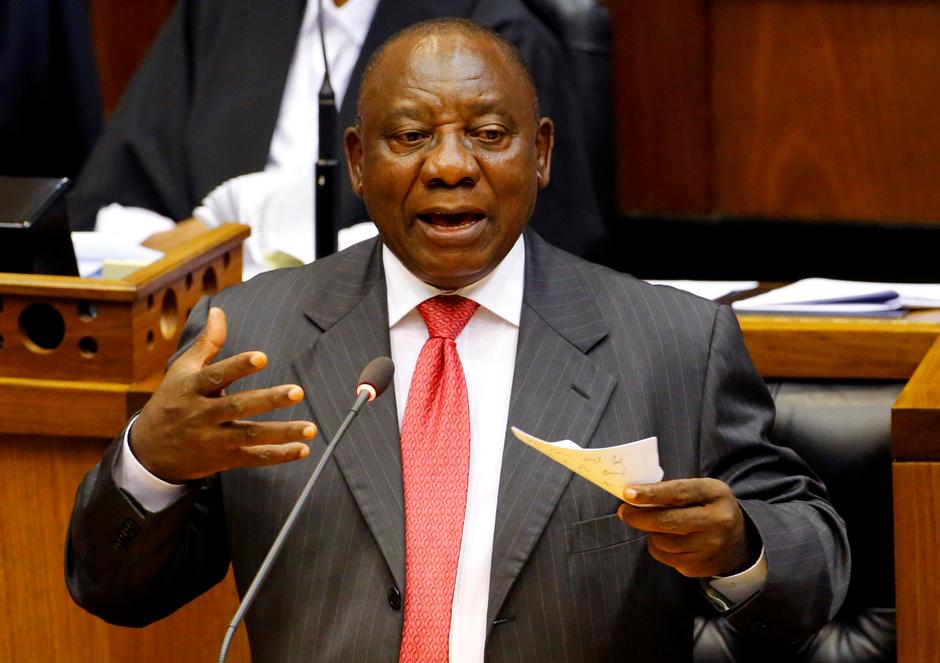
PRESIDENT Cyril Ramaphosa delivers his fifth State of the Nation address (SONA) on Thursday night to an anxious and frazzled nation, battered by a worst economic and health crisis in history, and the worst since the Spanish Flu of 1918.

Beyond outlining government’s plans for the year ahead, Ramaphosa needs to soothe ruptured nerves and give assurance that he is in total control of the health and economic crisis.

It does not help that the address takes place in a week when government appears to have mishandled a critical part of its response to COVID-19 pandemic: the rollout of the Oxford-AstraZeneca vaccine from India.

The government’s explanation that the vaccine from India has been found to be less effective against South African variant of the virus leaves much to be desired.

This begs the question: if the variant was discovered at the beginning of November and now accounts for 90% of active cases in South Africa, why did the country take delivery of the vaccine only at the beginning of February?

Government appears to have ben seized by a misplaced sense of urgency to be seen to be taking urgently after the outcry over initial delivery timelines in a bid to relax lockdown restrictions at the beginning of the month.

This may prove the biggest blow to government vaccine roll out efforts when the vaccine later becomes available.

Trade union federation COSATU has called for an “audacious yet sincere” speech and one which seeks to reverse austerity measures of the past few years to improve the lives of the poor.

The most disappointing aspect that Ramaphosa has to account is the failure of the R200 billion loan guarantee scheme for businesses.

Between May and mid-January this year, less than 1% of the funds had been disbursed, with applications now expected to taper off as the economy opens.

Yet businesses continue to suffer and close down.

Black business will feel particularly let down.

Ramaphosa will also have limited progress to report in the area of State-Owned Enterprise (SOE) reform, with pressure mounting to resolve technical, financial and operational issues in parastatals, from Eskom to the Passenger Rail Agency of South Africa and many others.

Transnet, under new CEO Portia Derby, is steadily freeing itself from the clutches of state capture with 12 new executives out of an Exco of 15, and aiming to resume procurement spending and avoid challenges that befell the infamous 1064 locomotive contract, for example.

But the question of which SOEs government will keep, and which might be sold, has not been resolved and if Ramaphosa is not careful, he may find himself pressured to partially privatise a successful and profitable Transnet or any of its seven operating divisions and be left with cash-draining struggling parastatals like South African Airways (SAA) and the no profitable parts of Eskom, once the three new divisions have been established and operational.

In 2004, the ANC through Department Public Enterprises minister Alec Erwin, announced its intentions to stop privatization and use SOEs to drive growth and employment.

Ramaphosa must first articulate if that goal has changed and if so, what is the goal now.

The president also has to decide whether his cabinet and other key parts of government are staffed by the right people for the job.

Health Minister Dr Zweli Mkhize has proven a capable general over the past year, but few others have emerged with any distinction, ranging from the overzealous police minister Bheki Cele to communications minister Stella Ndabeni Abrahams, in charge of freeing up the communication spectrum to unlock growth but instead distracted by colourful dramatic personal life and frequent claims of her husband sniffing around the same sector for opportunities.

Ramaphosa must question whether even the South Africa Reserve Bank governor Lesetja Kganyago is the right lieutenant for this battle, currently sitting on a 3.5% rate cut cushion that he refuses to use, and sitting on $55 million in reserves when the country needs to fund the vaccine effort, and ultimately in charge of the failed loan guarantee scheme in his capacity as a banking regulator.

Ramaphosa received unsolicited advice from an awkward place – The Thabo Mbeki Foundation.

The former president’s foundation says the Economic Reconstruction and Recovery Plan (EERP) is not an economic plan but rather a vision which needs to be fleshed out with economic partners at the National Economic development and Labour Council (Nedlac).

Ramaphosa is entitled to point out that when Mbeki sent former finance minister Trevor Manuel to unveil the Growth Employment and Redistribution Strategy (GEAR), he had not consulted alliance partners and probably had private consultations with business, but certainly not through Nedlac.

The foundation reserves praise for business response the Accelerated Economic Recovery Strategy (AERS), which was produced by Business 4 SA on behalf of organised business.

“Among other notable things is the fact that this is the very first time during the 26 years of our democracy that business has come together to make a public and solemn commitment to invest in the South African economy.”

Ramaphosa may mutter under his breath why this did not happen under Mbeki, or during his tenure as deputy president in charge of the economy and government business.  

This could be because Mbeki, with his thin skin, spent his time clashing with business leaders like Anglo American’s Tony Trahar over the existence of political risk, arguing that South Africa’s last three presidents began their terms of office with a crisis.

Their legacies were shaped by how they responded to these.

Mbeki was faced with the dot.com bubble when he assumed office.

He proceeded to impose his market-oriented policies, adopting inflation-targeting in February 2000 for example, then went on to deliver 99 months of economic growth that ended in November 2008, two months after his recall.

In the five years to the 2008 budget, he had produced at least 1 million jobs, according to that year’s Budget Review.

Zuma assumed office in 2009 in the wake of the Global Financial Crisis after Kgalema Motlanthe’s presidency.

Zuma proceeded to respond to every parliamentary question on the economy over his almost two terms in office by referencing, or rather blaming the crisis, not explaining why middle-income emerging market economies had emerged quicker than South Africa from the crisis.

Apart from reserve bank governor Gill Marcus aggressively cutting rates, Zuma offered limited policy response, and occupied himself and his proxies, the Gupta family, with any part of the state machinery that generated cash which could be accessed by any means.

Ramaphosa started his term in office with the deepest of all economic and health crises – COVID-19 pandemic – and has thus far had an uneven, inconsistent response.

How Ramaphosa responds will determine whether he completes this term, let alone two.

He currently looks overwhelmed and like the nation he leads, anxious and frazzled too.

(Source: INSIDE POLITICS)

More articles

LEAVE A REPLY

Please enter your comment!
Please enter your name here

CATHSSETTA

spot_img

AVBOB STEP 12

spot_img

Inside Education E-Edition

spot_img

Inside Metros G20 COJ Edition

spot_img

JOZI MY JOZI

spot_img

QCTO

spot_img

Latest article



