
- Advertisement -spot_img

ANALYSIS| Political Parties Biggest Losers In ConCourt Electoral Act Ruling

- Advertisement -spot_img

Must read

LUCAS LEDWABA and SANDILE MOTHA

VOTERS WILL no longer be at the mercy of major South African political parties that have imposed candidates on the electorate during election time since the dawn of democracy in 1994.

The Constitutional Court’s ruling declaring some sections of the Electoral Act unconstitutional has technically disempowered political parties as the only way to parliamentary representation for communities.

The ruling, made by a quorum of eight judges of the apex court, stemmed from a 2018 application by the New Nation Movement NPC, Chantal Dawn-Revell, GRO and the Indigenous First Nation Advocacy SA PBO in the Western Cape High Court.

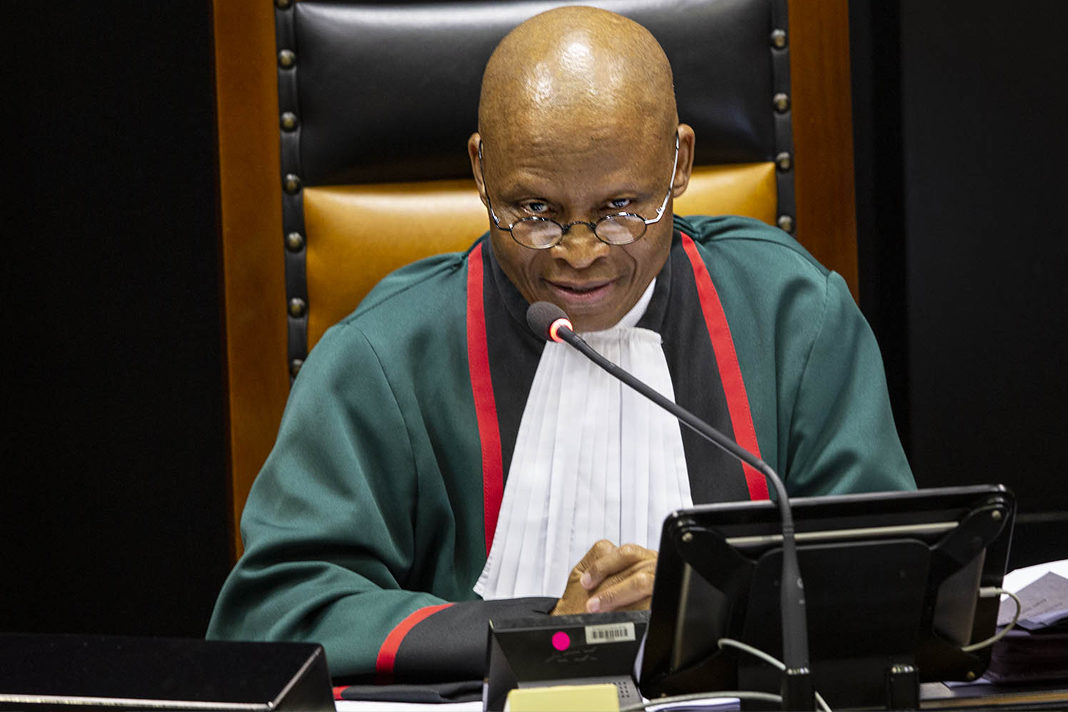
In the main judgment written by judge Mbuyiseli Madlanga, he said the applicants argued that the Electoral Act is unconstitutional for unjustifiably limiting the right to stand for public office and, if elected, to hold office conferred by section 19(3)(b) of the Constitution.

In addition, some applicants submitted that the Electoral Act infringes their right to freedom of association protected by section 18 of the Constitution.”

Justice Chris Jafta, in concurring with the main judgment concluded “that the deficiency in the Electoral Act to the extent that it fails to enable adult South Africans to stand for public office as individuals is inconsistent with the Constitution.”

Madlanga declared “that the Electoral Act 73 of 1998 is unconstitutional to the extent that it requires that adult citizens may be elected to the National Assembly and Provincial Legislatures only through their membership of political parties.”

The court granted the applicants leave to appeal and set aside the order of the Cape High Court.

The court ruled that the declaration of unconstitutionality referred to is prospective with effect from the date of the order, but its operation is suspended for 24 months to afford Parliament an opportunity to remedy the defect giving rise to the unconstitutionality.

The Minister of Home Affairs was ordered to pay the applicants’ costs in both the Cape High Court and the Constitutional Court.

The Independent Electoral Commission’s chairperson Glen Mashinini said it “welcomes the clarity the Court has provided to the interpretation of the rights of citizens to stand for public office. We will study the judgment in detail to reflect on its full implications for the current electoral system and legislative framework governing national and provincial elections.”

Mashinini said the timing of the judgment and the parliamentary review of the electoral system it prompts, “is opportune given both the maturing of South Africa’s democracy and the looming impact of the COVID-19 pandemic on election processes around the world.”

The Constitutional Court has given parliament 24 months to revise the legislation, a factor which Mashinini said stands the IEC “ready to provide technical assistance into this process to help enhance our electoral system.”

Xolani Dube, KwaZulu-Natal based political analyst and senior research at the Xubera Research Institute and Development said the ruling is a victory for ordinary citizens.

“For the longest time, poor people were at the mercy of political parties. The fact of the matter is that public representatives are not elected by the ordinary people. Instead, political parties through their conferences and political meetings take decisions that have far reaching implications for the voter,” said Dube.

He argued that under the current electoral act, public representatives are paraded by their respective political parties as candidates in elections.

“So the voter feels obliged to vote for that candidate regardless of his/her moral compass,” said Dube.

He said the ruling gives a voice to the marginalized who can now vote for any ordinary member in the community whom they feel can sufficiently represent their needs and aspirations.

“Any village or township can group themselves and choose an individual and vote that candidate to national parliament or the provincial legislature. This move will also enable greater accountability as individuals would be answerable to the residents as opposed to the political party,” added Dube.

He described the move as a game changer, saying more citizens would now be keen to participate in the electoral process of the country.

“People want a corruption free government who deliver on promises made. So this judgment is precedent setting and open up doors for ordinary citizens to be elevated to be municipal mayors and speakers of councils. This is what I call democracy at play,” he said.

In his judgment, Madlanda noted that only the Minister of Home Affairs and the Electoral Commission challenged the application.

He said the high court dismissed the initial application and in doing so it focused only on the section 19(3)(b) challenge.

“Whether there should be a framework that caters for the participation of independent candidates is best left to Parliament, something that Parliament is currently seized with. At the centre of this matter are two issues. The first is whether – in making accessing political office possible only through membership of political parties – the Electoral Act unjustifiably limits the right to freedom of association guaranteed in section 18 of the Constitution.”

“The second involves a determination of the content of the right enshrined in section 19(3)(b) of the Constitution and whether the Electoral Act unjustifiably limits that right. Obviously, both questions do engage this Court’s constitutional jurisdiction.”

He said a point was made by the respondents that it is inexpensive and not difficult to form a political party.

“The subtext was that, if the applicants are unwilling to join existing political parties, they have no reason not to form political parties of their own. It may be inexpensive and not difficult to form a political party. That is not the issue. There are other and perhaps more important issues. This matter is about choices; not choices about mundane daily preferences.”

“Rather, choices that implicate the very notion of freedom which the right to freedom of association is about. If it is an individual’s fundamental right to be free to associate with whomsoever she or he wishes, surely it must equally be one’s fundamental right to be free not to associate with anybody whatsoever.”

Madlanga said although for some there may be advantages in being a member of a political party, undeniably political party membership also comes with impediments that may be unacceptable to others.

“It may be too trammelling to those who are averse to control. It may be overly restrictive to the free spirited. It may be censoring to those who are loath to be straight-jacketed by predetermined party positions. In a sense, it just may – at times – detract from the element of self; the idea of a free self; one’s idea of freedom.”

(Compiled Inside Politics staff)

More articles

LEAVE A REPLY

Please enter your comment!
Please enter your name here

CATHSSETTA

spot_img

AVBOB STEP 12

spot_img

Inside Education E-Edition

spot_img

Inside Metros G20 COJ Edition

spot_img

JOZI MY JOZI

spot_img

QCTO

spot_img

Latest article



