



By Simon Nare
DA Johannesburg mayoral candidate Helen Zille has pledged to prioritise the city’s water crisis if elected mayor, but warned that decades of infrastructure neglect means the problem cannot be resolved overnight.
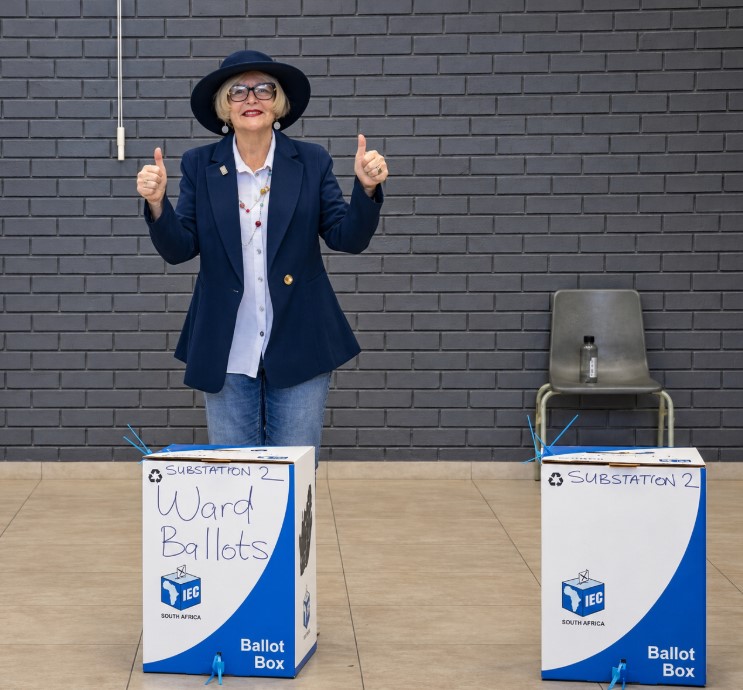
Speaking to reporters after casting her vote at Emmarentia Primary School in Wednesday’s local government elections, Zille said she had learnt over the weekend that 50 suburbs were without water, which she said was a major crisis for a city the size of Johannesburg.
READ: The disruptors: Zille and Zuma shake up the battle for metros
“I was asked what is your top priority and my answer is water. Some people can afford to buy water and others can’t and the desperation for water is palpable. So our first port of call will be to mobilise resources to try and address the water crisis.
“We can’t address it instantly because this has been a long period of decay over decades, literally, and we are going to have to find emergency solutions in the short term,” she said.
The former Western Cape premier also spoke fondly of Johannesburg, praising its weather, jacaranda trees and the spirit of its residents.
“This is such a great city. It is so beautiful. Look at the Jacaranda above. I don’t know how Pretoria came to be called the Jacaranda City but nevertheless, this wonderful summer’s day — you will never get better weather — and it’s all Jozi spirit everywhere,” she said.
READ: Ramaphosa promises better local government despite deepening service delivery crisis
If elected, Zille would become one of the few politicians to have served as executive mayor of metropolitan municipalities in two different provinces, having previously held the position in Cape Town.
She is seeking to lead one of South Africa’s most politically contested metros, with a population of 4,803,262 and 270 municipal council seats being contested in the elections.
Johannesburg has an overall budget of R97.1 billion, including a capital budget of R8.8 billion, but it has experienced significant political instability over the past decade, largely because of fragile coalition governments.
The city entered the 2021–2026 council term without any party securing an outright majority. The DA initially formed an administration under Mpho Phalatse, with the support of several smaller parties, before successive changes in political leadership brought ANC-backed administrations into office.
READ: Joburg signed multibillion-rand salary deal just hours before local elections
Current executive mayor Dada Morero took office in August 2024, leading an ANC-centred coalition arrangement that has involved support from parties including ActionSA, the Economic Freedom Fighters, Patriotic Alliance, Inkatha Freedom Party, African Independent Congress and Al Jama-ah.
The city’s reported combined infrastructure requirements exceed R220 billion, while non-revenue water accounts for about 45% of its water supply.
City Power’s electricity distribution losses stand at approximately 27%, while the municipality’s revenue collection rate has declined from 88.6% to about 86%.
INSIDE POLITICS






