
By Thapelo Molefe
Former police minister Bheki Cele has defended his initial refusal to approve state funding for the legal fees of former apartheid-era Security Branch officers, telling the Khampepe Commission of Inquiry that his decision was shaped by his personal experiences under apartheid.
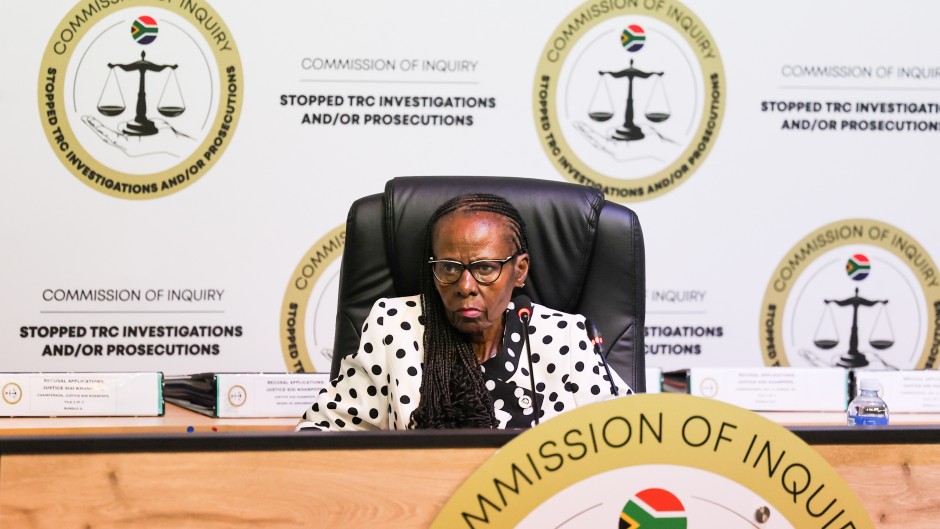
Cele testified before the commission on Tuesday, which is investigating allegations that officials in the South African Police Service (SAPS) and the National Prosecuting Authority (NPA) colluded with politicians to delay or obstruct investigations into apartheid-era crimes referred by the Truth and Reconciliation Commission (TRC).
He said his reluctance to authorise the payments stemmed from the trauma of losing comrades during the apartheid struggle.
“I did not wake up and become a Minister of Police. I had a history before then, which I carried with me into this position,” Cele told the commission.
“When I had to make decisions as Minister of Police, and issues came across my desk, I approached them with all my biographical experience insofar as police matters were concerned. I had a painful history.”
Cele said he found it difficult to accept that the democratic government should pay the legal costs of former apartheid police officers accused of serious crimes, given his own experiences of political violence.
He recalled anti-apartheid activists Victoria Mxenge and Matthew Goniwe among the comrades he had lost.
“I had lost comrades. Graves had been dug up with people we knew. There were missing persons who are still missing today, and we don’t know what happened to them,” he said.
“One person I know very well is Matthew Goniwe. We worked together with Matthew Goniwe to establish what is known today as the Teachers’ Union. So, I was working with him. It’s not just hearsay to me. These are things that touched me very closely.”
Commissioner Andrea Gabriel questioned Cele on why he had refused to approve the legal costs despite a court order requiring the state to do so.
Cele said he initially challenged the payments but ultimately complied with the law and authorised the funding through the then head of the Directorate for Priority Crime Investigation (DPCI), Lieutenant General Godfrey Lebeya.
“Legally, and as far as the rule of law is concerned, I should have, and ought to have, challenged the payment of legal costs. Indeed, I did,” he said.
“Later on, in line with the rule of law, I agreed to the payment of these litigation costs.”
Cele said that although he personally disagreed with the decision, he accepted that he was bound by the rule of law and implemented the court order.
The commission continued hearing evidence from Cele on Tuesday regarding his tenure as national police commissioner between 2009 and 2011.
Proceedings are continuing.
INSIDE POLITICS





