
CHARLES MOLELE
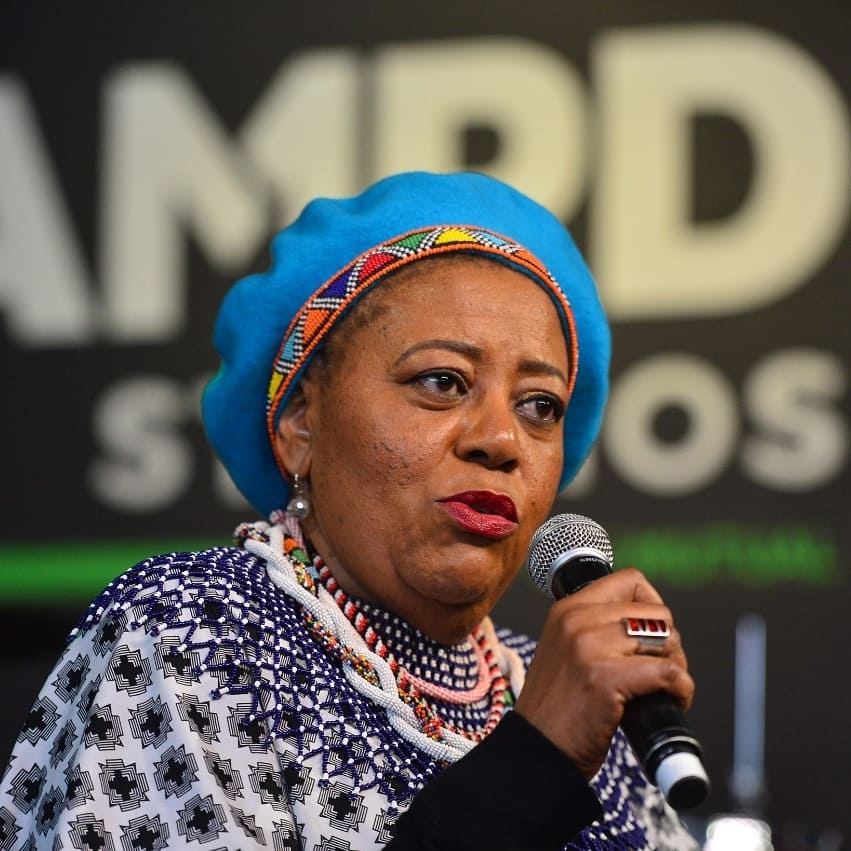
THE untimely death of world-renowned mezzo-soprano, Dr Sibongile Khumalo, has come as a shock to music lovers across the world. Khumalo, 63, succumbed to stroke-related complications on Thursday morning after a lengthy period of illness.
Khumalo, who came to prominence after singing at the inauguration of former president Nelson Mandela in 1994, has been unwell for the past three years, and was in and out of hospital ever since, according to family spokesperson, Bandile Mngoma.
“It is with great sadness that we announce the passing of Dr Sibongile Khumalo our iconic, world-celebrated South African singer, affectionately known as Ma’Mngoma (24 September 1957 – 28 January 2021). Dr Sibongile Khumalo succumbed to stroke related complications after a lengthy period of illness,” said Mngoma.
“She will be missed by all who had the privilege of experiencing her music, her friendship and her love. The family is grateful for the support and prayers during this time.”
Born into a musical family in Orlando West, Soweto, Sibongile Khumalo was naturally a diva, but not the raging prima donna-type; she was multi-talented, soulful and dynamic.
Her musical journey started at the age of eight under the tutelage and guidance of her father, Khabi Mngoma, a professor of music, and Emily Motsieloa, a pianist and leader of an all-women group called the Dangerous Blues.
At the age of 14, Khumalo knew she wanted to be an opera singer. But her father discouraged her for it would have meant studying overseas since there were no opportunities for black people in South Africa, especially for opera singers.
Khumalo decided to teach music instead, going on to complete a Bachelor of Arts (BA) in music at the University of Zululand, and obtaining a Bachelor of Arts (BA) Honours from the University of the Witwatersrand. Khumalo also holds a Higher Diploma in Personnel Management.
From her humble beginnings as a music teacher, Khumalo went on to earn the Order of Ikhamanga in Silver for her contribution to arts and culture in the musical fields of jazz and opera.
She worked ridiculously hard; Khumalo appeared as a soloist with South African symphony orchestras, and has also performed leading roles such as Carmen, Amneris in Aida and Azucena in Il Trovatore at the Cape Town and State Theatre Operas.
She has also performed at the Royal Albert Hall, the Royal Festival Hall, the Barbican Centre and the Kennedy Centre.
She has made her own the title role in Mzilikazi Khumalo’s Princess Magogo ka Dinuzulu, presented by Opera Africa, with appearances also at HetMuzik Theater, Amsterdam and at the Ravinia Festival in Chicago.
Khumalo’s oratorio repertoire includes among others, Handel’s Messiah, Mendelssohn’s Elijah, both the Verdi and Mozart Requiems, and Khumalo’s Zulu epic uShaka ka Senzangakhona. She has earned four South African Music Awards for her popular music and jazz recordings, and three FNB Vita awards for her opera and concert work.
In 2008 she toured the USA with Hugh Masekela and was also invited to perform at the Celebrate Brooklyn Festival. In South Africa she produced and sang in the For Letta-Sound of a Rainbow concert at the National Arts Festival, Grahamstown, in celebration of the music of Letta Mbulu.
By all accounts, Khumalo had an extraordinary musical range – a classical mezzo-soprano, as well as a great jazz vocalist and interpreter of African songs and lamentations.
Ranking top on her musical highlights include her debut album, Ancient Evenings, a magical journey through the rich tapestry of South Africa culture and traditions.
The album was a monumental and pioneering work, and included hits such as Ngibizwe, Untold Story, O Ea Kae, Mountain Shade and Amathonga.
In an interview with the Mail & Guardian, Khumalo said there were many sceptics who believed the album wouldn’t do well in the market.
“I think when I did Ancient Evenings, from a perspective of somebody who comes from a classically trained background, and coming from the choral world, some of the things I was doing musically were not commonplace, and there was scepticism among some of the record companies specifically,” Khumalo said.
“They were sceptical of the value of the music I was going to bring out. Record companies executives said “this isn’t going to sell.” Apart from Busi Mhlongo, who redefined, in a way, maskandi music, there were few of us who were bringing out recorded material. And because of the kind of material we were bringing out, it takes two to three years for the CD to settle in people’s minds, because it’s like pop – one of those feel good things that happen now and in a couple of weeks’ time they are gone. So there weren’t that many singers, male or female, at the time, and when Ancient Evenings came out the reception was good and a lot more record companies were willing to take the risk with female singers outside of the pop vein. I contributed to an opening up of people’s appreciation of SA music.”
Khumalo’s song Untold Story, originally composed by Soweto-born poet and writer Motsumi Makhene, also featured in the documentary Amandla: A Revolution in Four-Part Harmony.
The song speaks of restless spirits of those who were killed and buried without trace during the apartheid era, like Vuyisile Mini, a trade unionist, Umkhonto we Sizwe activist, singer and one of the first African National Congress members who hailed from Port Elizabeth, Eastern Cape.
Mini, and his co-accused, Wilson Khayinga and Zinakile Mkaba, were hanged in the Pretoria Central Prison on 6 November 1964.
Mini went to the gallows singing freedom songs, some he had composed.
It is a moving tribute to those who were executed by the Apartheid regime and buried without the involvement of their families, friends, and comrades.
According to government records, more than 4 200 prisoners are believed to have been executed in South Africa since 1910, 2 173 of them between February 1967 and November 1989.
The experiences of all those who were executed and buried by the state were therefore symbolically banished to Zamani – an ancestral abode of those who have been forgotten; those who have been “cast out of the Sasa [region], and are in effect excommunicated, their personal immortality is destroyed and they are turned into a state of non-existence”.
This can be interpreted as reinforcing the notion that the apartheid system functioned to normalise secrets in all areas of life.
Khumalo, a classical musician, explained: “It [the song Untold Story] is saying let their demise [the demise of those who sacrificed their lives for freedom], let their destruction not be for naught.”
For the past three years, Khumalo disappeared from the limelight due to poor health; she was kind of fragile and she had a lot to grapple with, but, basically, she kept it all inside.
After all, a true diva is divine.
(SOURCE: INSIDE POLITICS)





