
By Charmaine Ndlela
The Government of Ghana was due on Thursday to evacuate the first batch of 300 Ghanaian nationals from South Africa amid growing safety concerns linked to recent anti-immigration protests and threats against foreign nationals.
Ghana’s Minister of Foreign Affairs, Samuel Okudzeto Ablakwa, announced on X that the evacuees would depart from OR Tambo International Airport on a specially chartered flight.
According to Ablakwa, the evacuation is being fully funded by the Ghanaian government and forms part of an emergency intervention to protect citizens living in South Africa.
The minister said returnees would receive a comprehensive support package, including financial assistance on arrival, transport to their destinations within Ghana, reintegration allowances, psychosocial support services, and placement on a special database for employment and business start-up opportunities.
“The welfare and safety of all Ghanaians is a non-negotiable priority of the Mahama Administration,” Ablakwa said.
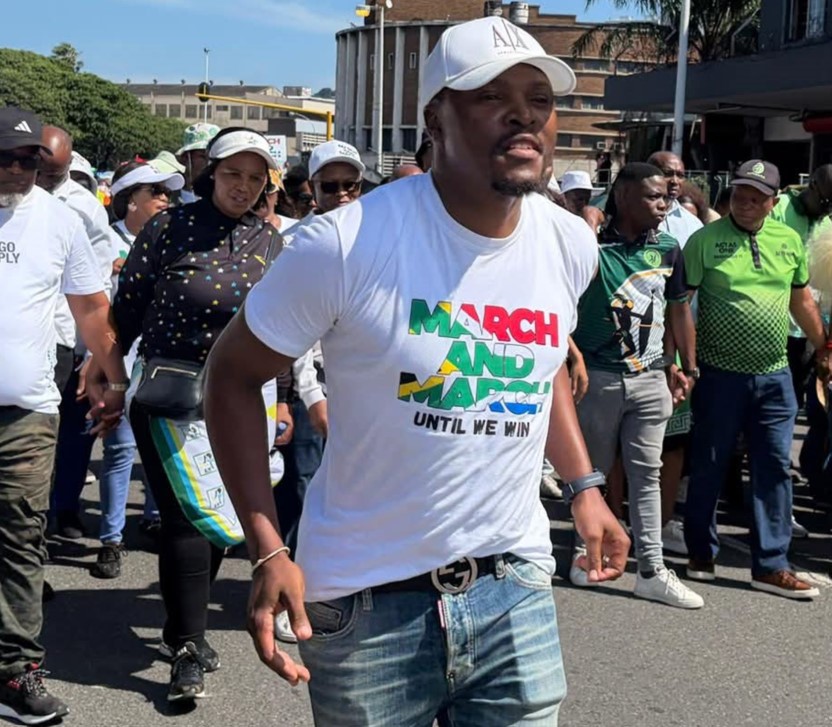
Inside Politics spoke to March and March Johannesburg leader Pontsho Shasha, who welcomed Ghana’s evacuation decision, and said the movement wants all foreign nationals to leave South Africa regardless of their legal status.
The movement has maintained that its planned nationwide march on 30 June will proceed as a national shutdown targeting foreign nationals operating businesses in South Africa.
“I hope by 30 June all Ghanaians will be gone, 30 June is a national shutdown and no foreigner will operate in South Africa. Illegal foreigners — this time around we do not care whether documented or undocumented — they have to leave,” Shasha said.
The planned evacuations come amid escalating anti-immigration demonstrations led by groups including Operation Dudula and March and March, which have staged protests in several parts of South Africa demanding the removal of undocumented foreign nationals.
The groups have accused undocumented migrants of contributing to crime, unemployment and pressure on public services, with some protests resulting in the closure of foreign-owned shops and intimidation of migrant communities.
Last month, an anti-migration protest in the Eastern Cape turned violent, resulting in the torching of minibus taxis and damage to public infrastructure.
In KwaZulu-Natal, alleged attacks and threats made on foreign nationals, including Ghanaians, triggered diplomatic tensions between Ghana and South Africa, prompting Ghana to summon South Africa’s ambassador for explanations over the incidents.
Other African countries, including Kenya, Malawi, Lesotho and Zimbabwe, have also reportedly advised their citizens in South Africa to remain cautious amid fears of further violence targeting foreign nationals.
Nigeria confirmed that at least 130 Nigerians had registered for voluntary evacuation flights back home.
President Cyril Ramaphosa has condemned the violence, saying the attacks and intimidation do not reflect the values or policy of South Africa.
“The recent violent protests and criminal acts directed at foreign nationals in parts of our country do not represent the views of South Africa’s people nor reflect our government’s policy,” Ramaphosa said.
Foreign nationals in Durban on Wednesday accused anti-illegal immigration groups of intimidation and forcing them from their homes. Several have taken shelter at the Diakonia Centre in the CBD, which houses numerous NGOs focused on social justice.
But outside the centre, Operation Dudula members have been intimidating the groups, telling them to vacate the centre by 11am on Thursday.
Aid groups, including Gift of the Givers and the Red Cross Society of South Africa, have delivered assistance at the centre, including food parcels, clean water, blankets and formula for babies.
Several civil society organisations have condemned the rhetoric and actions of anti-immigration movements.
In a joint statement, the Equal Education Law Centre, Equal Education, the Children’s Institute, SECTION27, Lawyers for Human Rights and Kopanang Africa Against Xenophobia accused groups such as March and March and Operation Dudula of exploiting socio-economic frustrations to fuel organised xenophobic violence.
The organisations said that failures within the Department of Home Affairs had worsened tensions around migration and documentation processes.
“The department’s bureaucratic dysfunction affects both South Africans and non-South Africans alike, yet the blame for these failures is cynically placed on migrants,” the statement reads.
“When the state fails to provide clear and accessible pathways to documentation for people living within its borders, it creates the very conditions that xenophobic and Afrophobic groups exploit.”
The groups called on political leaders, community organisations and the media to stop using migration as a simplistic explanation for broader social and economic failures.
Civil society organisations also accused anti-immigration movements of spreading fear and intimidation, including threats directed at schools in some communities, forcing parents to remove children from classes over safety concerns.
They questioned how some of the groups are funded.
“Zandile Dabula (formerly) of Operation Dudula has previously alleged that human rights groups are funded by non-South Africans, yet Dudula’s own financial backers remain a mystery,” the statement reads.
The organisations demanded that the South African police deploy law-enforcement resources to protect migrant communities, schools in affected areas and individuals at risk of attack.
They also called for a law-enforcement cordon around any school targeted by protesters to ensure that any conflict or intimidation takes place away from minors.
Meanwhile, the South African government has acknowledged Ghana’s request for a formal debate at the African Union Mid-Year Coordination Summit in Cairo on “xenophobic attacks against African nationals in South Africa”.
In its response, the South African government said it had moved swiftly to condemn incidents of intimidation and violence and had instructed law-enforcement agencies to act against perpetrators.
Minister of International Relations and Cooperation Ronald Lamola has since engaged his counterparts from Ghana and Nigeria, assuring them that South Africa remains committed to protecting all residents and visitors in accordance with the Constitution and the rule of law.
The government further dismissed social media claims alleging that Ghanaian and Nigerian nationals had been killed during recent protests, saying there was currently no credible evidence to support the allegations and cautioning against the spread of fake or manipulated videos online.
INSIDE POLITICS





