



By Thapelo Molefe
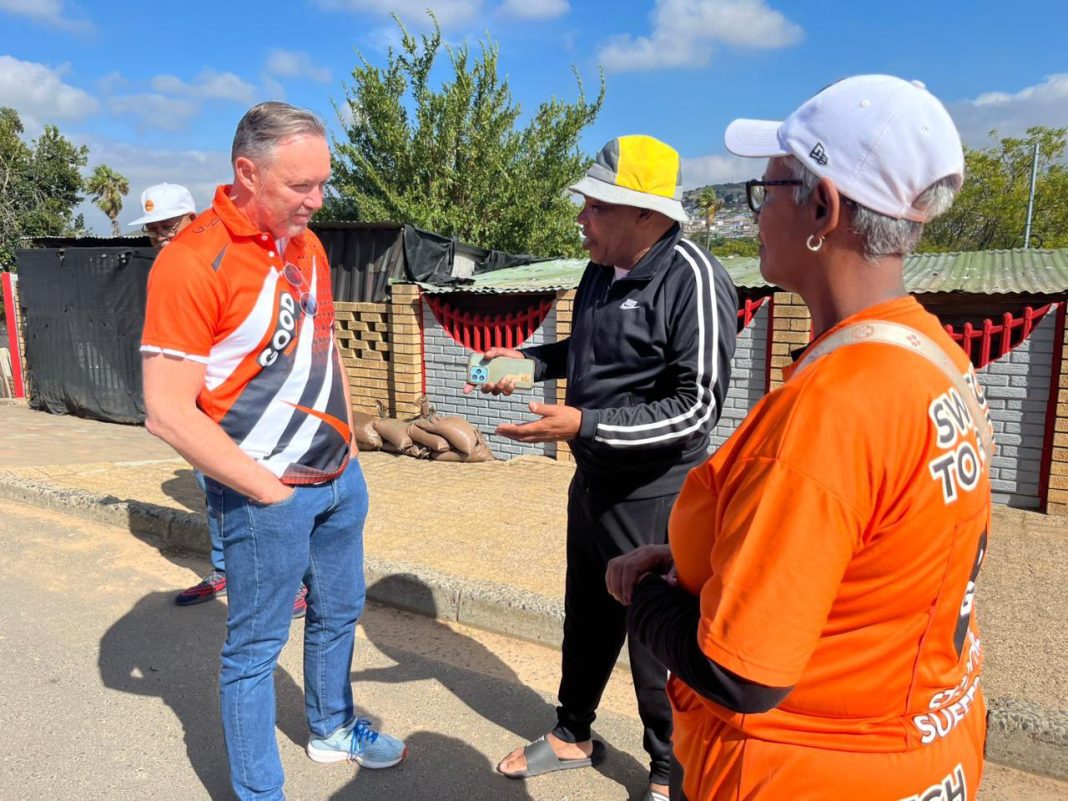
The Good Party has been fined R50,000 by the Electoral Court for failing to disclose a R900,000 donation used to pay for campaign T-shirts ahead of the 2021 local government elections.
The court also fined the party and its secretary-general and accounting officer, Brett Herron, R40,000 jointly and severally for failing to account for the income, while Electrox Properties, which the court found made the payment on the party’s behalf, was fined a further R40,000 for failing to disclose the donation.
ALSO READ: AI costs, infrastructure and human judgement dominate CNBC Africa AI Summit
The judgment, handed down on Wednesday, found that the R900,000 payment was a donation to the Good Party despite denials from the party and Electrox Properties.
The matter arose from the Good Party’s purchase of T-shirts and other campaign material from Kairos Communications during August and September 2021. The material was worth R1.97 million in total.
On 22 September 2021, Electrox Properties paid R900,000 into the account of Incorp Trade and Investment, a company linked to Kairos. The payment was subsequently acknowledged by Kairos and credited towards the purchase price of the material supplied to the Good Party.
The party did not disclose the payment to the Electoral Commission of South Africa (IEC), and the amount was not reflected in its annual financial statements for the relevant financial period.
The case followed a complaint lodged with the IEC in June 2023 by former Good Party member Shaun August.
August had been involved in procuring the campaign material and told investigators that the R900,000 had been paid by a sponsor rather than the party.
The IEC appointed independent investigators, who produced a report supporting the complaint.
The Electoral Court found that the IEC’s case was supported by documentary evidence, including an invoice from Kairos, correspondence concerning the payment and evidence from August.
Electrox Properties denied that the payment was a donation and claimed it was linked to a commercial transaction involving tiles.
However, it did not provide details of the alleged transaction.
Judge Leicester Adams rejected this explanation, describing it as “so far-fetched that it can be rejected out of hand” when considered against the evidence.
The court also rejected the Good Party’s attempt to distance itself from August’s actions.
The party argued that the arrangement was between August and businessman Saravan Devaraj Govender and that August had acted independently.
But the court noted that the Good Party itself had described August as a high-ranking member responsible for purchasing campaign material.
“It is clearly an attempt by the Good Party to disown Mr August and to suggest that he acted on a frolic of his own,” Adams said.
Herron was also copied on much of the correspondence relating to the payment and the campaign material, the court found.
The court said the Good Party had also failed to explain how it had paid for the R900,000 worth of T-shirts it received from Kairos.
“What is conspicuously missing from the Good Party’s affidavits is an explanation of how it paid for the t-shirts worth R900 000.00 it received from Kairos Communications and proof of such payment,” the judgment states.
The Political Funding Act requires political parties to disclose donations above the prescribed threshold. Entities making donations above the threshold must also report them to the IEC.
ALSO READ: ANC faces fresh legal threat over councillor candidate selection
The court noted that the definition of a donation includes money paid on behalf of a political party for expenses incurred directly or indirectly by it.
It said the disclosure requirements are designed to promote transparency by giving voters information about who funds political parties and to guard against funders exerting influence over their policies and decisions.
The court said the penalties also needed to send a strong message to political parties and other participants in the electoral system about the importance of transparency.
“This is not a minor case where respondents may have overlooked their obligations and unwittingly contravened the Act,” the judgment states.
The court said the IEC’s investigation report indicated that there had been a deliberate attempt to conceal the donation.
The Good Party was therefore fined R50,000 for contravening section 9 of the Political Funding Act.
The party and Herron were jointly and severally fined R40,000 for contravening section 12, meaning the liability is shared between them rather than being a separate R40,000 fine against each.
Electrox Properties was separately fined R40,000 for its failure to disclose the donation.
The court’s administrative penalties therefore total R130,000.
The alternative case against Kairos Communications and the other Govender-linked respondents fell away after the court found that Electrox Properties had made the R900,000 payment on behalf of the Good Party.
Each party was ordered to pay its own legal costs.






