
By Johnathan Paoli
Deputy President Paul Mashatile has urged South Africans to preserve and reimagine the nation’s diverse heritage as a tool to combat unemployment, drug abuse, crime and social fragmentation, while strengthening unity and cultural identity.
Speaking at the national Heritage Day celebrations at Bridgeton Sports Grounds in Oudtshoorn, Western Cape, on Wednesday, Mashatile welcomed the theme, ‘Reimagine Our Heritage Institutions for a New Era,’ as encouragement to honour the country’s history whilst looking to the future.
“I call upon all South Africans to reimagine our history and heritage institutions for a new era, so that they may continue to add value to human development and serve generations to come. I wish all South Africans across the length and breadth of our nation, across the continent, and throughout the Diaspora, I wish you a wonderful Heritage Day,” Mashatile said.
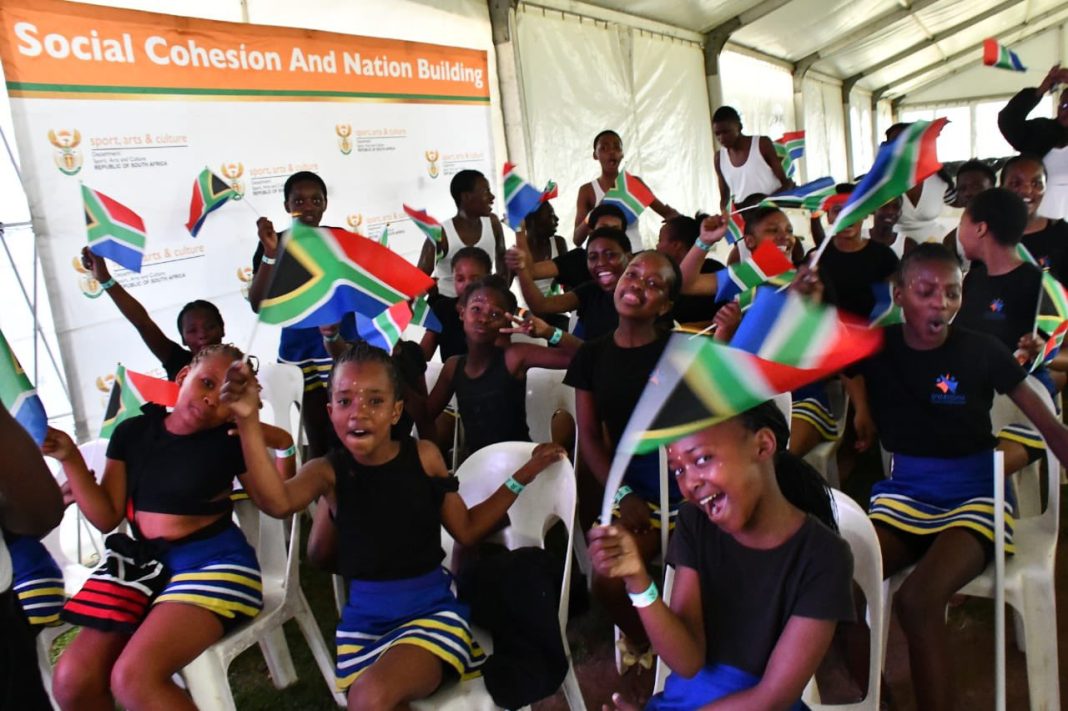
The event, hosted in a town renowned for its rich cultural landscape, brought together government leaders, traditional authorities, cultural practitioners and community members.
Heritage Day, Mashatile noted, is not just a commemoration of the past but a call to action for the present and future.
He stressed that heritage institutions must evolve into inclusive, innovative spaces that address current challenges.
“Our heritage institutions nurture cultural identity, encourage unity, and offer economic opportunities in sectors such as tourism and the arts. They must become spaces of cultural diplomacy, intergenerational conversation, laboratories of creativity and incubators of opportunities for our people, particularly the youth,” he said.
Mashatile explained that South Africa’s G20 presidency later this year has further underscored the importance of inclusive development rooted in cultural diversity.
He said the Heritage Day theme aligns with South Africa’s G20 priorities of solidarity, equality, sustainability and innovation.
According to the Deputy President, museums, monuments and archives should not be static relics of the past but dynamic institutions that help communities confront pressing issues.
“We must position our heritage institutions to contribute to the government’s efforts to deal with the pressing challenges of unemployment, social fragmentation, crime and corruption,” he said.
He called for a radical shift in how museums and cultural spaces are managed, including decolonising and Africanising them.
This, he said, requires co-curation with communities and the recognition of lived experiences and marginalised histories.
Mashatile used his address to highlight the growing problem of substance abuse among young people, linking it to broader social decay.
He appealed for collective responsibility across families, communities, NGOs, business and government to combat the scourge of drugs, alcohol abuse, and related social ills.
The Deputy President also urged South Africans to tackle gender-based violence, racism, tribalism and crime, noting that these hinder national progress and erode social cohesion.
Heritage preservation, Mashatile said, also means correcting historical injustices inflicted during colonialism and apartheid.
He pointed to ongoing government initiatives to repatriate human remains and heritage objects taken abroad, including those of Khoi and San ancestors.
“Some of these sacred human remains remain locked away as prisoners of ‘science’ in museum cupboards across the world, still awaiting their rightful repatriation,” he said.
Citing the 2002 return of Sarah Baartman’s remains from France, Mashatile described the process as crucial to restoring the dignity of African heritage.
He further highlighted the importance of honouring unsung heroes of resistance such as the Khoi and San defenders, the warriors of the Eastern Cape Frontier Wars, King Sekhukhune of the Bapedi, and those who fought in the Bambatha Rebellion.
Mashatile paid tribute to Ouma Katrina Esau, the last fluent speaker of the N|uu language, describing her as a “towering figure” and one of South Africa’s Living Human Treasures.
“Her life’s work reminds us of the urgent responsibility to safeguard our intangible cultural heritage for future generations,” he said.
Esau’s efforts to teach and preserve the critically endangered language, he added, are an example of how individuals play a crucial role in passing down indigenous knowledge.
Earlier in the day, Mashatile participated in the One Million Trees Campaign at Dysselsdorp Secondary School.
He said initiatives like tree planting and the government’s Clean Cities, Towns and Villages Campaign link cultural heritage with environmental stewardship and sustainable development.
“These campaigns affirm our duty to preserve the environment while also protecting historic buildings and landscapes,” he said, noting that they contribute to job creation, public health and infrastructure improvement.
Mashatile concluded his address by urging South Africans to take part in the ongoing National Dialogue, a citizen-led initiative aimed at fostering inclusivity and confronting uncomfortable truths about democracy and social challenges.
INSIDE POLITICS



