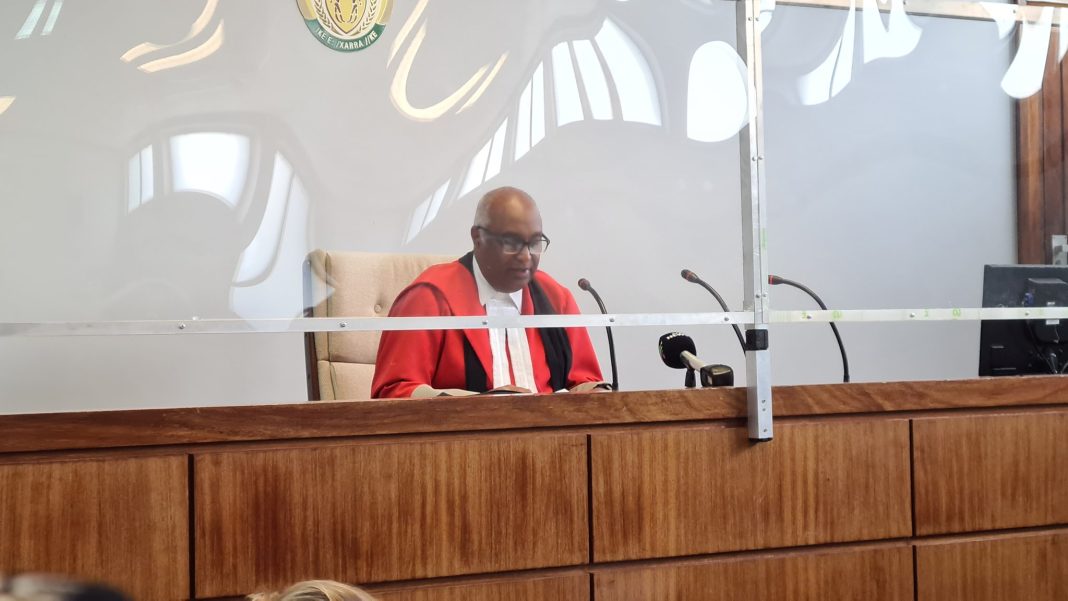


By Lebone Rodah Mosima
The South African judiciary said on Thursday it was mourning the death of Western Cape High Court Judge Taswell Papier, who died on Tuesday at 64 after a distinguished legal career.
The Office of the Chief Justice (OCJ) said Papier studied law at the University of the Western Cape (UWC) during the turbulent 1980s as a committed student activist and dedicated scholar.
ALSO READ: We were used,’ says TMPD deputy chief Bolhuis on security tenders
He was also a Visiting Fellow at Harvard Law School’s Human Rights Programme in 1994 and obtained an LLM in Human Rights there in 1995.
“He later opened his own practice in Mitchells Plain, where he served the poor and vulnerable across Western Cape townships,” the OCJ said.
“As an attorney, he represented thousands of students and school learners arrested by apartheid police during protests, as well as members of liberation movements charged with treason, sabotage, and membership in banned organisations.”
Papier pioneered pro bono programmes within the legal profession. After his firm merged with ENS, he led the pro bono department and later excelled in commercial and administrative law. He received the UK Global Lawyer of the Year Award in 2006 for his human rights and pro bono work.
ALSO READ: US and Iran agree to two week ceasefire as Trump pulls back on ‘end of civilization’ threat
Papier was active in the National Association of Democratic Lawyers (NADEL), where he held a number of official positions.
“Since his landmark appointment, Judge Papier served with utmost integrity, care, and distinction, presiding over significant cases that advanced constitutional rights, administrative justice, and equity,” the OCJ said.
“Known for his kind, gentle, and caring personality, he mentored generations of lawyers and embodied judicial excellence.”
Papier is survived by his wife Joy, son Roscoe, daughter Kayla, as well as his mother, father and sister.
In his tribute, Advocate Jason Brickhill said Papier was committed to ensuring the law served poor communities and who lived that commitment both as a lawyer and on the bench. “I feel fortunate to have crossed paths with him when I worked at the Legal Resources Centre, and he served on its trust,” Brickhill said.