
- Advertisement -

Madlanga confirms ‘imminent’ consultation with Mkhwanazi as SAPS corruption inquiry starts

- Advertisement -

Must read

By Thapelo Molefe

The newly established Judicial Commission of Inquiry into allegations made by KwaZulu-Natal police commissioner Lt. General Nhlanhla Mkhwanazi is expected to begin its work in August, chairperson Acting Deputy Chief Justice Mbuyiseli Madlanga announced on Monday.

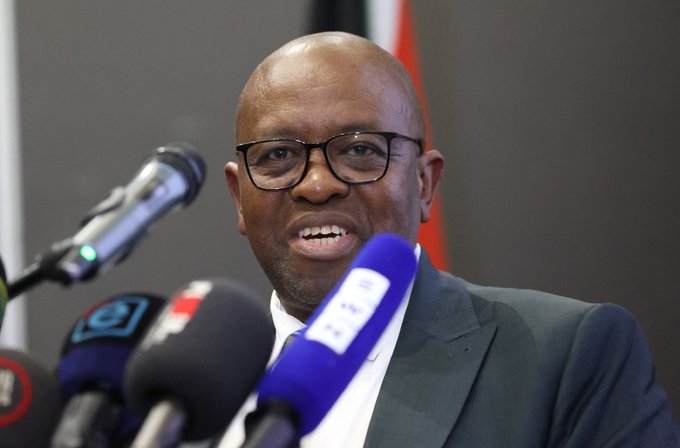
Addressing reporters at the commission’s first media briefing, Madlanga said preparatory work was well underway and that the first witness consultation had already been scheduled.

“The first interview has been scheduled and is imminent,” said Madlanga, whose tenure at the commission aligns with his impending retirement this month, marking the conclusion of a 17-year judicial career on the bench.

He confirmed that the initial consultation would be with Mkhwanazi, whose explosive claims of political interference and obstruction in high-profile investigations prompted President Cyril Ramaphosa to establish the inquiry.

“We are mindful that South Africa is eager to see the first witness take the stand. We, too, are keen to see that happen and are acting with the necessary expedition,” said Madlanga.

However, he cautioned that while Mkhwanazi would be consulted first, it was not guaranteed he would be the first to testify publicly.

“Indications are that he may well be, but we cannot tie ourselves to a position that says he’s definitely going to be the first witness,” he said.

Public hearings have not yet commenced, but the commission has pledged to conduct its proceedings in an open and transparent manner.

Mkhwanazi has alleged that criminal syndicates have infiltrated police and prosecutorial systems, and that political interference, specifically by Police Minister Senzo Mchunu, led to the collapse of key investigations into political assassinations in KwaZulu-Natal.

In response to the public outcry following these claims, Ramaphosa placed Mchunu on ‘immediate’ leave while National Commissioner Fanie Masemola placed Deputy Commissioner for Crime Detection Shadrack Sibiya on special leave pending an internal SAPS investigation into corruption allegations.

Although the Commission is expected to sit in Gauteng,  Madlanga said the procurement of a permanent venue and necessary infrastructure is still in progress.

He argued, however, that these logistical matters are not hindering the Commission’s momentum.

“We are proceeding with the Commission’s preparatory work full steam ahead,” Madlanga said. 

“The lack of infrastructure… does not affect progress.”

Members of the public will also be able to submit relevant information to the Commission once both physical and digital submission platforms have been finalised.

“We believe it is important that the public be afforded the opportunity to contribute,” he said.

Madlanga is supported by two co-commissioners, Advocate Sesi Baloyi and Advocate Sandile Khumalo. The Chief Evidence Leader is Advocate Terry Motau SC, assisted by a team of supporting advocates.

Peter Gous serves as the Chief Investigator, Lolita Vukuza as the Commission Secretary, and Jeremy Michaels as the Commission’s spokesperson.

“We believe this team is up to the task and will deliver on the mandate,” said Madlanga.

The Commission’s terms of reference are broad and include investigations into the SAPS, metro police departments in Gauteng, the National Prosecuting Authority (NPA), the State Security Agency, the Judiciary, Correctional Services, and any members of the executive responsible for the criminal justice system.

The Commission is tasked with determining whether these institutions have been compromised or influenced by criminal syndicates, and whether politically connected individuals have been shielded from accountability.

An interim report is expected within three months, followed by a final report within six months.

However, Madlanga acknowledged that the complexity and potential scope of the evidence may necessitate an extension.

“Looking at the allegations made on 6 July, they seem to cover quite a wide spectrum,” he said.

“Consultations and investigations are likely to yield a lot more than what was referred to in the initial allegations. So, the timelines do appear to be quite tight.”

Public access will be the default for the Commission’s hearings, which will be live-streamed.

However, Madlanga said certain sessions may be held privately to protect witnesses or safeguard national security interests.

“I will not readily grant applications for private hearings,” he said.

“I will look very closely at each and every application, bearing in mind the need for transparency, especially with regards to serious allegations like those that we have before us.”

Clause 15 of the Commission’s terms of reference mandates the protection of witnesses.

Madlanga noted the potential difficulty of this obligation, given that some of the very institutions responsible for witness protection are under investigation.

“This is receiving serious consideration,” he said.

“Can the witnesses be protected by the same people—at least some of whom are implicated? We believe we will come up with a practical and acceptable solution.”

The Commission is also empowered to conduct search-and-seizure operations.

Madlanga conceded, however, that publicly disclosing certain evidence might unintentionally alert those under investigation.

“Unfortunately, there is nothing we can do about that because evidence has to be given,” he said.

He declined to speculate on whether any arrests might follow the Commission’s findings.

“If I was able to say yes, I think there would not have been a need for an inquiry at all,” Madlanga said.

Litigation challenging the Commission’s legitimacy is currently before the Constitutional Court.

Madlanga confirmed that the Commission would fully comply with any ruling handed down.

While no formal budget figure was disclosed, Madlanga stated that the financial management of the Commission falls under the Department of Justice, which bears legal responsibility for commissions of inquiry.

The number of witnesses to be called remains uncertain and will depend on the outcome of ongoing consultations.

Despite the scale of the task ahead, Madlanga stressed the Commission’s commitment to urgency and accountability.

“We understand the weight of this task, and we will not treat it lightly,” he said.

INSIDE POLITICS

More articles

LEAVE A REPLY

Please enter your comment!
Please enter your name here

AVBOB STEP 12

Inside Education Quarterly Print Edition

Inside Metros G20 COJ Edition

JOZI MY JOZI

QCTO

Latest article



