
By Johnathan Paoli
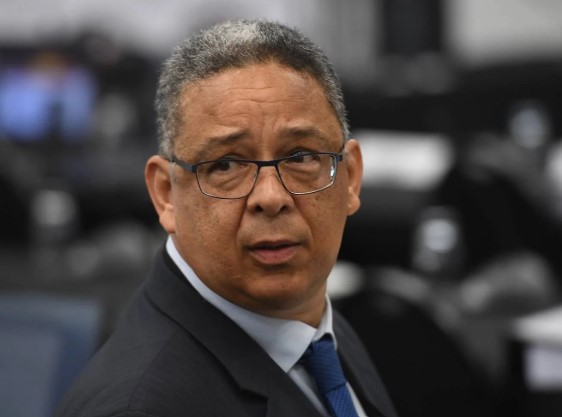
Former Independent Police Investigative Directorate (IPID) head Robert McBride is scheduled to testify before Parliament’s ad hoc committee on Tuesday and Wednesday, while suspended Ekurhuleni Metropolitan Police Department deputy chief Julius Mkhwanazi is expected to appear on Thursday and Friday.
On Monday morning, the committee is meeting to agree on scheduling, procedural matters, and witness management. The committee is also expected to receive an update on Monday about its decision to formally write to SAPS seeking clarity on the status and possible arrest of Major-General Richard Shibiri.
The issue arose during last week’s hearings, when MPs expressed frustration over what they said was a lack of visible consequence management against senior officers implicated in allegations of wrongdoing.
Committee chair Soviet Lekganyane told the committee that Parliament would write to SAPS leadership, including the national commissioner, to demand a clear explanation of Shibiri’s employment status and why he had not been arrested or formally suspended.
The move followed testimony by Crime Intelligence head Lieutenant-General Dumisani Khumalo, who said investigations into Shibiri’s alleged interference in the Armand Swart murder case were at an advanced stage.
Last week’s proceedings were dominated by lengthy and at times confrontational testimony from former acting National Police Commissioner Lieutenant-General Khomotso Phahlane, followed by evidence from Khumalo.
Phahlane told MPs that he was the victim of a coordinated campaign designed to destroy his career, reputation and personal life.
Central to his evidence was the claim that McBride, together with forensic investigator Paul O’Sullivan, orchestrated a sustained “project” against him under the guise of fighting corruption, using criminal complaints, internal disciplinary processes and media exposure.
He traced the origins of the alleged campaign to June 2016, following a violent armed robbery in which he and his wife were attacked by three gunmen at a Johannesburg spa.
Phahlane said McBride was the first person to contact him after the incident, sending a WhatsApp message offering assistance.
He alleged that McBride later obtained the spa’s CCTV footage, which was subsequently circulated to O’Sullivan’s associates and disseminated online in a way that fuelled negative media narratives about him.
According to Phahlane, this marked the start of what he described as the “Phahlane task team”, involving repeated complaints, investigations and sustained media pressure.
He named several journalists whom he alleged were used to amplify what he characterised as propaganda, insisting that many of the allegations against him were unsupported by sworn affidavits.
Despite multiple dockets being opened, he said, O’Sullivan had never submitted a formal affidavit.
Phahlane also testified about escalating political interference in SAPS after the ANC’s 2007 Polokwane conference, criticising the appointment of former Crime Intelligence head Richard Mdluli as undermining governance, while stressing he bore no personal animosity toward Mdluli.
Khumalo echoed claims of targeted campaigns within SAPS during his testimony.
Khumalo said his arrest on fraud and corruption charges related to a civilian appointment in Crime Intelligence was part of a broader effort to tarnish his reputation and undermine reforms within Crime Intelligence and the Political Killings Task Team (PKTT).
Khumalo told the committee that his investigations into organised crime in Gauteng exposed a deeply troubling level of corruption within the South African Police Service (SAPS), and that “almost the whole of SAPS in Gauteng is working for the cartel”.
He said counter-intelligence work linked to the prosecution of high-profile suspects such as Katiso “KT” Molefe and Vusimuzi “Cat” Matlala revealed that elements within police ranks were offering protection and assistance to syndicate figures, undermining legitimate law enforcement efforts.
INSIDE POLITICS





