
- Advertisement -

McBride says Sibiya was framed as MPs clash over his employment status

- Advertisement -

Must read

By Johnathan Paoli

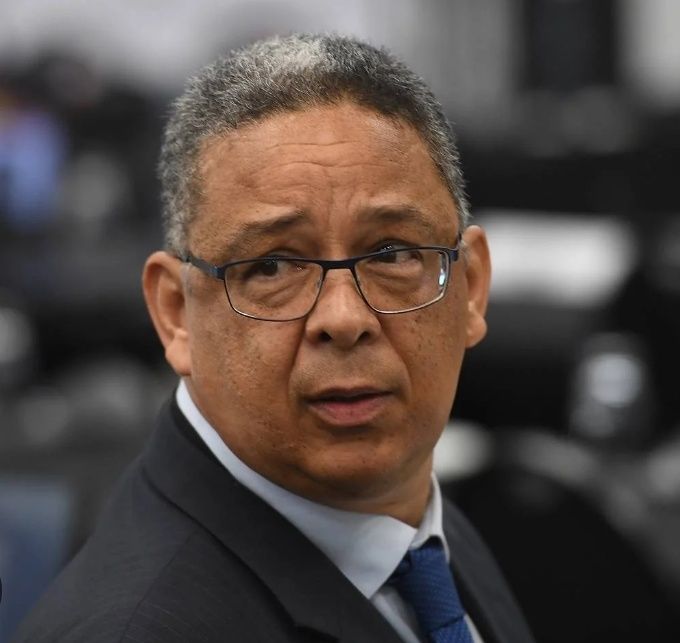
Former Independent Police Investigative Directorate (IPID) head Robert McBride told Parliament’s ad hoc committee probing corruption and political interference in the criminal justice system that former national deputy commissioner Shadrack Sibiya was deliberately framed in the controversial rendition case that ultimately derailed senior police leadership and triggered political retaliation against IPID.

Being led by evidence leader Norman Arendse in Cape Town on Tuesday, McBride said the investigation into the alleged illegal rendition of Zimbabwean suspects was fundamentally flawed and that evidence pointed to a deliberate attempt to implicate then-Hawks head Anwa Dramat and Sibiya.

“It was clear that Shadrack Sibiya was not anywhere near the scene of the crime. It appeared to be a stitch-up, and he was being framed,” McBride told the committee.

He said IPID’s report, which exonerated both Dramat and Sibiya, directly contradicted the position taken by then police minister Nathi Nhleko.

“It was clear to us that this was not a legitimate case. The NPA were also of the view that the report that recommended charges against Dramat and Sibiya was incomplete,” McBride said

McBride told the committee that Sibiya’s problems escalated after his arrest of former Crime Intelligence head Richard Mdluli.

“Sibiya’s problems started when he arrested Richard Mdluli,” he said. “Members of Crime Intelligence were behind Sibiya’s stitch-up.”

He said those involved in undermining Sibiya remained embedded in the system claiming that members of Criminal Intelligence (CI) were behind Sibiya’s “framing”.

Asked whether those CI officers were still employed, McBride said to his knowledge, they were.

McBride said the political consequences of IPID clearing Dramat and Sibiya were swift, leading to his suspension by Minister Nhleko.

He said the central issue in his legal challenge was institutional independence, stating that the minister should not be able to unilaterally discipline the IPID head, due to its constitutionally protected independence.

The High Court overturned his suspension, a decision later upheld by the Constitutional Court. “The Constitutional Court upheld the High Court ruling,” McBride said.

He warned that the failure to implement the judgment had left oversight bodies structurally compromised.

“A good example is the Hawks being under the national commissioner of police,” he said. “Their budget comes from the police, and when they want to appoint someone, they have to ask SAPS HR.”

He added that IPID should move away from the police minister, who is the political head of the department over which IPID has oversight, and thus has an interest in controlling the outcomes of IPID.

The morning session started off, however, with a heated dispute over McBride’s current employment and the outdated curriculum vitae he submitted to the committee.

Arendse asked McBride to state his current employer.

“I’m not allowed to say what my employment is,” McBride replied.

Pressed by MPs, McBride referred to intelligence legislation, citing the National Strategic Intelligence Act of 1994.

Committee chairperson, Soviet Lekganyane challenged him on submitting an outdated CV, with ActionSA MP Dereleen James MKP MP David Skosana and ANC MP Xola Nqola rejected McBride’s refusal to disclose his employment and questioned his conduct.

They pointed to the 2020 public appointment of McBride as head of the Foreign Branch of the State Security Agency.

McBride later clarified his role, stating that he was no longer head of the foreign branch, but now ran “special operations”.

The committee continues after lunch.

INSIDE POLITICS

More articles

LEAVE A REPLY

Please enter your comment!
Please enter your name here

AVBOB STEP 12

Inside Education Quarterly Print Edition

Inside Metros G20 COJ Edition

JOZI MY JOZI

QCTO

Latest article



