- Advertisement -

Not enough is being done to end the scourge of GBV – Gender Activists say

- Advertisement -

Must read

Lerato Mbhiza

Gender based violence in South Africa has become a big challenge and while President Cyril Ramphosa has declared GBV as a “second pandemic”, the tide is yet to turn as crime statistics have shown. 

Violence against women compromises both physical and emotional well being. Reports suggest that GBV intensified during the COVID-19 pandemic as victims were no longer able to escape their attacker. This forced the government to dedicate funds to fight GBV.

The 2023/2002 second-quarter crime statistics from Police Minister Bheki Cele showed that South Africa recorded 10,516 rapes, 1,514 cases of attempted murder, and 14,401 assaults charges against female victims in July, August, and September.

Ramaphosa said around R21 billion was dedicated over the medium term to the implementation of the six pillars of the plan, including the economic empowerment of women.

New laws were introduced to strengthen the response of the criminal justice system to gender-based violence and provide better support to survivors of such violence, he said during his 2024 State of the Nation Address.

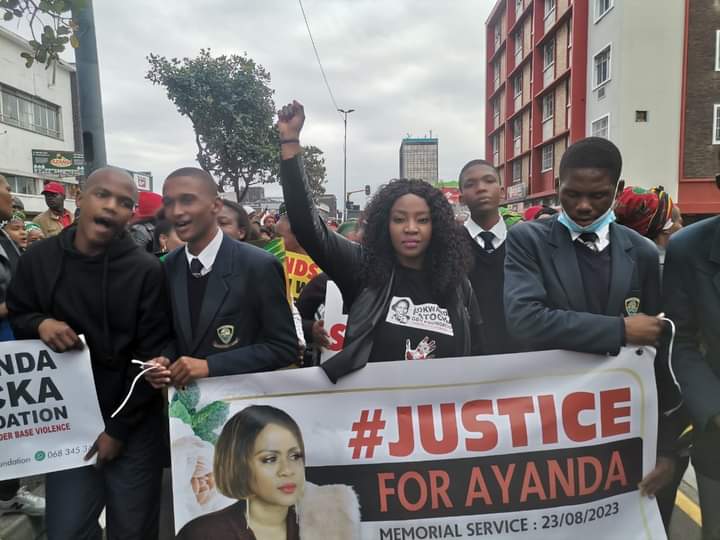
Asonele Melapi the founder and chairperson of Nokwanda Patocka Foundation said to win the fight against gender-based violence, the government needs to do more in term of skills development.

“We need skills development, incapacitation and funding in Civil Society Organizations. We are ignored but we are the bridge between communities and Government. We need more support and for laws to favour victims and survivors of GBV and not perpetrators like they do now,” she told Inside Politics.

Melapi also said the first respondents to the cases of GBV are the ones who are failing the system. “I know that GBV is not only a governmental scourge that all are responsible. It’s also societal because we are having a society where GBV is committed daily .

In many areas of South Africa, there is limited access to formal psychosocial or medical support for survivors of GBV contributing to psychological trauma and behavioral consequences with an inability to reintegrate into society, Melapi said.

Limited funding at the national and provincial levels has affected GBV services and support. Non-profit organisations which played a crucial role in providing support to survivors during the pandemic, now continue to struggle with the ever-escalating demand for their services amid a lack of coordination between government and civil society to address the “pandemic within the pandemic”.

Melapi questioned what the government is doing to help  the small NGOs ” what we’re doing as citizens is more than what employees of public service do and you find that Civic Society organisations are doing the jobs of public servants more than they are doing”.

Under Covid-19, as rates of GBV reportedly rose, resources and attention allocated to addressing the problem were diverted, according to Farida Myburgh, a programme manager at Masimanyane Women’s Rights International (MWRI) located in East London, Buffalo City. 

Myburgh is also a member of the Interim Steering Committee of the NSP-GBVF and part of a non-profit organisation (NPO) seeking to empower and educate youth, through awareness campaigns; community engagement; training; and reproductive health support.

Women’s rights campaigners have worked hard over many years to bring the issue of GBV to the attention, Myburgh said.

INSIDE POLITICS

More articles

LEAVE A REPLY

Please enter your comment!
Please enter your name here

AVBOB STEP 12

Inside Education Quarterly Print Edition

Inside Metros G20 COJ Edition

JOZI MY JOZI

QCTO

Latest article