
- Advertisement -

Parliament questions credibility of Hlungwani’s crime intelligence claims

- Advertisement -

Must read

By Johnathan Paoli

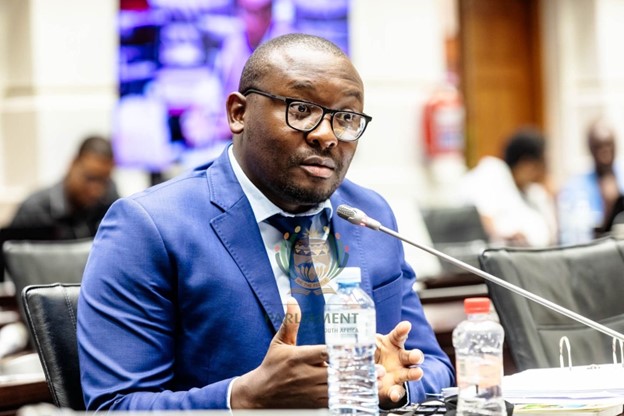
Parliament’s ad hoc committee investigating allegations of corruption and political interference has questioned the credibility of former Crime Intelligence financial services head Tiyani Hlungwani, with both the committee chair and evidence leader expressing concern about the timing, scope and evidentiary support for his sweeping claims.

Chairperson Soviet Lekganyane repeatedly challenged Hlungwani on what he described as conjecture, moral judgements and selective credibility assessments, while evidence leader and senior counsel Norman Arendse said he was “quite disappointed” by the manner in which serious allegations had been placed before the committee.

“We are now at the tail end of these hearings and you come with far-reaching allegations against senior officials who have not had an opportunity to respond,” Arendse told Hlungwani.

Despite those concerns, Hlungwani used his testimony to advance grave allegations against Crime Intelligence head Lieutenant-General Dumisani Khumalo, whom he accused of orchestrating irregular appointments, manipulating security clearance processes and presiding over the misuse of the Secret Service Account.

Hlungwani told the committee that Khumalo’s rise within Crime Intelligence followed what he described as a deliberate and irregular chain of appointments beginning in 2011, when Lieutenant-General Nhlanhla Mkhwanazi was appointed acting national commissioner while still holding a junior rank.

According to Hlungwani, Mkhwanazi then appointed Lieutenant-General Fannie Masemola as acting divisional commissioner for Crime Intelligence, who in turn appointed Khumalo, then a brigadier, as acting component head for Counter-Intelligence.

“That post was not advertised, which is very shocking because there were capable people at Crime Intelligence serving at the level of major general. You go and appoint somebody who has no experience in Crime Intelligence,” Hlungwani said.

He further alleged that Khumalo’s security clearance was rushed through in a matter of days, in violation of intelligence legislation and established procedures.

“Security assessment takes, if you are lucky, at least four months. It can take up to a year,” Hlungwani said. “This one was done chop, chop, chop within days, which is highly irregular.”

Hlungwani told MPs then Inspector-General of Intelligence Imtiaz Fazel later found the clearance to be invalid.

“The recommendation of the IG was that this security clearance is fraudulent and invalid and must be redone through State Security,” he said.

The former SAPS official also alleged that the Secret Service Account had been misused under Khumalo’s leadership, including for the procurement of buildings and luxury items that fell outside the lawful purpose of intelligence operations.

“Two hotels were bought and signed off on the same day. Buildings do not fall under machinery and equipment required for intelligence gathering,” Hlungwani testified.

He added that other properties were acquired in KwaZulu-Natal, Durban and Johannesburg.

He further claimed that massage beds were procured using secret funds.

Hlungwani also alleged that a R360 million tender awarded to businessman Edwin Matlala was irregular because suppliers were not properly vetted as required by the National Strategic Intelligence Act.

“You then end up giving highly sensitive personal information of South Africans to an alleged criminal,” he said.

In one of his most serious claims, Hlungwani told the committee that the establishment of technical intelligence structures within the PKTT, reporting outside the Crime Intelligence chain of command, amounted to the creation of an unlawful intelligence service.

“That would be a violation of section 209 of the Constitution. Only the President can establish an intelligence service. What was created here is, in a lot of ways, a rogue structure,” he said.

However, Lekganyane repeatedly pressed Hlungwani on whether his testimony crossed the line from evidence into personal judgement, particularly when he described some SAPS figures as credible and others as not.

“Does it make you a credible witness to make moral judgements about who is credible and who is not, when there are serious allegations across the board?” the chairperson asked.

Arendse, meanwhile, criticised Hlungwani for submitting a 161-page affidavit only days before his appearance, without annexures or supporting documentation.

“We are unable to evaluate the value of your evidence because none of the annexes referred to are before us,” he said.

Hlungwani conceded that his credibility should be assessed against both his affidavit and his oral testimony, but insisted that his disclosures were genuine.

He announced that he would hand over evidence of his claims to the parliamentary legal team.

The committee continues with the testimony of the former Executive Director of Johannesburg Metro, Melusi Mlandu.

INSIDE POLITICS

More articles

LEAVE A REPLY

Please enter your comment!
Please enter your name here

AVBOB STEP 12

Inside Education Quarterly Print Edition

Inside Metros G20 COJ Edition

JOZI MY JOZI

QCTO

Latest article



