



Staff Reporter
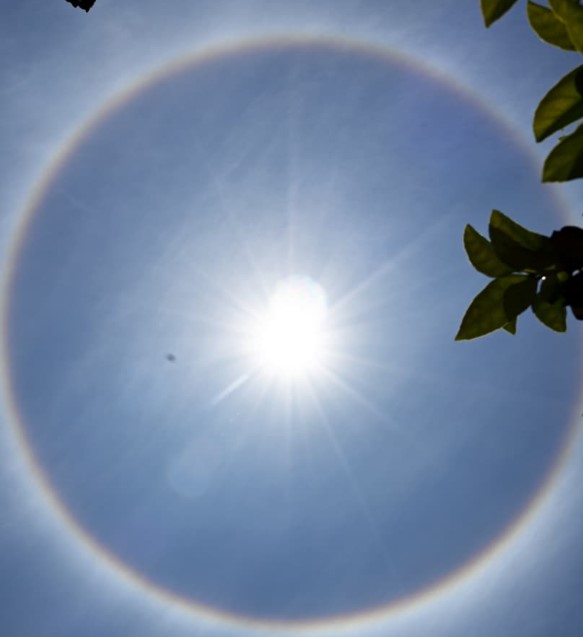
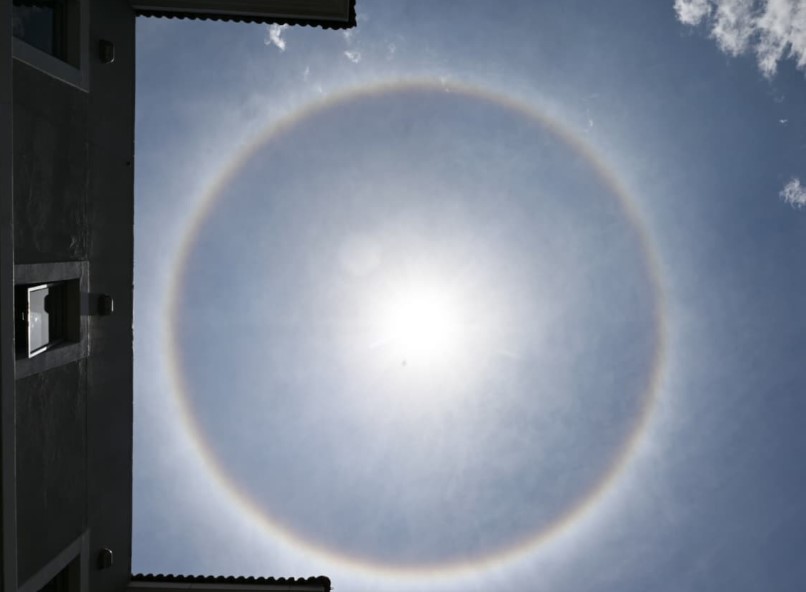
A solar halo was visible across parts of Gauteng and North West on Monday morning, with the South African Weather Service (SAWS) attributing the circular ring around the sun to ice crystals in high-altitude clouds.
The phenomenon, known as a 22-degree solar halo, was reported in Johannesburg, Pretoria, Hartbeespoort and Rustenburg.
SAWS forecaster Lehlohonolo Thobela told The Citizen that the halo followed overnight thunderstorms in parts of Gauteng.
“After an evening of thunderstorms in Gauteng, with a lot of lightning, thunder, as well as heavy downpours in some parts of the province, residents have woken up to a beautiful picture of a bright and circular type of light around the sun,” Thobela said.
He said that the halo forms when sunlight passes through hexagonal ice crystals suspended in high-altitude cirrus clouds.
The crystals refract sunlight, producing a ring approximately 22 degrees from the sun.
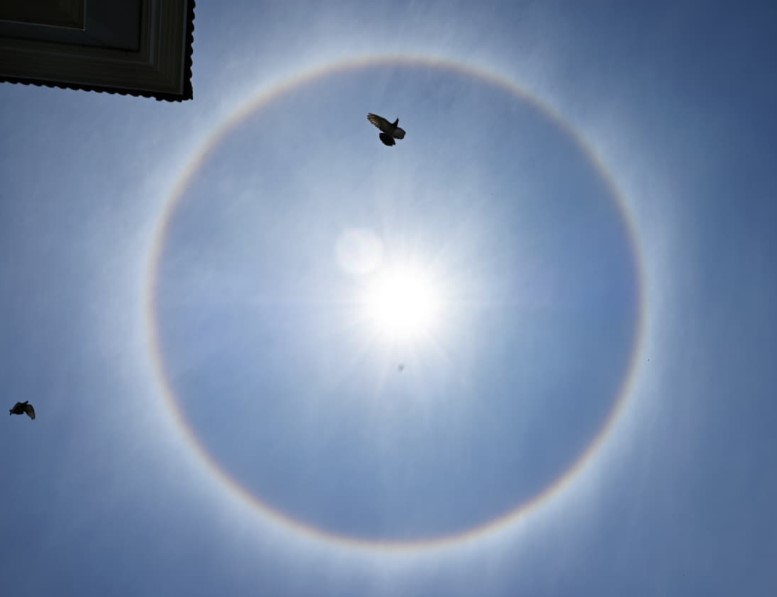
According to the World Meteorological Organisation (WMO), 22-degree halos are among the most commonly observed atmospheric optical phenomena. They generally appear white but can display faint red colouring along the inner edge.
Although halos can occur ahead of approaching weather systems, their appearance does not necessarily indicate that rain is imminent.
SAWS had forecast partly cloudy and warm conditions in Gauteng on Monday, with scattered afternoon showers and thundershowers.
The South African National Space Agency (SANSA) reported low solar activity on Monday, with no significant solar flares recorded during the preceding 24 hours.
The halo is an atmospheric phenomenon and is unrelated to changes in solar activity.
While it is harmless, looking directly at the sun can cause permanent eye damage.
INSIDE POLITICS






