



By Akani Nkuna
President Cyril Ramaphosa has called on Southern African Development Community (SADC) member states to accelerate regional integration and intra-SADC trade to harness the region’s full economic potential, while discouraging the continued export of raw minerals for processing outside the region and continent.
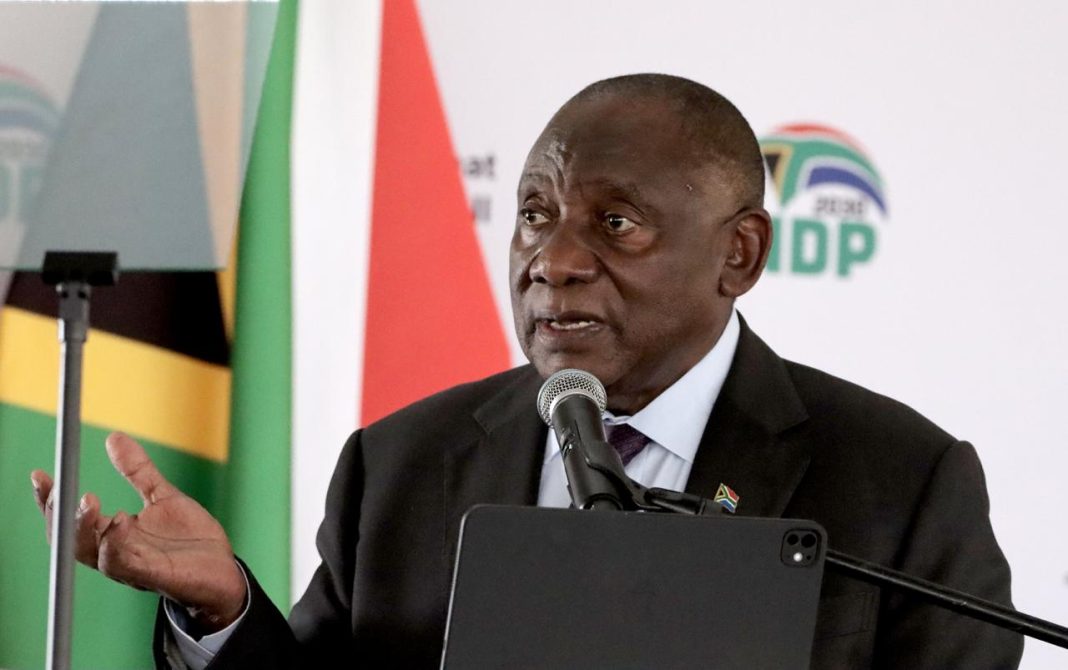
Speaking at the 46th Ordinary Summit in Durban on Monday, Ramaphosa said the pace of transformation in the region remained too slow, adding that the region continues to import goods and procure services from outside SADC despite having the capacity to produce and provide them within the region.
“Our region recorded economic growth of approximately 3.4 per cent in 2025. Yet intra-SADC trade accounted for only around one-fifth of the region’s total trade. After decades of integration, we have not yet unlocked the full potential of our regional market,” he said.
“We continue to import too many goods that we could produce within our region. We continue to export raw materials that we could process and beneficiate ourselves. We continue to procure services from elsewhere that our own people and businesses have the skills and capacity to provide.”
The summit brought together heads of state and government, ministers and delegations from across SADC to reflect and chart a way forward on how the region can cooperate to address the many challenges confronting it, including infrastructure development.
Ramaphosa said that raw minerals exported from the region without beneficiation, despite the capacity and skills needed to process them locally, represented a loss of value to the detriment of businesses and local communities.
He added that imported products that could competitively be manufactured locally represented jobs that could have been created in the region, saying that across the 16 SADC member states there was a plethora of skills that could be deployed to benefit the region.
ALSO READ: Cat Matlala’s lawyer clashes with Madlanga Commission over right against self-incrimination
The Durban summit marks the start of South Africa’s 12-month tenure as chair of SADC. South Africa had served as interim chair since November 2025 after Madagascar, which assumed the chairmanship in August 2025, relinquished the role following political developments in that country. Zimbabwe, as the outgoing chair before Madagascar, assisted during the interim period by hosting selected SADC meetings.
Ramaphosa told delegates to accelerate implementation of the Regional Indicative Strategic Development Plan 2020-2030, including deepening industrialisation and building regional value chains.
“We need roads that link our countries, efficient railways that carry minerals and manufactured goods, and modern ports that connect Southern Africa to continental and global markets,” he said.
He also highlighted the need to strengthen the region’s energy, water and digital security, including expanding electricity generation and transmission capacity and deepening cooperation through the Southern African Power Pool.
He highlighted the imperative to build climate-resilient food systems to enable SADC to use its land, climate diversity and agricultural expertise to feed its communities and become a major global producer of food.
He said SADC must also make full use of the opportunities presented by the African Continental Free Trade Area to gain greater access to the continental market.
“But this will require us to remove non-tariff barriers, improve border management, harmonise standards and make it easier for goods, services, capital and skills to move across our region.
“Our decisions must be implemented. They must be properly costed, funded, assigned and monitored. Our communiqués must become construction sites, factories, power lines, water systems, laboratories, businesses and jobs,” Ramaphosa said.
ALSO READ: Building an integrated, productive and prosperous Southern Africa
Meanwhile, SADC Executive Secretary Elias Magosi emphasised the need for industrialisation and economic diversity as some of the ways the region can achieve its development goals, saying reliable infrastructure and transport networks were essential to strengthening regional competitiveness and economic growth.
“We should continue building a region that is united in purpose, resilient in the face of challenges, and steadfast in advancing the prosperity and dignity of all its people. We should build a SADC where peace prevails, economies grow, industries flourish, trade expands, young people thrive, and opportunity reaches every community,” he said.






