
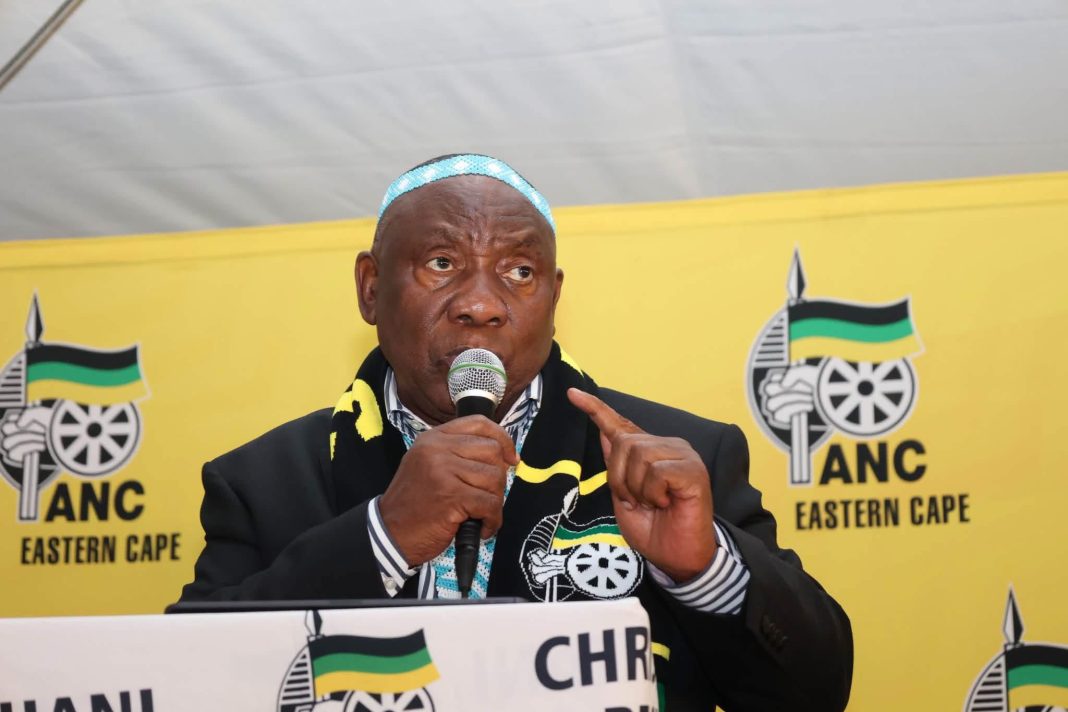
By Akani Nkuna
President Cyril Ramaphosa has reaffirmed the role of traditional leaders in South Africa’s constitutional democracy, saying kings, queens and traditional leaders remain central to community development and nation-building as government continues reforms to address the legacy of apartheid-era interference in traditional leadership structures.
“As much as we are a Republic where democracy thrives and leaders are elected to govern the country, we must respect traditional leadership. We must respect our Kings, Queens and other traditional leaders,” Ramaphosa said.
“As we do that, we will need to develop processes as well as the conditions for them to lead. Remember that apartheid contaminated kingship matters and abused our Kings by removing some and installing others. Now, we are streamlining everything.”
Ramaphosa was speaking on Monday at the ANC’s Chris Hani Region Volunteers Drive at the Qamata Great Palace in Cofimvaba, Eastern Cape.
The programme forms part of the party’s campaign to mobilise volunteers and strengthen grassroots structures ahead of the 2026 local government elections.
Addressing the royal household and community leaders, Ramaphosa said government was working to improve the remuneration and benefits of traditional leaders.
“I personally wish that everyone who works for government gets enough salary to live on, medical aid, pension so that they are well taken care of even in old age. For now, these things are being introduced bit by bit, but they are going to be there,” he said.
Ramaphosa’s visit comes as the ANC continues efforts to stabilise its leadership in the Eastern Cape, where the party has yet to establish a permanent provincial executive.
A provincial conference scheduled for March was halted after three ANC members – Lwazi Rotya, Sinethemba Mpande and Nompumelelo Mzothwa – successfully obtained an interdict, citing branch irregularities and flawed membership verification.
ANC Secretary-General Fikile Mbalula later appointed a Provincial Task Team (PTT), but the move was challenged in court.
The Makhanda High Court subsequently ruled that the PTT was unlawful and unconstitutional, finding that its establishment was inconsistent with the ANC’s constitution.
Judge Vuyokazi Noncembu also ordered that the branch general meeting data underpinning preparations for the provincial conference be handed to the applicants.
The court ruled that no process to elect new provincial leadership could proceed until that order had been complied with.
INSIDE POLITICS





