

By Thabang Chiloane
When I first met Ma’am, I was already in mourning.Not the kind of mourning that follows the loss of a loved one, but a smaller, rather personal bereavement. I was about to become spokesperson to the first woman Deputy President of South Africa, and a well-meaning colleague decided to prepare me for the encounter.
“If you want to last as her spokesperson,” I was warned, “your looks are not going to impress the Deputy President.”
I was bewildered.
I had not created my face, I protested, nor had I paid for plastic surgery. What exactly was I supposed to do about my looks?
My colleague laughed.
She was not talking about my face.
She was talking about my hair.
At the time, I had neat dreadlocks that fell to my shoulders. Apparently, the educator and disciplinarian in Deputy President Phumzile Mlambo-Ngcuka was not going to have a “Rastaman” for a spokesperson.
So, on the eve of meeting her officially, the dreadlocks came off.
I mourned them quietly.
When I walked into her presence the following day, she looked at me, smiled knowingly and said:
“I see you are well prepared. Fresh haircut!”
I smiled back.
Somewhere inside, I shed a tear for my departed locks.
And so began one of the most extraordinary chapters of my life.
For the next two and a half years, I had the privilege of serving as Ma’am’s spokesperson. What I thought was going to be a demanding job in government became something much bigger: a masterclass in leadership, governance, diplomacy, humanity and, ultimately, life.
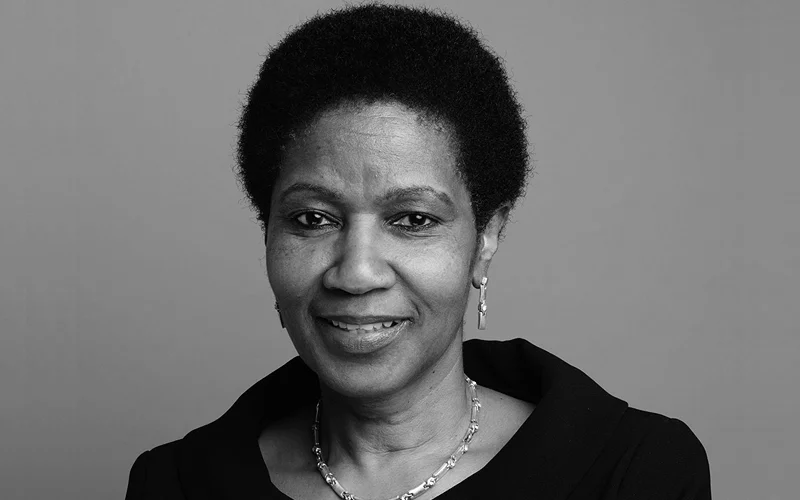
Since news of her passing, South Africa and the world have rightly remembered an extraordinary public figure: a freedom fighter, Cabinet minister, South Africa’s first woman Deputy President, international stateswoman, educator and global champion for women and girls.
I cannot improve upon those tributes.
Instead, I want to remember the woman behind the titles.
The Ma’am we knew.
The woman who taught me that leadership could be formidable without being cruel; that authority did not require arrogance; and that it was possible to occupy the highest offices in the land without losing the capacity to see the human being standing in front of you.
The mother I met at 32
I have often thought that I was fortunate enough to have two mothers.
There is the mother who gave birth to me.
Then there was the mother I met when I was 32-years-old.
I joined the Office of the Deputy President around that age. I was young, ambitious and, as young professionals sometimes are, more confident on some days than I had reason to be and deeply uncertain on others.
What struck me was the respect Ma’am gave me.
Here was one of the most powerful people in South Africa, a woman old enough to be my mother, who nevertheless expected me to have a view.
When self-doubt crept in, she reminded me why I was there.
She had appointed me to advise her on communication and reputation. If I was merely going to agree with her, I was of little use to her.
That was liberating.
It meant I could think. I could argue. I could persuade. Sometimes I could tell the Deputy President of South Africa that the way she wanted to communicate something might not work.
And she would listen.
Not always agree.
But listen.
That distinction taught me more about leadership than many textbooks ever could.
Never kick someone when they are down
Ma’am was compassionate über alles.
Politics can make good people hard.
Those of us around powerful political figures easily become consumed by the battle of the day. Sometimes, fuelled by the exuberance of youth, we were ready with sharp statements and sharper words for people we believed had wronged us.
There were moments when our instincts were almost primal: an opponent was wounded and we wanted to pounce.
Ma’am would stop us.
Never kick somebody when they are down, she would remind us.
Even when you believe that person has hurt you.
Even when retaliation feels justified.
Even when you have the power to do it.
There was no grand lecture. She simply brought us back to our humanity.
And when she disciplined us, she somehow did it in a way that made you leave determined not to disappoint her again.
That was Ma’am.
Firm, but never needlessly cruel.
Demanding, but deeply humane.
Powerful, but never intoxicated by power.
She taught us that the true test of power is not what you can do to someone when you have the advantage. It is what you choose not to do.
The same woman everywhere
Being the spokesperson to a Deputy President takes you into spaces very few people see.
My work brought me into the public grandeur of high office, but also into the deeply personal corners of her life.
I saw her carrying the responsibilities of the state, but I was also present during painful family moments, including the passing of her father.
I watched her engage global personalities such as Sir Richard Branson and other international leaders.
Then, sometimes days later, I would watch the same woman talking to ordinary people in rural villages in Venda, Mpumalanga, KwaZulu-Natal, the Free State, North West and the Eastern Cape.
This is perhaps one of the things I most want people to know about Phumzile Mlambo-Ngcuka.
She did not change according to the room.
The person who walked into rooms of international power was fundamentally the same person who sat with people at grassroots level.
Sleek. Smart. Warm. Curious.
Cool, calm and collected.
She understood the dignity of office, but she never confused the office with herself.
Then there was Bhalacisha
Of course, our memories of Ma’am are not all solemn.
Those of us who worked around her had a nickname for her: Bhalacisha.
Roughly understood, it captured her habit of writing, changing, correcting and rewriting.
Perfectionism was part of her DNA.
You could believe that a speech was finally finished, only for Ma’am to have another thought 30 minutes before delivery.
Suddenly I would be running around looking for somewhere to print Version 7, Version 8 or Version 12.
Eventually I surrendered.
I bought myself a portable printer and a tablet.
Wherever the Deputy President went, a small mobile communications office travelled with me.
Surely, I thought, technology had finally defeated Bhalacisha.
I was wrong.
Because Ma’am could defeat the printer simply by having a new idea while standing at the podium.
She would look up from the prepared text and inspiration would take over.
And there I would be, frantically taking notes, trying to capture the newest thoughts that existed nowhere in the carefully approved speech in my hand.
Eventually she knew what we called her.
And, in that wonderful way she had, she embraced the nickname herself.
Those frantic moments seem precious now.
What I would give today for one more last-minute change.
One more version.
One more dash to the printer.
One more: “Thabang, I think we must say this differently.”
Her particular love for the girl-child
There was, however, an aspect of Ma’am’s leadership about which she was utterly serious: creating space for young women.
She was a mentor of note.
When she saw potential in a young woman who was prepared to work, she invested herself in that person’s success.
Not symbolically.
Practically.
She opened doors.
She created opportunities.
She followed progress.
She believed that the advancement of women could not remain a slogan uttered from podiums. Someone had to physically hold the door open while another woman walked through it.
Her enthusiastic support for initiatives that exposed young girls to workplaces reflected that instinct. Some of the young women whose paths crossed hers went on to establish successful careers in the media, business and other sectors.
That was not accidental.
For Ma’am, “lifting as you climb” was not a fashionable phrase.
It was a way of life.
Her later global leadership would make that commitment visible around the world. But those of us who knew her closely had already seen its most intimate expression: one young woman at a time, one opportunity at a time, one door at a time.
What power could not change
History will record the offices.
History will record the policies, the speeches, the diplomatic engagements and the battles fought.
It will record Phumzile Mlambo-Ngcuka as the first woman to become Deputy President of democratic South Africa and as a South African who went on to occupy one of the world’s most important platforms for advancing the rights of women.
But those things alone cannot explain why her death hurts so deeply.
Titles tell us what someone achieved.
They do not always tell us who that person was.
I knew a Phumzile Mlambo-Ngcuka who could be exacting about a speech one moment and deeply concerned about another person’s wellbeing the next.
A leader who expected excellence but understood human frailty.
A woman who could sit among the powerful without becoming consumed by power.
A disciplinarian whose correction was accompanied by care.
A mentor who understood that reaching the top was meaningless if nobody else found a way up because you had been there.
And a boss who became, to me, something much more difficult to describe.
A second mother.
There are moments after someone dies when your mind rebels against the permanence of death.
You think of picking up the phone.
You imagine one more conversation.
You remember unfinished sentences.
And you find yourself wanting to say: “Mama, look how far we have come because of you.”
Perhaps that is why, amid the sadness, I return to the words that best capture how I remember her:
You lifted us as you climbed
Mama, you climbed the mountains before us
so that we would know they could be climbed.
You walked the roads before us
so that our feet would know where to go.
You opened doors before us
so that we would never have to knock alone.
And every time you rose,
you reached back for someone else.
You lifted us as you climbed.
When we cried,
you gave us your shoulder.
When we doubted,
you gave us courage.
When we lost our way,
you became our compass.
You were more than a leader.
You were a mother.
A mentor.
A hero.
A light.
And now that light has travelled beyond our sight.
We wish for one more conversation,
one more embrace,
one more frantic change to a speech,
one more moment to say:
“Mama, look how far we have come because of you.”
But perhaps our greatest tribute
cannot be our tears alone.
It must be in the lives we choose to lead.
To serve.
To love.
To lead without losing our humanity.
To open doors.
To make a way for others.
And whenever life allows us to rise,
to turn around, reach back
and lift somebody else.
Because that is what you did, Mama.
You lifted as you climbed.
And because you lifted us,
we too can climb.
Rest now, Ma’am.
Your work lives on in us.
Your courage lives on in us.
Your humanity lives on in us.
And somewhere, I would like to imagine, there are no speeches left to correct and no spokesperson anxiously waiting beside a portable printer.
Siyabonga, Mama.
Siyabonga kakhulu.
Hamba kahle, Qhawekazi.
Lala ngokuthula.
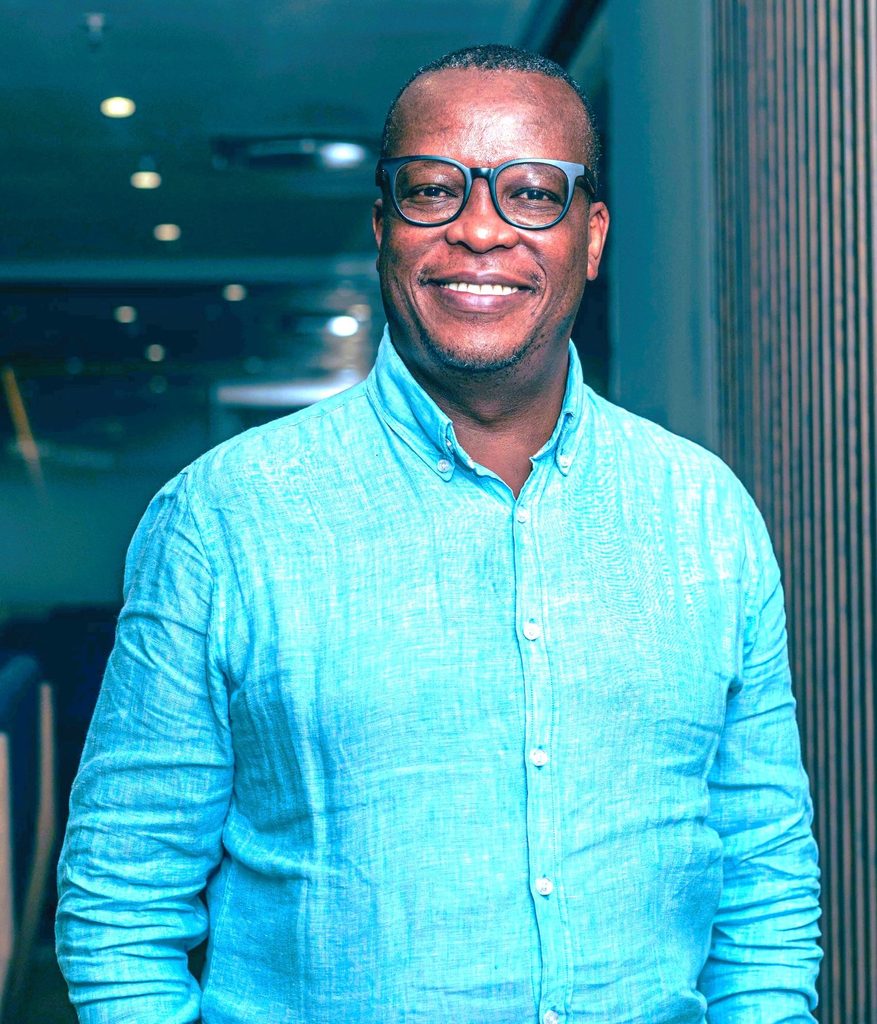
Thabang Chiloane served as spokesperson to Phumzile Mlambo-Ngcuka during her tenure as Deputy President of South Africa.
INSIDE POLITICS