
- Advertisement -

Ramaphosa urges GNU ministers to share credit and blame, defends BBBEE

- Advertisement -

Must read

By Simon Nare

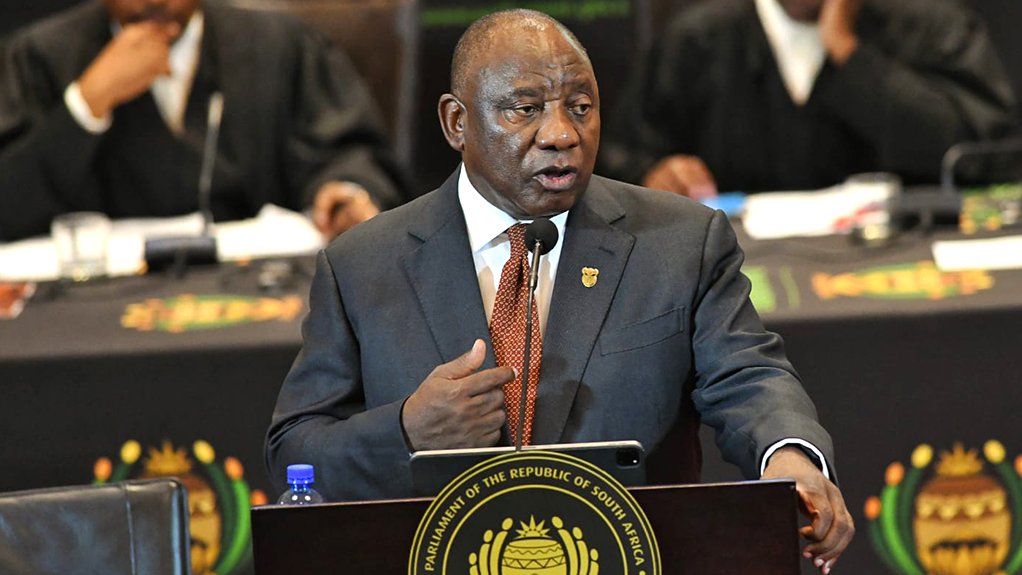
President Cyril Ramaphosa has rebuked ministers and deputy ministers in the Government of National Unity (GNU) for claiming successes along party lines while blaming failures on the ANC, saying coalition partners must share both successes and failures.

Responding to the two-day debate on his State of the Nation Address (SONA) in a joint sitting of the National Assembly, where opposition parties criticised his speech and commitments, Ramaphosa said there were no political parties in Cabinet, which is appointed by the president to serve the country.

Ramaphosa said while members of the executive were free to campaign for their parties outside government, every minister and deputy minister was part of a collective bound to implement a common programme — the Medium-Term Development Plan.

“There are no ANC or DA or IFP or PA or UDM or GOOD or FF Plus or PAC or Al Jama-ah ministries. No minister or deputy minister should claim their work in the GNU as an achievement of their party,” he said.

“In many cases, the foundation for these achievements was laid before they came into office. In many cases, the work to realise their objectives will continue after they have left.”

He added that recorded successes were the achievements of the collective, and by the same measure, coalition partners were jointly responsible for mistakes and shortcomings.

In response to calls from senior GNU partner the Democratic Alliance (DA) to scrap Broad-Based Black Economic Empowerment (BBBEE), Ramaphosa said now was not the time to abandon the policy when white South Africans still earned, on average, five times more than black South Africans.

He said it was unacceptable that African, coloured and Indian South Africans remained poorer and had fewer opportunities than white South Africans, and that women earned and owned less, and ran fewer businesses, than men.

“And yet there are people in this House who tell us to get rid of the measures we have put in place to correct this gross historical injustice,” he said.

“They say we must get rid of broad-based black economic empowerment, falsely claiming that it benefits only a few, that it inhibits economic growth and that it enables corruption.”

Ramaphosa argued that progress achieved through empowerment legislation was undeniable, citing changes in ownership patterns, management control, enterprise development and skills development, including more businesses owned by women.

“It is no accident that between 2006 and 2023, black African households experienced real income growth of 46%, coloured households 29% and Indian households 19%,” he said.

“It is no accident that poverty among the black African population fell from 67% in 2006 to 44% in 2023, and among the coloured population from 43% to 25% over the same period.”

Despite this progress, he said, the average income of white households remained nearly five times higher than that of black African households — a gap government must close through sustained and deliberate efforts to expand opportunity.

“Now is not the time to abandon BEE. Now is the time to make it more effective,” he said, adding that BBBEE should be seen not as a cost to the economy, but as an investment in sustainable growth.

Ramaphosa also maintained that the country’s economy had turned a corner, even if critics refused to acknowledge it. Improved economic indicators, he said, might seem abstract, but had a tangible impact on people’s lives.

Lower borrowing costs freed up resources for health, education, policing and service delivery, while reduced public debt enabled greater private-sector investment in production and jobs.

A lower inflation rate had eased the cost of living, and a declining unemployment rate meant income and hope for more families.

“And yet we still have a long way to go,” he said. “More than 10 million South Africans live below the food poverty line. More than 11 million people are unemployed.

“These are not simply statistics. They are individuals, families and communities facing hardship, violence, hunger, water cuts and longing for a better life.”

Using the analogy of beavers working together to build their dams, Ramaphosa urged GNU partners to act collectively.

“One beaver can’t change it. But a community can. They don’t wait for perfect conditions; they start with what’s in reach. One drags a branch. Another places it. Others pack mud and strengthen the weak points. Bit by bit, they raise a dam and shape a lodge — not as a monument, but as a home.”

He said the same spirit of cooperation was needed within the GNU to build a stronger South Africa.

INSIDE POLITICS

More articles

LEAVE A REPLY

Please enter your comment!
Please enter your name here

AVBOB STEP 12

Inside Education Quarterly Print Edition

Inside Metros G20 COJ Edition

JOZI MY JOZI

QCTO

Latest article



