By Johnathan Paoli
ANC President Cyril Ramaphosa has warned of a renewed global offensive against transformation, progressive policies, and multilateralism, accusing Western powers of “weaponising” international institutions to undermine African sovereignty.
Speaking at the ANC Liberation Movements Summit in Johannesburg, Ramaphosa said the continent is once again under threat—this time through “transactional diplomacy, debt traps, and AI-driven resource exploitation.”
“At the heart of this campaign lies a battle for control—not only of our politics, but of our critical and rare minerals needed for green technology and the digital economy,” he said.
“There has been ample evidence that international actors use the legitimate grievances of the people in developing economies to attack progressive governments.”
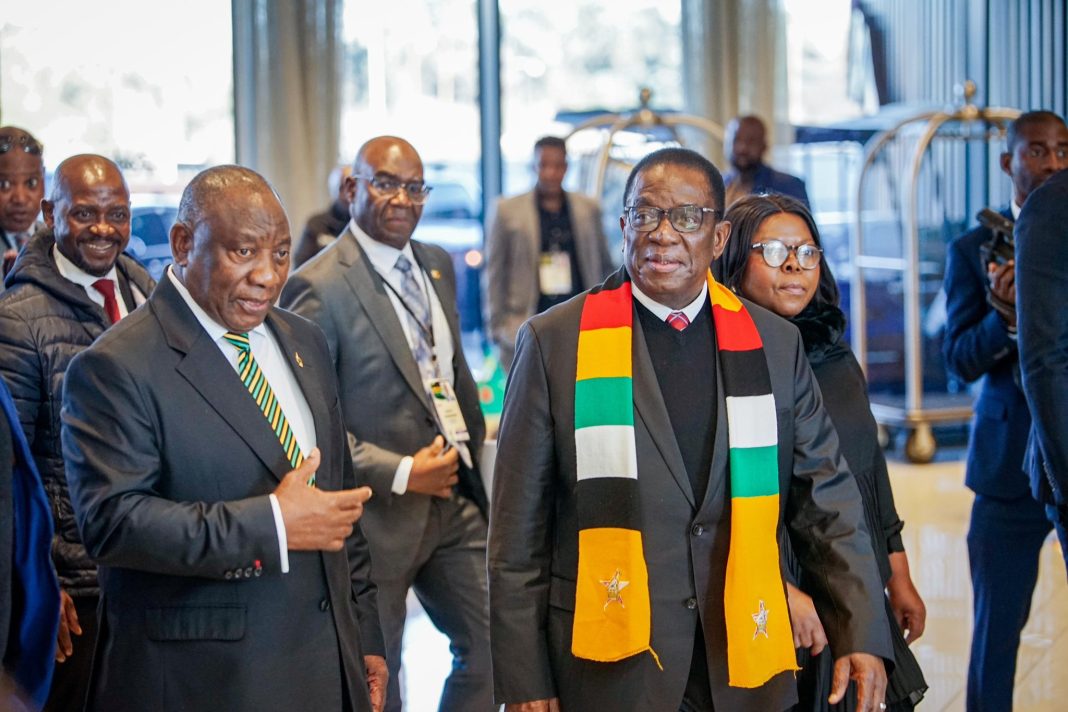
The four-day summit is attended by representatives from Zimbabwe, Mozambique, Namibia, Tanzania, Angola, and SA.
The summit brought together liberation movements including Frelimo (Mozambique), MPLA (Angola), Zanu-PF (Zimbabwe), CCM (Tanzania), Swapo (Namibia), and the ANC.
Fraternal allies such as the Communist Party of China, Fatah (Palestine), the Polisario Front (Western Sahara), and other global solidarity movements were also in attendance.
Among the dignitaries in attendance were former Mozambican president Joaquim Chissano, former South African president Thabo Mbeki, Zimbabwean president Emmerson Mnangagwa, and Namibian president Ndemupelila Netumbo Nandi-Ndaitwah
Ramaphosa’s remarks comes as controversial bill in the United States Congress seeks to cut off direct aid to South Africa and impose targeted sanctions on its political leaders.
The bill cites South Africa’s legal case against Israel at the International Court of Justice and its growing diplomatic ties with Iran and Hamas.
The US is also imposing a 30% tariff on a wide range of South African exports, effective August 1, 2025.
“There is a battle for our data, our land, our people and our future. This is a new scramble for Africa. But this time, it is not a scramble for territory. It is digital, economic, ideological and ecological scramble,” said Ramaphosa.
“For centuries, Africa has paid the price for the rapid industrial development of the Global North. Our people were enslaved and subjugated, our land was occupied, our natural resources were stolen.”
The president also warned that liberation movements are under siege, facing electoral decline, disillusioned youth, entrenched inequality, and foreign interference.
“Although Africa is not responsible for the climate crisis, we bear the brunt of its consequences. Historical justice demands the world help close the financing gaps we face,” said Ramaphosa.
“We must recognise that our political independence is incomplete without economic justice. It is incomplete without land reform, industrialisation, manufacturing, beneficiation and the creation of jobs for our youth.”
Turning to international solidarity, Ramaphosa issued a strong condemnation of what he described as “the genocide against Palestinians” by the Israeli state.
“We are horrified by the deliberate starvation of Gaza. Food and aid must reach those in need immediately. The murder of children through starvation must stop,” he said.
Ramaphosa reiterated South Africa’s unwavering support for the struggles of Palestine, Western Sahara, and Cuba.
ANC Secretary-General Fikile Mbalula acknowledged the mounting challenges facing liberation movements, including factionalism, patronage, ideological drift, and a growing disconnection from the masses.
“There is patronage, ideological confusion, disconnection from the people, and the collapse of cadre discipline,” Mbalula said, adding that foreign forces are also contributing to these internal struggles.
He noted that there was consensus at the summit on the need for liberation parties to return to their founding principles.
“We emerged united on several core principles, which will be outlined in the summit declaration and programme of action. We reaffirmed that our destiny is a shared one. We reject all forms of foreign interference, neocolonialism, and digital imperialism,” he said.
Mbalula said the summit would produce a declaration reaffirming a collective rejection of neo-colonialism, foreign interference, and digital imperialism, while committing to a shared programme of ideological and structural renewal.
“In the closed session, we moved from diagnosis to coordination,” he said.
“Representatives of the ANC, SWAPO, MPLA, CCM, ZANU-PF, and FRELIMO engaged in a robust discussion about the internal weaknesses of our movements—patronage, ideological drift, disconnection from the masses, and the collapse of cadre discipline. We emerged united on several key principles, which will be codified in the Summit Declaration and Programme of Action.”
INSIDE POLITICS