By Thapelo Molefe
The South African Communist Party (SACP) has lashed out at the ANC following its decision to boycott the Conference of the Left, accusing the party of adopting an “arrogant, isolationist and self-glorifying posture” towards working-class organisations.
In a response issued on Wednesday, the SACP rejected remarks made by ANC Secretary-General Fikile Mbalula after the ANC National Executive Committee resolved not to attend the conference, scheduled to take place in Boksburg from Friday to Sunday.
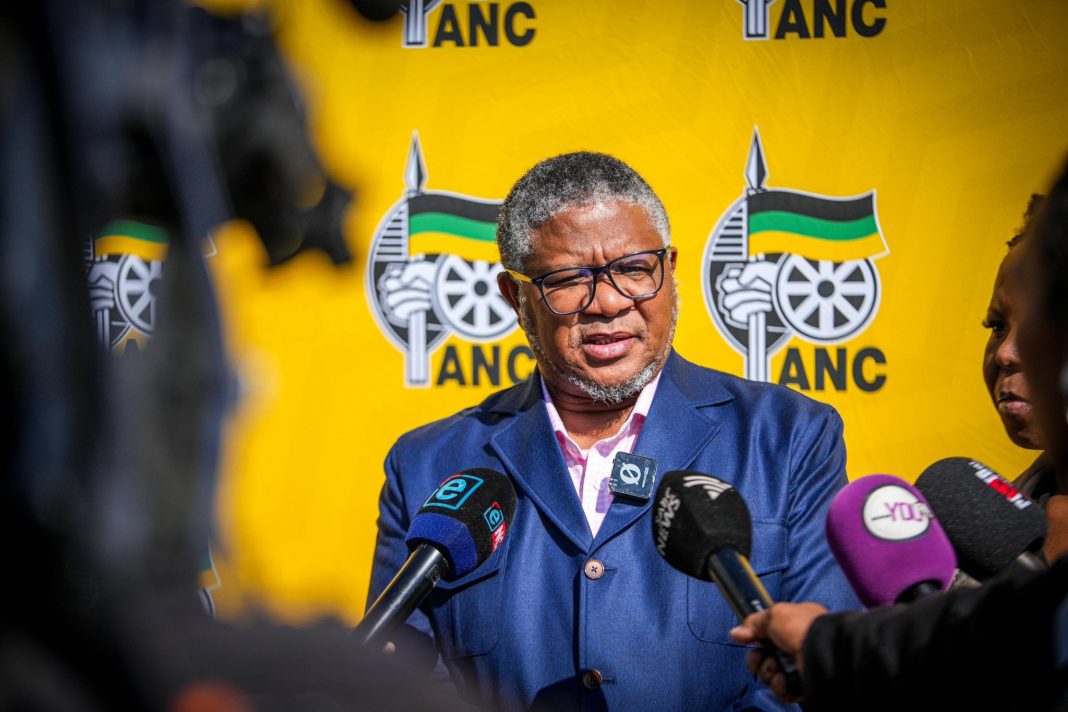
The ANC had described the gathering as “a coalition of negation” aimed primarily at opposing the ANC and questioned whether it could legitimately be regarded as a left-wing formation.
ALSO READ: DA wins first Gauteng township ward
Responding to the criticism, the SACP said the ANC leadership had wrongly reduced the conference to an anti-ANC project while dismissing the political agency of organisations participating in it.
“This logic assumes that all these forces cannot independently decide on a conference without being driven by some enmity towards the ANC,” the SACP said.
“It also assumes that any and all conferences involving these forces can only be convened to plot against the ANC.”
The communists said the ANC’s approach reflected “an inward-looking and self-glorifying tendency” among sections of its leadership.
“For a national liberation movement established with the sole purpose of forging unity among the oppressed masses, the ANC’s appetite to castigate citizens, mostly working-class people, for convening a conference to discuss critical national issues in the context of a reality that is increasingly unbearable for the most vulnerable, is not only distasteful but is also devoid of the necessary national vanguard consciousness,” the SACP said.
It also accused the ANC of attempting to distance itself from a process it had previously engaged with.
“The ANC, having been not only invited but also engaged on numerous occasions on the subject of the Conference of the Left and its overall intent and objectives, is choosing now not only to remove itself from participating in the Conference and downplay its knowledge of it but has also chosen to allocate to itself the role of its public opponent.”
The SACP defended the composition of the conference after the ANC questioned the inclusion of different political and social formations, including organisations representing informal traders and small enterprises.
“The left cannot be narrowly defined as only those formations located within the Alliance,” the SACP said.
“The left has always included trade unions, civic movements, socialist organisations, black consciousness formations, co-operatives, community struggles, progressive intellectuals, anti-imperialist formations and other forces committed to radical transformation.”
It rejected ANC claims that the conference was diluting class politics by involving organisations such as the National African Federated Chamber of Commerce and Industry.
ALSO READ: New prosecutor steps in as Sibanyoni and co-accused push back against re-enrolment
“NAFCOC and similar formations do not represent monopoly capital,” the SACP said.
“They represent mainly black micro and small enterprises, township traders, spaza shop owners, co-operatives and emerging entrepreneurs who are themselves squeezed by monopoly capital.”
The communists also reiterated criticism of the Government of National Unity, describing it as part of a broader “rightward drift” in the country’s political direction.
The dispute adds to growing strains within the Tripartite Alliance ahead of the 4 November local government elections, which the SACP has resolved to contest independently under its own banner. The ANC’s NEC has warned that the move could fragment progressive forces and said the SACP would not participate in ANC election structures, campaign activities or candidate lists. The SACP has rejected what it said was an ANC “ultimatum”, saying its decision to contest the elections directly would continue.
Despite the latest exchange, the SACP said it remained committed to the Tripartite Alliance and viewed it as “a site of principled engagement”.
“Alliance discipline cannot mean silence in the face of unemployment, poverty, inequality, austerity, corruption, weak public services and the rightward drift expressed in current political developments,” the party said.
The National Union of Metalworkers of South Africa (NUMSA) also defended its participation in the conference, saying the gathering formed part of broader efforts to unite working-class formations around a “revolutionary minimum programme”.
NUMSA said worsening unemployment, deindustrialisation, poverty and “the growth of reactionary and neo-fascist politics” made cooperation between progressive organisations necessary.