



By Johnathan Paoli
A web of WhatsApp messages, sworn statements and police intelligence reports has placed taxi bosses Joe “Ferrari” Sibanyoni and Oupa “Bafana” Sindane in the orbit of alleged izinkabi (hitmen), murder suspects and an alleged extortion network.
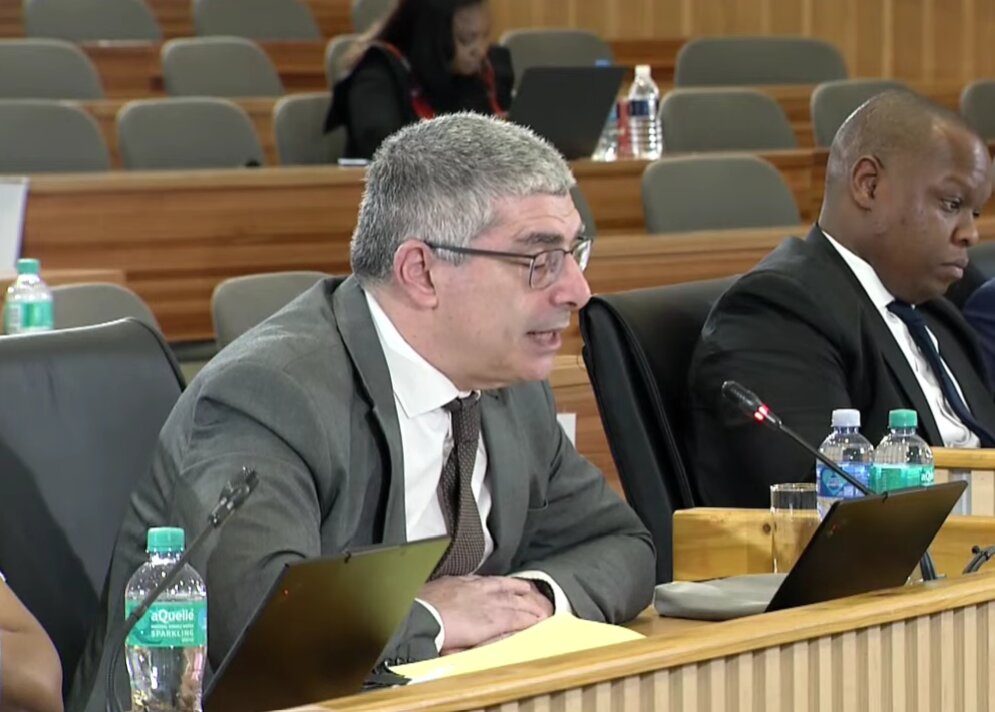
Leading evidence before the Madlanga Commission of Inquiry on Monday, evidence leader Matthew Chaskalson said the material pointed to more than commercial dealings between the pair and contractors, suggesting links to people who allegedly used violence for criminal purposes.
ALSO READ: Madlanga to file criminal charges against Khan
“But we say it also because the chats show in our submission that there is a relationship between Mr Sindane and Mr Sibanyoni and violent criminals, izinkabi and other people deploying violence for criminal purposes,” Chaskalson told the commission.
The allegations emerged as Chaskalson led the commission through evidence relating to an alleged extortion racket involving contractors operating around Kwaggafontein and the R573 Moloto Road.
At the centre of the evidence is businessman Dr Tengane Thomas Ntuli, who opened a R2.2-million extortion case against Sibanyoni and Sindane.
Ntuli alleged that he was told he had to deal with Sibanyoni to operate his business supplying aggregate concrete soil for the Moloto Road project.
He described the arrangement as “a cartel process of extortion”.
At a July 2021 meeting at Waterkloof Golf Estate, Ntuli said Sibanyoni demanded R100,000 in cash before he would “further open a channel of communication”.
Ntuli later withdrew the money from his FNB business account and returned to the same address, where he said he handed R100,000 to Sibanyoni in the presence of Sindane.
ALSO READ: Storms set to batter parts of SA
He further alleged that he was told to pay a protection fee because Sibanyoni and his associates were “the people who are looking after all the land in Kwaggafontein”.
Ntuli said the alleged arrangement was backed by threats.
According to Chaskalson, Ntuli’s own security company had been beaten, tied up with cable ties and had its weighbridge damaged, forcing him to engage a security company linked to Sibanyoni’s nephew.
Chaskalson said the WhatsApp evidence appeared to reinforce Ntuli’s account.
Sindane allegedly sent Ntuli messages demanding payment and warning that the operation could be stopped.
“I demand a response, within 48 hours, detailing why the operation should not be stopped so that you can come and account for what’s going on,” Sindane allegedly messaged.
Chaskalson said the evidence leaders regarded the threats as significant because legitimate commercial disputes were not ordinarily enforced through threats of violence.
He then turned to messages concerning a contractor seeking a meeting about a R500-million Moloto Road deal.
Sibanyoni told Sindane that the contractor “used to report at the farm for all his Soshanguve projects, but he now knows there’s a new sheriff in town”.
Chaskalson said the “farm” was an apparent reference to the compound of the late taxi boss Jotham “Mswazi” Msibi.
He inferred from the exchange that contractors had previously paid protection money to Msibi and were now approaching Sibanyoni because they believed there was a new power structure.
“There are a series of other examples in these chats that, in this context, we interpret to refer to relationships with other construction companies that are being required to pay protection into Mr Sibanyoni, Mr Sindane and their associates,” Chaskalson said.
On 2 September 2024, Sibanyoni sent Sindane messages containing the names Mandla, Norman, Mshinga, Trinity and Surprise.
Another message said Mandla had been shot and Surprise was dead.
ALSO READ: Blood-stained evidence tested in Ekurhuleni murder probe
A few days later, Sindane received what Chaskalson described as an internal SAPS Crime Intelligence “success report” concerning an operation against a group known as Kwagga 20.
The report described the group as being involved in extortion, serial killings, construction mafias, illegal firearms and taxi-related killings.
It recorded multiple murder cases and two drop-safe bombings.
One of the people listed as an escaped suspect was Mandla Mtsweni, whom Sibanyoni previously identified in his statement as his nephew.
Chaskalson said the timing was significant, with Sibanyoni allegedly forwarding information about the police operation to Sindane less than four hours after it happened.
Sindane subsequently forwarded the report back to Sibanyoni.
The commission was also taken through a separate exchange in August 2025 in which Sibanyoni sent Sindane the names of two men and asked: “Do you perhaps know the above izinkabi?”
Sibanyoni has previously denied engaging the services of izinkabi and argued that the term could refer to security guards.
Other messages included photographs of firearms and a photograph of a person with his hands tied behind his back in what appeared to be a police or security vehicle.
Chaskalson said the photograph raised questions because members of the public would not ordinarily have access to images of suspects inside police vehicles.
The commission then heard evidence concerning two men convicted of taxi-related murders, Gwabu Mahlangu and Tsehofatso Richmond Makofane, known as Morwa.
WhatsApp exchanges between Sibanyoni, Sindane and attorney Hartley Ngwato appeared to show discussions about paying the legal fees of the two convicted men.
Ngwato repeatedly complained about unpaid fees, including a demand for R250,000.
Chaskalson said the exchanges suggested that Sibanyoni and Sindane were involved in funding the men’s legal defences.
“What these chats cumulatively suggest is that Mr Sibanyoni and Mr Sindane were involved in paying the legal expenses of Mr Gwabu Mahlangu, who was convicted of a taxi-related murder, and Morwa, Mr Tsehofatso Richmond Makofane, who was also convicted of a taxi-related murder,” he said.
“And that they were essentially supporting the legal defences of these two apparent izinkabi involved in taxi killings. We’d like to find out from them why,” he added.
Despite Sindane’s lawyers previously seeking to postpone his evidence, Chaskalson said the evidence leaders believed they had “danced around Mr Sindane for too long” and wanted to proceed with the WhatsApp evidence he had sought to prevent from being released.
The commission continues.






