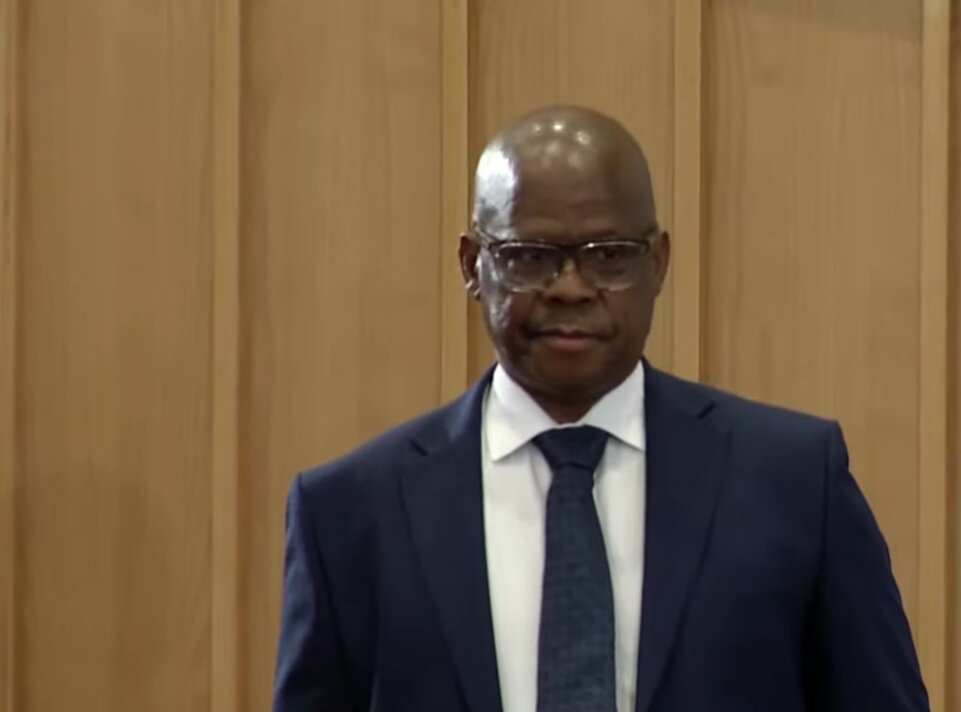


By Johnathan Paoli
Taxi boss Joe “Ferrari” Sibanyoni’s push for a 30% stake in Putco has come under scrutiny, with evidence leader Matthew Chaskalson linking his demands for local control to bus blockades, the torching of 51 buses and a subsequent attempt to buy the company.
Resuming his testimony at the Madlanga Commission on Wednesday, Sibanyoni repeatedly insisted he had been acting on behalf of local communities and not himself. But Chaskalson confronted him with his own words, including a warning to President Cyril Ramaphosa.
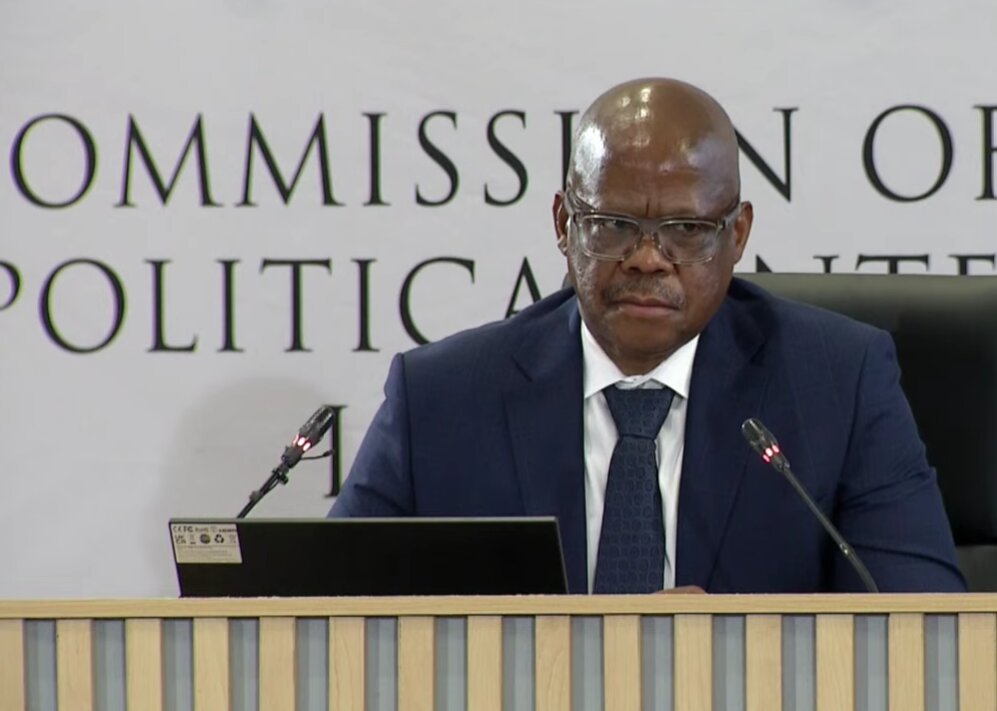
The questioning became increasingly tense when Sibanyoni objected to Chaskalson’s engagement with Putco and accused the evidence leader of making the matter personal.
ALSO READ: Police urged to revive stalled cases as violence surges
“For me, this matter becomes personal because reading from the scope of this commission doesn’t put Putco into the picture. And me listening to him, he says now his interaction with Putco is driving this matter of Putco to personalise it so that it comes back to me,” Sibanyoni said.
The explosive exchange followed a video played to the commission of a January 2024 meeting attended by Ramaphosa, Mineral and Petroleum Resources Minister Gwede Mantashe and Sibanyoni.
In the video, Sibanyoni spoke about local businesses wanting a share of Putco’s operations and said: “We are fighting for our own 30%.”
“When you find someone trying to interfere with the Putco business, you must know it’s us,” Sibanyoni told the president.
But Sibanyoni insisted “interfere” did not mean that he intended to disrupt the bus service’s operations.
“If maybe that word of interference comes out to be the other way, we can replace it with engagement so that we allow the flow of this commission. But definitely my interference was not meant in a bad way,” he said.
Sibanyoni said that local communities were entitled to 30% of Putco’s routes and business, which he linked to what he described as local-content requirements.
Sibanyoni said he and other local business interests had held repeated meetings with Putco, including meetings at the Centurion Clubhouse.
He also maintained that Putco’s month-to-month contract prevented it from giving local businesses the 30% allocation.
He claimed that Putco’s CEO had asked him to approach the government to help secure a longer-term contract for the bus company.
ALSO READ: Waseem Carrim appointed RAF CEO as fund faces financial crisis
But Chaskalson repeatedly tested Sibanyoni’s description of his role.
Sibanyoni initially referred to negotiating on behalf of two businesses before later saying there was only one.
He also relied in his statement on a Public Protector report dealing with Putco, but conceded he had not known that the report had subsequently been reviewed and set aside by the High Court in Pretoria 2023.
The commission heard that Putco’s buses were blocked by taxi operators more than 350 times between October 2024 and January 2025.
Sibanyoni acknowledged being aware of the blockades but said he did not know the scale of the disruptions.
Chaskalson also challenged Sibanyoni over apparently changing evidence about taxi operations on the Moloto Road (R573), running between Pretoria and the areas of KwaMhlanga and Siyabuswa in Mpumalanga.
Sibanyoni previously described a single taxi association operating the route, but on Wednesday said there were several associations and that none were affiliated to him.
The commission was shown footage from 27 January 2025 of Putco workers being attacked at gunpoint before flammable liquid was used to set buses alight.
Just over 50 buses were destroyed.
In his statement to the commission, Sibanyoni had suggested there was a “prevailing theory” that Putco itself had torched its buses amid labour and industry disputes.
He also suggested the company’s ageing fleet could have been a reason for deliberately destroying the buses.
Chaskalson challenged the theory, pointing out that there was no strike when the buses were torched.
Sibanyoni nevertheless maintained that the matter required investigation and suggested those behind the blockades may have been responsible for the fires.
Just 36 hours after the buses were torched, Sibanyoni sent fellow taxi boss and right-hand man Oupa “Bafana” Sindane a message about engaging a taxi associate in connection with buying Putco buses.
Sibanyoni said he wanted to purchase 15 old buses and donate them through his foundation to communities so they could be used to transport mourners to gravesides during funerals.
On 25 February 2025, less than a month after the fires, Taxi Choice, a company Sibanyoni acknowledged he was associated with and the financial arm of taxi association Santaco, sent Putco an unsolicited offer to buy a stake in, or the whole of, the bus company.
The company rejected the approach, saying it was not for sale. It demanded a R100 million non-refundable deposit and a minimum R2 billion cash guarantee before any further process could begin.
Sibanyoni insisted that the offer was the culmination of discussions that had started before the buses were burnt.
Chaskalson disagreed, pointing to Putco’s description of the proposal as “unsolicited” and suggesting that the chronology pointed to a concerted effort to pressure the company into selling.
“These events seem to me to point to a single process where Putco is being placed under pressure to sell and to sell to Taxi Choice. What’s your response to that?” Chaskalson asked.
Sibanyoni rejected the interpretation outright.
“I differ 100% with your findings. You understand it differently. It’s unfortunate. But my position in this matter, it’s clear and I’ve answered it before and I still maintain my answer,” he said.
Sibanyoni said Taxi Choice ultimately abandoned the proposed acquisition because it could not meet the bus company’s financial requirements.
Sibanyoni rejected the suggestion that the events formed part of a single campaign to put pressure on Putco.
The commission continues.