
By Charmaine Ndlela
Government has denied claims that Malawian nationals were “secretly” transported from Durban to Johannesburg, saying about 500 people accommodated in Newlands, Sophiatown, had come from Cape Town under arrangements for voluntary repatriation.
The Government Communication and Information System (GCIS) confirmed that approximately 500 Malawian nationals are currently being temporarily accommodated at a church facility in Newlands after being transported from Cape Town as part of arrangements coordinated by the Malawian Embassy to facilitate their voluntary return home.
“Government calls on all communities to remain calm and to allow the relevant authorities to manage the situation in a lawful, orderly and humane manner,” GCIS said.
The development follows unverified claims circulating on social media that buses allegedly linked to government repatriation efforts had transported migrants from Durban to Johannesburg instead of the buses going to Malawi.
In the ongoing anti-illegal immigrant atmosphere gripping South Africa, attention has this week also shifted to Pietermaritzburg, where officials say the number of displaced Malawian nationals continues to rise.
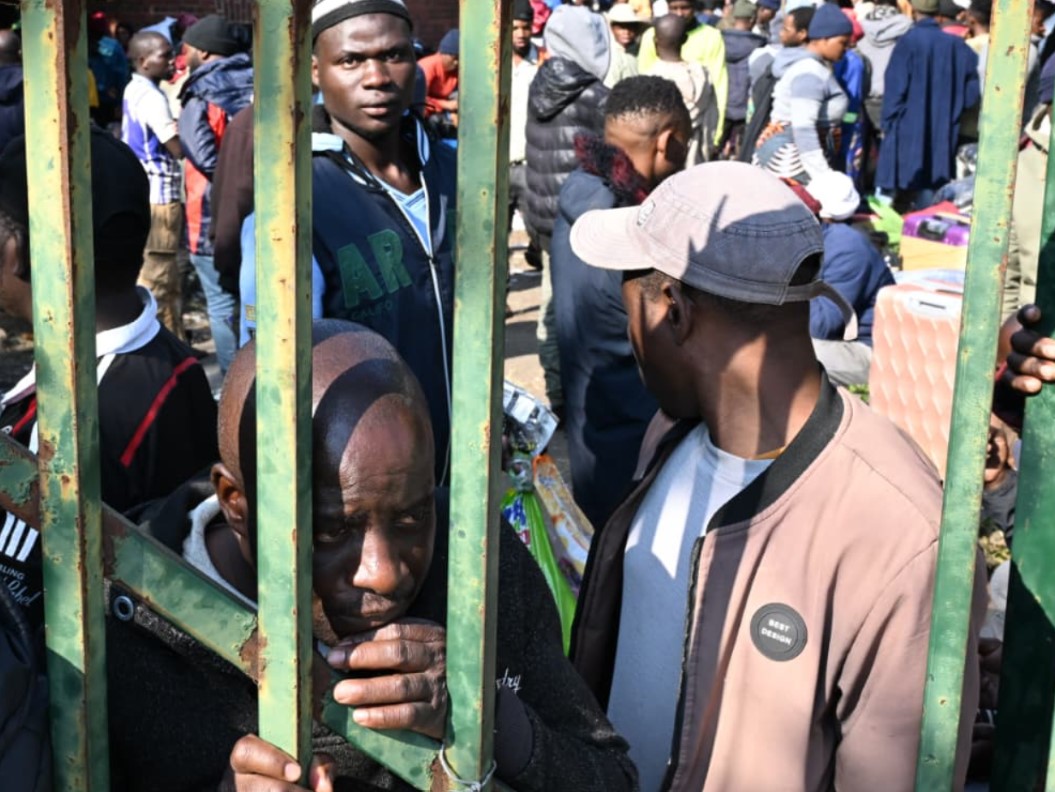
An estimated 1,600 Malawian nationals are stranded at Mayor’s Walk in Pietermaritzburg after fleeing the Jika Joe informal settlement, where tensions escalated following the fatal attack on a 29-year-old Malawian man on Friday after an anti-illegal immigrant march.
Officials say hundreds of documented and undocumented migrants have sought safety at temporary shelters in Pietermaritzburg amid fears of further attacks.
Speaking during a visit to a disused building in Mayor’s Walk, where some of the migrants are staying, KZN Premier Thamsanqa Ntuli said that the site is not an official accommodation facility and urged displaced foreign nationals not to move there.
“We are discouraging people from coming here. There is no official shelter in Pietermaritzburg, and this site will be shut down,” Ntuli said.
Ntuli said that government departments, including Cooperative Governance and Traditional Affairs and the Department of Health, together with the Msunduzi Municipality and non-governmental organisations, are providing support, including humanitarian assistance, in the area.
Ntuli criticises Malawi government
He also criticised the Malawian government for not doing enough to assist its citizens.
“We are disappointed with the extent to which the Malawi government is responding to this problem. They are not providing enough transport, as government; they should have done more to rescue their nationals who are here,” Ntuli said.
At the same time, Ntuli warned against communities taking the law into their own hands.
“We don’t want people who are going to cause chaos, violence, hatred, or xenophobia while we deal with this problem,” he said.
At media briefing on Monday about police readiness for the 30 June “deadline” set by anti-illegal immigrant groups for foreigners to leave the country, Defence Minister Angie Motshekga said the army would only be deployed if requested by police.
Acting Police Minister Firoz Cachalia said at the same briefing that SAPS had “elevated its operational readiness across all provinces” and put in place deployment plans to protect communities, critical infrastructure and public spaces.
He said that while citizens have the right to protest peacefully, “criminality, intimidation, violence, the destruction of property and any attempt to undermine public safety will not be tolerated”.
“To all South Africans, I want to assure you that the government is fully prepared,” Cachalia said.
Civil society organisation Siyafana Sonke Action Campaign has also entered the fray, warning that anti-immigrant mobilisation could trigger wider violence.
In a statement endorsed by more than 130 organisations, it urged South Africans to reject “the politics of division” and warned against scapegoating migrants for the country’s social and economic challenges.
The organisation said that anger over unemployment, crime and failing public services was being redirected toward “vulnerable communities” and cautioned that rhetoric targeting migrants could have deadly consequences.
Siyafana Sonke called on government to present a clear plan to prevent further violence and displacement.
The fear is not only among the Malawian community, with some foreign nationals elsewhere in the country seeking to leave South Africa before the 30 June protest action.
A group of Zimbabwean nationals camped outside the Zimbabwean Consulate in Cape Town last week and requested to be repatriated home, saying they no longer feel safe in South Africa.
INSIDE POLITICS





