
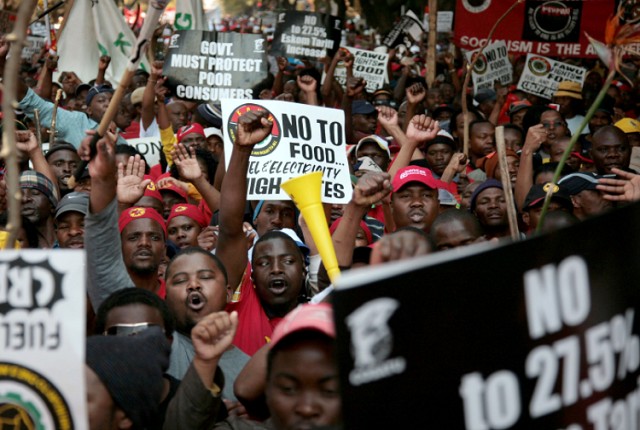
THE Congress of South African Trade Unions (Cosatu) has gone back to its initial demand for a 10% wage increase from the government after salary talks collapsed, the union federation said in a statement on its website.
“Having considered the economic outlook of government, our demands of a higher percentage above consumer-price inflation is informed by the fact that the three main items — food, electricity and public transport — which drives the expenditure patterns of our members is way above the set CPI,” Cosatu said.
Inflation in South Africa was at 7.5% in September. The government is offering a 3% increase.
South Africa’s government asked mediators to urgently intervene to help end a wage dispute with public-servant labour unions before Finance Minister Enoch Godongwana presents his mid-term budget this week.
Department of Public Service and Administration Director-General Yoliswa Makhasi asked the Commission for Conciliation, Mediation and Arbitration to help negotiate an end to the impasse in a letter seen by Bloomberg.
The Public Servants Association, which says it represents more than 230,000 state workers, on Monday filed a notice of its intention to begin a strike in seven days over the government’s failure to agree to its wage demands.
“Reaching an amicable solution to the current impasse has become extremely urgent for us in order to manage the risk of public servants not receiving any salary increases for this financial year,” Makhasi said in the letter.
State employees this month rejected an offer by the government to increase their pay by 3% and continue a non-pensionable cash allowance of R1,000 a month.
The remuneration of the state’s 1.3 million workers accounts for almost a third of total government expenditure, and keeping it in check is key to the National Treasury’s plans to rein in the budget deficit and bring runaway state debt under control.
Acting Public Service Minister Thulas Nxesi warned last week that he may impose the 3% wage increase unilaterally to help create fiscal certainty ahead of Godongwana’s budget statement on Oct. 26.
The medium-term budget policy statement makes adjustments to cater for additional funds for unforeseeable expenditure. In the current case, the unforeseen spending is estimated at R14 billion to cater for the 3% salary adjustment, Makhasi said. That amount is in addition to the R20.5 billion budgeted for the 2022-23 financial year, she said.
BLOOMBERG





