- Advertisement -

WATCH: Weak municipalities are choking jobs and investment, says Ramaphosa

- Advertisement -

Must read

By Johnathan Paoli

President Cyril Ramaphosa said on Wednesday that weak municipal services and red tape were stifling entrepreneurs and deterring investment.

Delivering the keynote address at the 2026 National Local Economic Development Summit in Ekurhuleni, Ramaphosa said municipalities must reposition themselves as “incubators of economic activity” if the country is to turn investment commitments into inclusive growth.

“South Africa has a burgeoning entrepreneurial sector that continues to increase its contribution to economic activity and job creation. Yet the entrepreneurship ecosystem as a whole still faces challenges with funding, skills training, bureaucratic barriers and integration into larger value chains. It also faces challenges within local government that constrain economic opportunity and potential,” Ramaphosa said.
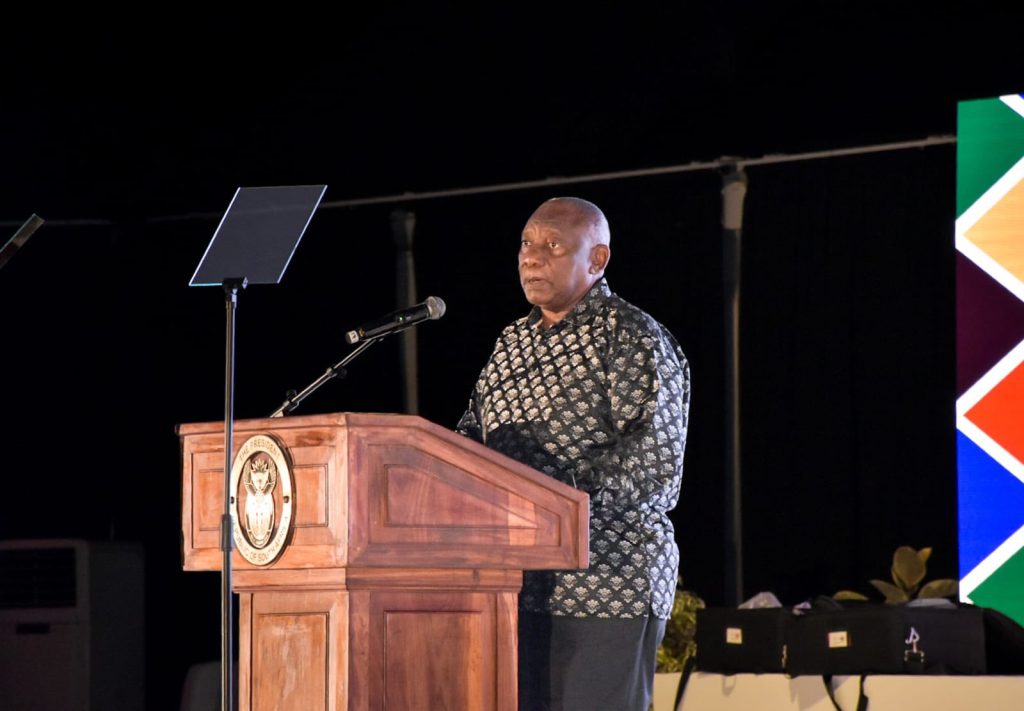
President Cyril Ramaphosa.

He said the R890 billion secured at the sixth South Africa Investment Conference would deliver little unless municipalities were able to support business activity on the ground.

“When investors build their business in our country, they don’t set up factories or open call centres on the lawns of the Union Buildings or in front of the Houses of Parliament. This investment takes place in metros, cities, towns and villages,” he said.

ALSO READ: New US ambassador Roelf Meyer to be deployed ‘immediately’, says Presidency

He said persistent failures in financial management, infrastructure upkeep, procurement and consequence management were directly feeding unreliable electricity supply, water insecurity, poor roads and unsafe trading environments.

“Without fixing governance, we cannot fix service delivery and without fixing service delivery, we cannot unlock local economic development,” he said.

He outlined four interventions, starting with efforts to unblock service delivery constraints, particularly in energy, water, roads and rail, which he said was the foundation of growth.

He also said many municipalities budget less than 1% for infrastructure maintenance, instead of the 8% required under National Treasury guidelines.

The second intervention, he said, was to improve the ease of doing business, especially for small enterprises and informal traders.

“Cutting red tape is crucial both to attract large scale investments and also to enable informal traders and small township entrepreneurs to succeed. More often than not, bureaucratic delays at municipal level prevent local investments from getting over the line… There are backlogs in issuing business licences. This must change,” Ramaphosa said.

ALSO READ: Booysen withdraws from Nkabinde Inquiry

He said municipalities needed to move beyond fragmented projects and instead provide reliable basic services and predictable infrastructure maintenance as the “Operating System of Growth”, while government would formalise the District Development Model’s “One Plan” as a binding economic transformation compact.

Ramaphosa said the fourth priority was to strengthen institutional capacity and professionalise local economic development functions.

“Appointments must be made based on merit, relevant skills, experience and qualifications, while holding people to strong ethical standards,” he said, adding that government, business and financial institutions needed a national compact to support small enterprises and infrastructure delivery.

ALSO READ: WATCH: Malema’s pre-sentencing hearing

In his welcoming address, Ekurhuleni Executive Mayor Nkosindiphile Xhakaza said local economic development was no longer a peripheral municipal function but central to the survival of cities and towns.

“As municipalities, we stand at the coalface of service delivery and economic development. Our communities are not asking for abstract policies; they are calling for tangible improvements in their daily lives. Local economic development is no longer a complementary function of municipalities; it is central to our existence,” he said.

Xhakaza said infrastructure remained the backbone of local growth, while skills development was essential to building a more inclusive economy, adding that better coordination across all three spheres of government would be needed to unlock resources and drive change.

INSIDE POLITICS

More articles

LEAVE A REPLY

Please enter your comment!
Please enter your name here

AVBOB STEP 12

Inside Education Quarterly Print Edition

Inside Metros G20 COJ Edition

JOZI MY JOZI

QCTO

Latest article