

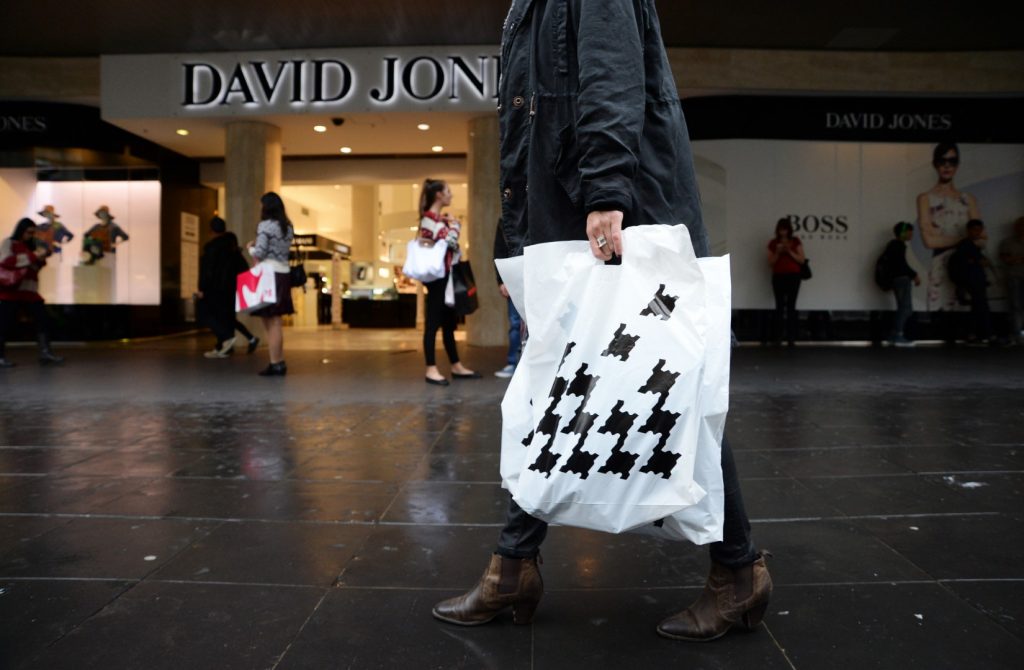


Australia’s oldest department store David Jones, previously owned by SA’s Woolworths, collapsed on Thursday, finally succumbing after almost 200 years as the digital era drove shoppers to cheaper and nimbler online rivals.
David Jones was placed into voluntary administration, a process similar to business rescue in SA that seeks to save financially distressed companies by restructuring their operations.
McGrathNicol executives were appointed as voluntary administrators, while FTI Consulting staff were named receivers, according to a statement. David Jones’s physical and online stores continue to trade while McGrathNicol seeks buyers or offers to recapitalise the business.
David Jones has ties to SA, as Woolworths bought the retailer for R21.5 billion in 2014, when Ian Moir was CEO. The decision to buy David Jones pushed Woolworths into Australia to create “a leading southern hemisphere retailer”.
David Jones was supposed to be transformative as it would also propel Woolworths to become one of the top 10 department store chains in the world.
But the purchase backfired for Woolworths and Moir.
The underperformance of David Jones meant that Woolworths wrote down its value by two-thirds, or about R14.3 billion, on its purchase price of R21.5 billion. This means that Woolworths overpaid for its bold leap Down Under and has lost more than half the value of its initial investment in David Jones since 2014.
For years, Woolworths mounted a defence for its purchase of David Jones, saying the impairments and writedowns of the business were “noncash”.
However, some investors rejected this notion, saying Woolworths lost cash on an asset for which shareholders’ cash was used to buy it.
Shareholder value was also eroded. When Woolworths completed the David Jones acquisition in 2014, its share price was trading above R105 and the investment community rendered it as a retail darling.
About R50 billion was wiped off its market capitalisation in the five years following its purchase of David Jones, due to the retailer’s underperformance.
Investors were so vexed that they implored Woolworths to sell David Jones and to fire Moir because he aggressively pushed the retailer into Australia.
Eventually, Woolworths cut its losses with David Jones, selling it in 2023 for a song (about R1.5 billion). And Moir quit as the Woolworths CEO.
David Jones
The chain’s old-fashioned and costly template of vast stores with dozens of fashion brands, beauty products and other accessories proved ill-suited to the modern-day consumer.
More recently, the out-of-date model collided with Australia’s cost-of-living crisis, intensifying pressure on household budgets. Commercial landlords said David Jones had fallen behind in its rent.
“The current retail trading environment, rising costs, a significant and outdated retail footprint, and supply-chain challenges have led to this point,” said Christopher Hill, one of the FTI Consulting receivers.
Private equity firm Anchorage Capital Partners bought David Jones in 2023.
Before the sale, Woolworths blamed several factors for David Jones failing to live up to expectations.
It cited poor fashion choices in ladieswear, repeated late starts to winter, and consumers ditching department store shopping for online shopping. Woolworths also blamed “unprecedented” economic pressures for the latest David Jones write-down, with Australia’s retail sales and economy having been sluggish for several years.
David Jones has stores at about 38 locations across Australia and New Zealand. The upmarket retailer was founded in 1838. The company is named after the Welsh-born immigrant who opened a store in central Sydney.
“We’ve changed how we shop, when we shop and where we shop,” said Gary Mortimer, a professor at Queensland University of Technology’s business faculty who specialises in retail and consumer behaviour. “We’ve seen a shift online.”
David Jones has also been hamstrung by long-dated agreements with landlords, which can leave tenants lumbered with unprofitable stores in the wrong locations for years, Mortimer said. “Commercial leasing isn’t nimble,” Mortimer said. “Maybe 70 years ago, it didn’t need to be.”
David Jones chief executive officer Erica Berchtold said in the statement that the company has a “well-developed plan on how to reset the business for the future.” She didn’t elaborate.
Iconic brand
The retailer’s failure this week extends a history of diminishing returns from the once-iconic brand.
Property group Vicinity Centres said Thursday that David Jones owed rent of about A$2.2 million as of 31 October, even though some of the stores in question were among the retailer’s most productive.
According to the Australian Financial Review, talks on Wednesday between David Jones and landlords failed to produce a resolution.
The discussions had included giving three months of rent relief to the struggling retailer and scaling back its store network, the newspaper said.
BLOOMBERG






