



By Johnathan Paoli
ActionSA leader and Johannesburg mayoral candidate Herman Mashaba has said the Democratic Alliance (DA) is no different from any other political party as his organisation prepares to negotiate coalition agreements across the political spectrum following the 2026 local government elections.
Mashaba said ActionSA had learnt from its previous coalition experience with the DA, which he described as a major political mistake, and would approach future negotiations as an independent party without giving any organisation preferential treatment.
“Last year, in 2024, I came here and I actually took you into confidence to admit that the biggest mistake we made in 2024 was our association with the DA. It was the biggest mistake we made. And immediately thereafter, I think a few days later, we went on a three-day session to come out with a way where we want South Africans to know and understand that ActionSA is a free, independent political party,” he said.
“We have absolutely nothing to do with DA. And I personally get cross. Every time we talk to, particularly you guys in the media, you always want to tell us we must talk to DA. Who is DA to us? DA is like any other party, the ANC, MK. So please, when we talk about coalition, let’s talk about all political parties. DA is not special to us as ActionSA. If they are special to you, then let it be your problem, not ActionSA’s problem.”
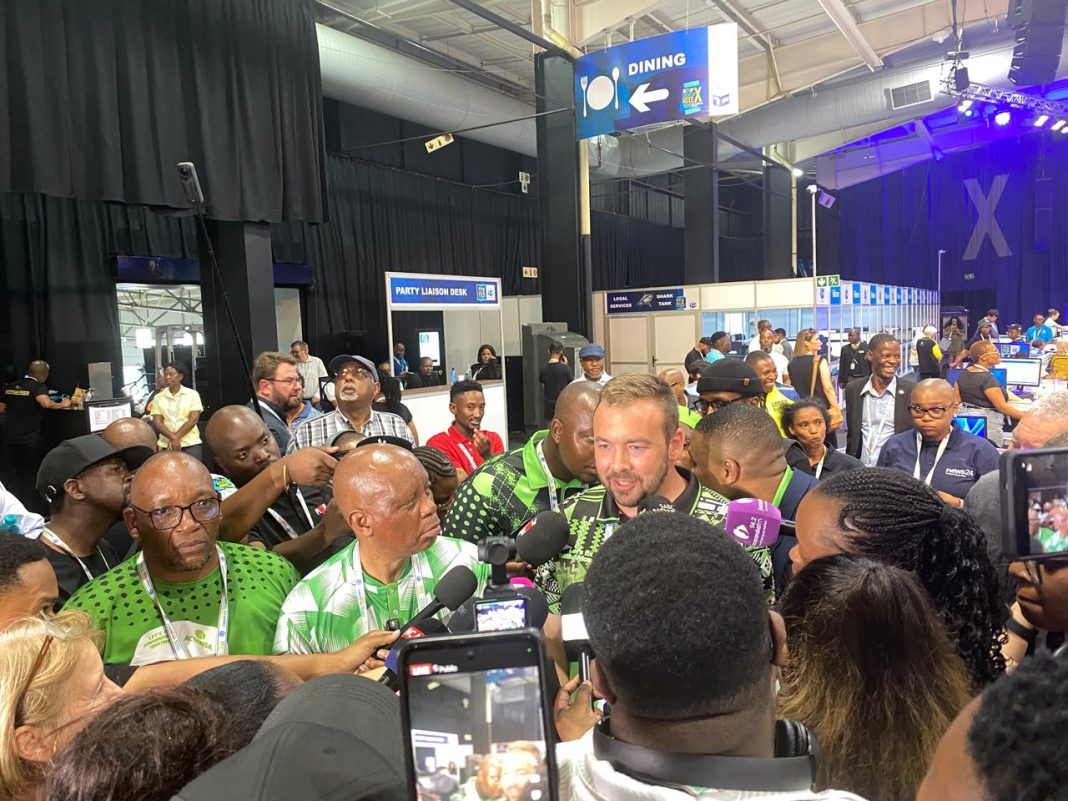
Mashaba was speaking at an ActionSA briefing on Thursday as votes continued to be counted in the local government elections. The party said it was prepared to enter coalition arrangements with political organisations across the spectrum.
ActionSA national chairperson Michael Beaumont said the party would negotiate with the ANC, DA, Economic Freedom Fighters (EFF), uMkhonto weSizwe Party (MK Party), Freedom Front Plus and other political organisations, provided they accepted its conditions for entering government.
These include commitments to service delivery across communities, fighting corruption, establishing stable administrations and addressing illegal immigration.
Beaumont said several political organisations had already approached ActionSA, although discussions remained preliminary.
“At this stage it’s talks about talks, there’s nothing really we can say beyond that because the numbers end up being part of these equations. The numbers end up so that the will of the South African people is reflected in the coalition arrangements that follow,” he said.
Mashaba said ActionSA would not begin formal coalition negotiations until the Electoral Commission of South Africa (IEC) had finalised and officially declared the election results.
The party’s approach marks a shift from its previous coalition positioning, with Mashaba acknowledging that it could not govern municipalities independently without securing an outright majority.
“If we don’t get outright majority, can we govern on our own? Because you can only govern when you have 50 plus one. So if we don’t have 50 plus one, we have to really talk to other political parties,” he said.
However, he warned that the party’s previous experience with the DA would inform its approach to future partnerships.
Mashaba also joked that he was nervous about the prospect of working with the MK Party, suggesting that its members could face dismissals before a new council even held its first meeting.
Meanwhile, ActionSA expressed confidence in its electoral performance, with Mashaba claiming that the party had secured 54 ward victories across Gauteng’s three metropolitan municipalities, with further results still outstanding.
He attributed the performance to the party’s decision, after the 2024 national elections, to keep him out of Parliament and allow him to concentrate on rebuilding the organisation.
Beaumont said 16 of the party’s claimed ward victories were in Ekurhuleni and 11 in Johannesburg, while results from areas including Orange Farm, Alexandra and Diepsloot were still to be fully reflected in the count.
In Tshwane, the DA was leading with 30.6% of the vote by lunchtime on Thursday, followed by ActionSA at 22.8% and the ANC at 21.9%.
Beaumont said ActionSA had taken 12 wards from the ANC in Tshwane, including all but one ward in Atteridgeville.
The party had also secured more than 50% support in parts of Mamelodi and Soshanguve.
He attributed the party’s performance to the leadership of Tshwane mayor Nasiphi Moya, whom Mashaba praised for her technical ability, courage and ethical leadership.
Mashaba also defended ActionSA’s position on illegal immigration, rejecting suggestions that the issue was primarily responsible for the party’s improved electoral performance.
He accused the media of focusing disproportionately on immigration at the expense of the party’s broader policy proposals, including its inner-city rejuvenation programme, which he said would create jobs, attract investment and expand housing opportunities.
ActionSA has also pledged to revive its previous Johannesburg inner-city property programme, which involved taking over abandoned buildings and leasing them to private businesses rather than selling them.
Mashaba said the party’s broader objective remained addressing poverty and inequality, particularly in communities such as Alexandra and Soweto.
INSIDE POLITICS






