
By Thapelo Molefe
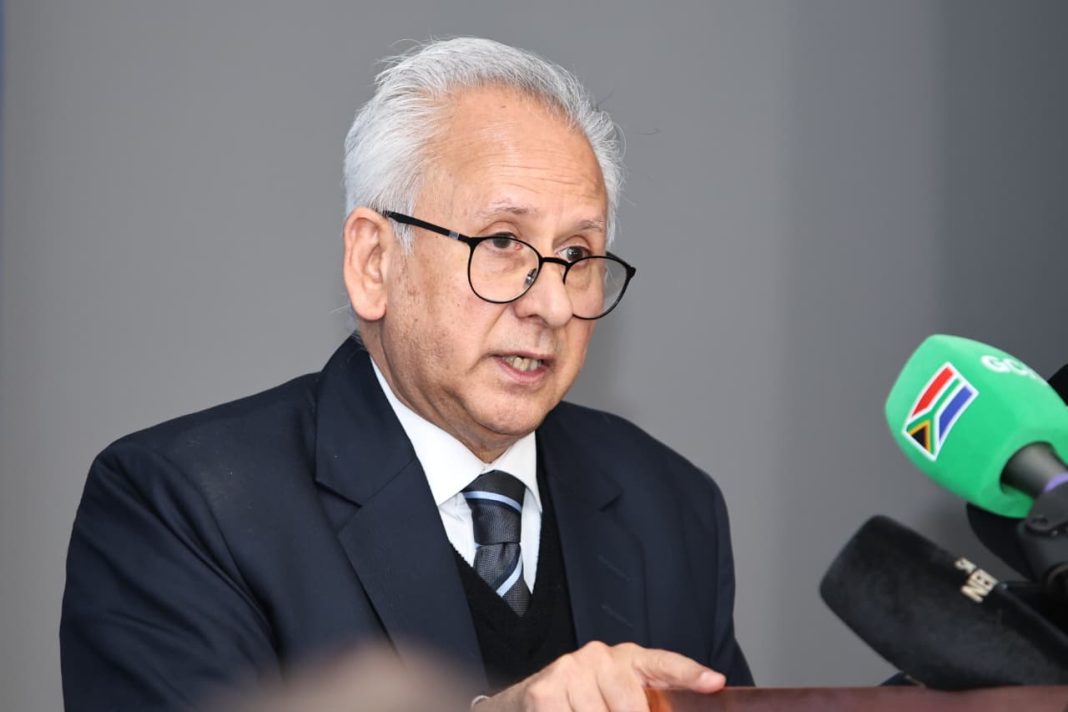
Acting police minister Firoz Cachalia says government will press ahead with sweeping reforms to the South African Police Service (SAPS) without waiting for the final Madlanga Commission report, as police battle organised crime, corruption and declining public trust.
Addressing the release of the fourth-quarter crime statistics in Pretoria on Friday, Cachalia announced a multi-year “police reset agenda” aimed at rebuilding SAPS through procurement reform, intelligence restructuring, forensic upgrades and stronger community policing.
“I have decided not to wait until August for the final report from the Commission, because the areas that require systemic reform are already clear,” Cachalia said.
The minister announced the establishment of a police advisory panel chaired by former South African Revenue Service (SARS) commissioner Edward Kieswetter to oversee the implementation of reforms and advise SAPS leadership on recommendations emerging from the commission.
Cachalia said the panel would also help lay the groundwork for a future National Policing Board proposed in the National Development Plan (NDP).
The reforms come as SAPS recorded declines in several major crime categories, including a 9.5% drop in murders and sharp reductions in trio crimes during the January-to-March period.
However, Cachalia warned that organised crime, extortion and corruption continued to threaten communities, the economy and state institutions.
“While high-flying and well-dressed criminals amass wealth and are revered by those who benefit from their illegal activities, too many of our communities will continue to suffer from drugs, shootouts, infrastructure damage and corrupt government officials,” he said.
Acting national commissioner Puleng Dimpane said the reset agenda would focus on restoring discipline, accountability and professionalism across SAPS.
“This moment demands decisive leadership. It demands honesty. It demands courage and above all, it demands action,” Dimpane said.
She said the plan would be built around three pillars: restoring police credibility through operational integrity, rebuilding public trust, and strengthening partnerships with communities and civil society.
Dimpane confirmed that mandatory vetting and lifestyle audits for senior SAPS managers were already under way with support from the State Security Agency.
“All lieutenant generals, including myself and senior managers on this podium, have already submitted to the re-vetting process,” she said.
The acting commissioner also announced procurement and technology reforms, including the planned rollout of body-worn cameras by the end of the third quarter of the current financial year.
SAPS will also overhaul its supply chain systems with assistance from the Government Technical Advisory Centre to improve transparency and accountability.
At the same time, Dimpane said police would prioritise the recruitment and training of 11,000 new constables to strengthen station-level policing and frontline visibility.
Organised crime emerged as a central theme throughout the briefing, with SAPS confirming that Gauteng remained the country’s main hub for kidnappings, carjackings and cash-in-transit robberies.
KwaZulu-Natal police commissioner Nhlanhla Mkhwanazi has been appointed to lead the national organised crime priority committee.
Cachalia said organised criminal syndicates were increasingly involved in extortion, corruption, infrastructure theft and online commercial crimes.
“These networks do not only steal money. They sabotage service delivery, collapse small businesses, and rob our people of jobs and opportunities,” he said.
During the briefing’s question-and-answer session, Mkhwanazi said police had already begun coordinating multidisciplinary teams nationally to target organised crime syndicates using a “PKTT approach” combining detectives, crime intelligence, prosecutors and forensic experts.
“We are already hard at work in coordinating different teams that are on the ground,” Mkhwanazi said.
Dimpane also confirmed that 33 SAPS employees were facing disciplinary processes linked to procurement irregularities, including the controversial Medicare 24 contract.
Of those, 19 are directly implicated in the Medicare 24 procurement matter, with 14 already placed on precautionary suspension.
Cachalia said the reset agenda would place strong emphasis on crime intelligence, detective services and forensic reforms to improve investigations and prosecution success rates.
“The police can have a substantially positive impact on community safety. But there is much more that the SAPS could do if we sort out its various challenges,” he said.
The minister said the reforms were aimed not only at reducing crime statistics but also at restoring public confidence in policing and ensuring communities feel safe.
“Our goal is not just fewer crimes, but that communities are and feel safe everywhere,” Cachalia said.
INSIDE POLITICS





