By Simon Nare
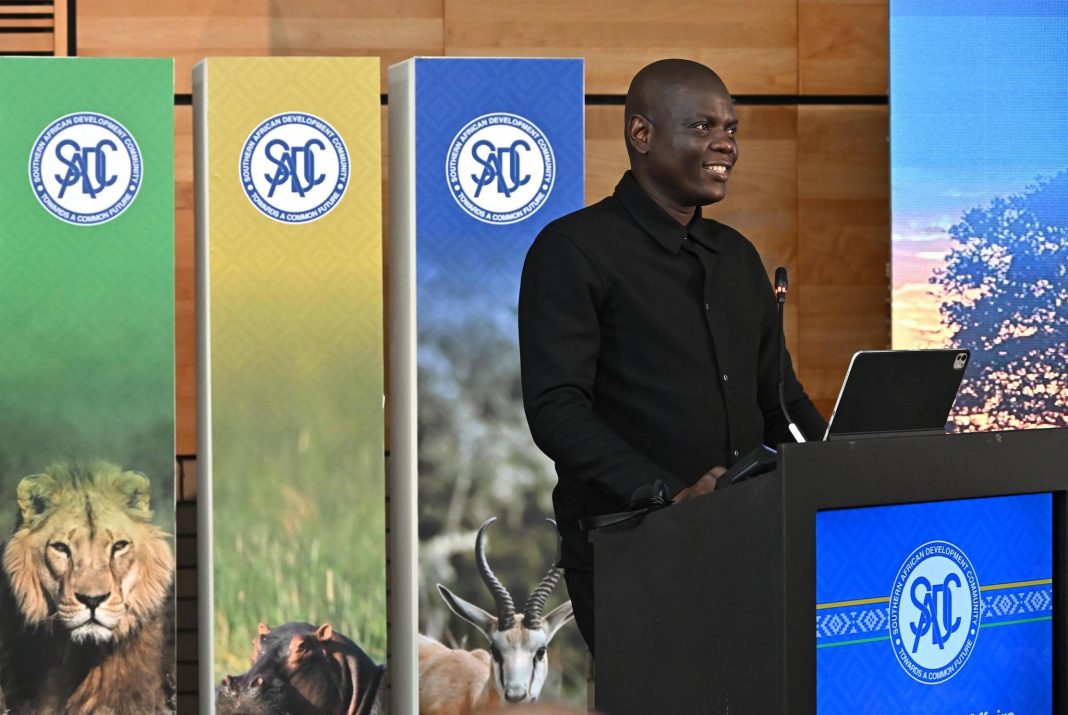
International Relations and Cooperation Minister Ronald Lamola has urged Southern African Development Community (SADC) foreign affairs ministers to confront migration challenges facing the region amid escalating anti-immigration protests in South Africa.
Addressing a retreat of SADC foreign ministers at Skukuza in the Kruger National Park on Friday, Lamola called for an honest and constructive discussion on migration and its underlying causes.
“For this reason, the region and the continent must hold constructive and comprehensive discussions on the push and pull factors of migration, including the related socio-economic, governance and security dimensions,” he said.
Lamola’s remarks come amid growing anti-immigration protests across South Africa and warnings from the March and March movement, which has given undocumented migrants until June 30, 2026, to leave the country.
The tensions have prompted countries such as Ghana to begin evacuating their citizens from South Africa.
Government has condemned the protests and called on law enforcement agencies to act, although frustrations among locals over illegal immigration and competition for jobs continue to intensify.
Lamola said South Africa recognised migration as an important contributor to regional development when managed effectively, adding that no country could succeed in isolation.
The minister reiterated government’s condemnation of attacks against foreign nationals and warned against vigilantism.
“South Africa is one of the seven SADC countries, out of 16 member states, that has ratified the 2005 SADC Protocol on the Facilitation of Movement of Persons. Similarly, South Africa supports and aligns itself with the African Union Free Movement of Persons Protocol,” he said.
He said regional discussions should also focus on infrastructure, transport and logistics, industrialisation, value chains and trade, energy, oil and gas, mineral resources, agriculture, food security and financing regional integration.
Lamola stressed that migration discussions must include the principle of burden-sharing, with attention given to countries of origin, transit and destination, as well as the root causes of irregular migration.
The minister also told delegates they were meeting at a defining moment in global geopolitics, describing the international order as undergoing profound transformation.
He said the world was shifting towards a multipolar order characterised by intensified geopolitical competition, economic fragmentation, technological rivalry and uncertainty over global peace, security and development cooperation.
“Unlike previous eras dominated by a single or bipolar power structure, today’s geopolitical landscape is characterised by multiple centres of power competing across economic, political, technological and strategic domains,” Lamola said.
“The tensions arising from this power shift are increasingly disrupting global supply chains, reshaping investment flows, intensifying territorial and resource competition and weakening multilateral cooperation.”
He said SADC needed resilient, coordinated and forward-looking responses to protect the region from global shocks.
“What emerged clearly from our discussions was the urgent need for SADC to adopt more resilient, coordinated and forward-looking regional responses to the geopolitical context,” he said.
Lamola said the region needed to answer two critical questions: how to pursue the vision of a resilient SADC amid global instability, and what strategies could shield regional economies and citizens from external shocks.
“The moment has come for the region to confer, reflect honestly and agree on a practical way forward,” he said.
INSIDE POLITICS