



Staff Reporter
Cuba is down to its last R13 million on a South African loan that once stood at R210 million, Parliament’s international relations committee said on Thursday, as it used the occasion to renew its call for Washington to drop its decades-old embargo on the island nation.
The figure came out of a bilateral dialogue between the Portfolio Committee on International Relations and Cooperation, Cuban representatives, and the African Renaissance and International Cooperation Fund (ARF), which administers the loan.
“The committee heard from the ARF that Cuba has already paid back and is left with approximately R13m to pay back,” the committee said. “Cuba has paid back on the agreed timelines.”
ALSO READ: WATCH: Hill-Lewis says MK Party should feel threatened by Democratic Alliance
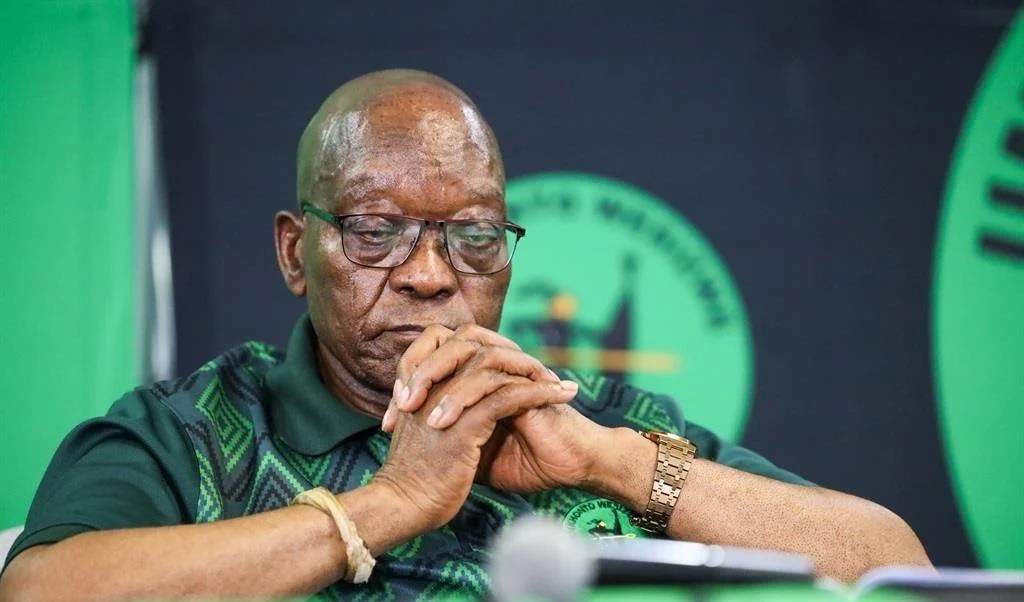
The debt traces back to a R350 million economic assistance package then president Jacob Zuma promised Cuba during a state visit in December 2010, formalised in a 2012 agreement between the two governments.
It had three parts: a R40 million grant for seeds, a R100 million “solidarity grant,” and – the part still being paid off – a credit facility of up to R210 million for Cuba to buy South African goods.
That credit facility came in two bites. Cuba drew R63 million of an available R70 million in the first tranche and repaid it, with interest, by June 2019. That cleared the way for the second, larger tranche of R140 million, released in 2021. Altogether, Cuba ended up borrowing R203 million of the R210 million on offer, at 4% interest a year, according to a 2023 parliamentary report.
DIRCO said in 2022 that repayments on the second tranche were due twice yearly, starting December 2021 and running through to a final payment on 30 June, 2026.
Thursday’s statement came more than six weeks after that final deadline had technically passed, but the committee said Cuba was still on schedule. It didn’t say whether the terms had been adjusted, or how much of the remaining R13 million is principal versus interest.
Not all the money South Africa has offered Cuba over the years has come with repayment terms attached.
Alongside the R40 million seed grant and R100 million solidarity grant in the original package, a separate R50 million in humanitarian aid was approved years later, only for that decision to be challenged in court by AfriForum.
The Gauteng High Court ultimately sided with AfriForum and set the decision aside; the ARF’s 2023/24 annual report subsequently dropped the Cuba payment from its books, saying simply that “the outcome of the court case sets aside the decision to provide humanitarian assistance to Cuba”.
The committee also restated South Africa’s long-held opposition to the US embargo, calling for its “immediate and unconditional lifting,” along with an end to what it said were unilateral coercive measures against Cuba.
“Members reiterated that the embargo continues to adversely affect Cuba’s development trajectory and constrains opportunities for mutually beneficial cooperation with the international community,” the committee said.
That embargo dates back to the fallout from Fidel Castro’s 1959 revolution, the nationalisation of American-owned property in Cuba and Havana’s turn toward the Soviet Union during the Cold War.
Washington tightened trade restrictions over the following decades, formalising the Cuban Assets Control Regulations in 1963 and later reinforcing the sanctions regime through the Cuban Democracy Act of 1992 and the Helms-Burton Act of 1996.
It’s still in force today, although not absolute. US rules carve out licences and exemptions for certain activities, spread across a patchwork of statutes, regulations and executive orders.
Cuba also remains on Washington’s list of state sponsors of terrorism, a separate designation from the trade embargo, but one that brings its own financial restrictions.
Donald Trump restored that listing in January 2025, days after Joe Biden had removed it on his way out of office. Havana denies sponsoring terrorism.
Trump ordered stricter enforcement of the embargo in June 2025 and tightened restrictions on financial dealings with Cuban military-linked entities.
In May 2026 he signed an executive order authorising sanctions against individuals and entities Washington accuses of repression in Cuba or of threatening US national security and foreign policy. The US Treasury was still adding Cuba-related sanctions as recently as 6 August.
In October 2025, South Africa joined 165 other countries in backing a UN General Assembly resolution calling for an end to the embargo; seven countries voted against it, and 12 abstained.
The committee said Pretoria intends to keep pressing the issue through the UN, African Union, BRICS and the Non-Aligned Movement.
ALSO READ: ANC asks voters for another chance to govern municipalities
The committee also said agriculture, renewable energy, tourism, infrastructure and skills development as areas where trade and investment between the two countries could grow.
Cuban Ambassador Fakri Pinelo Rodriguez told the committee that Cuba sent 463 doctors to South Africa between 1996 and 1998, of whom 55 stayed on. “Cuba has trained 3 243 South Africans to become doctors,” the committee said.
Committee chairperson Supra Mahumapelo said South Africa “remains steadfast in its solidarity with the people of Cuba and will continue to work with Cuba in pursuit of cooperation, friendship and a more just, inclusive and equitable international order”.






