
By Levy Masiteng
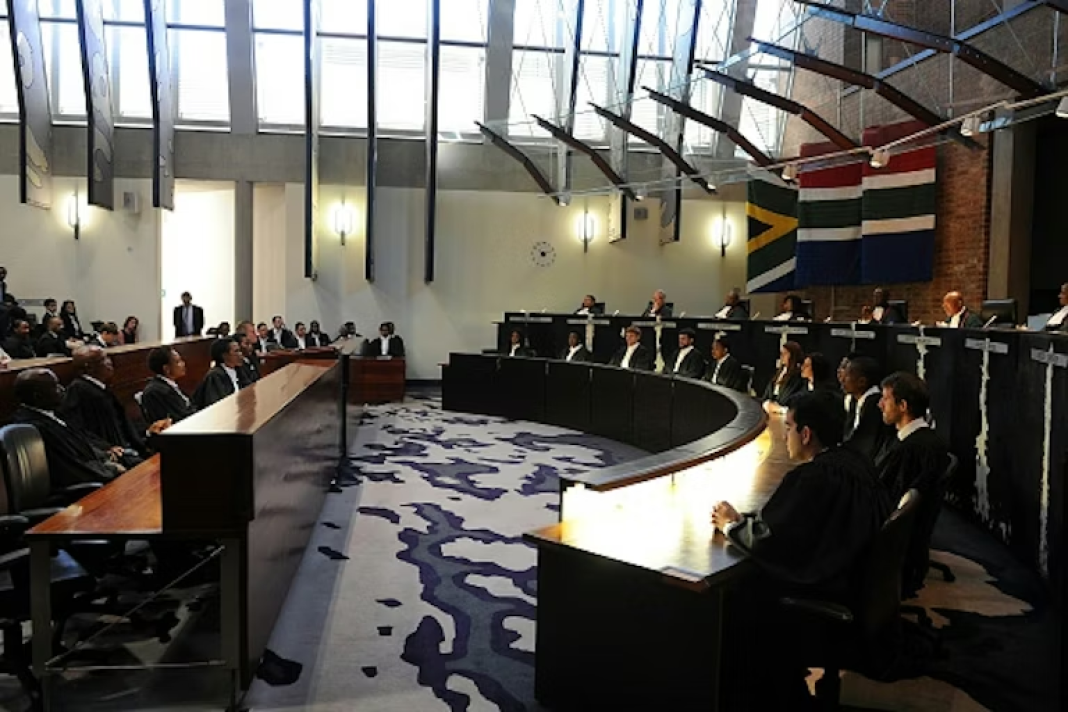
The Constitutional Court (ConCourt) has ruled that South African law places customary and civil marriages on an equal legal footing, affirming the transformative purpose of the Recognition of Customary Marriages Act, and confirming that antenuptial contracts concluded after a customary marriage are legally valid.
In a judgment handed down on Wednesday, the Court found that antenuptial contracts (ANCs) concluded after a customary marriage are not, on their own, sufficient to change a couple’s matrimonial property regime, providing clarity on the complex interaction between customary and civil marriages.
ALSO READ: Universities hold the key to early learning turnaround, Manamela tells Lekgotla
The ConCourt declined to confirm a Gauteng High Court ruling that had declared section 10(2) of the Recognition of Customary Marriages Act unconstitutional, holding instead that the provision is constitutionally sound when properly interpreted.
“The Recognition Act was enacted to remedy the historical marginalisation of customary marriages and to place them on an equal footing with civil marriages,” the majority judgment said.
It added that the law must be interpreted in a manner that “advances equality, dignity and protection, particularly for women married under customary law”.
The dispute centred on whether section 10(2) allows spouses already married under customary law to change their matrimonial property regime—from in community of property to out of community of property—simply by signing an ANC, without approaching a court. The Court found that it does not.
According to the majority judgment, any change to a matrimonial property system must comply with section 21 of the Matrimonial Property Act, which requires court supervision.
“This ensures protection for economically vulnerable spouses and creditors,” the Court said.
ALSO READ: Milnerton assault case postponed for victim consultation
The Court further clarified that when spouses in a customary marriage later conclude a civil marriage, the customary marriage is not dissolved. Instead, it is “subsumed” into the civil marriage.
As the Court explained, the relationship remains “a single, continuous marriage”, and the transition to a civil marriage is “declaratory rather than constitutive”.
Importantly, the Court emphasised that a customary marriage can be dissolved only by death or by a decree of divorce issued in terms of the Recognition Act.
The matter arose from an opposed divorce in the Gauteng Division of the High Court in Pretoria involving spouses identified as VVC and JRM.
The couple married under customary law in 2011. In 2019, they signed an antenuptial contract, and in 2021 they concluded a civil marriage—without first dividing the joint estate created by their customary marriage.
“When divorce proceedings were instituted in 2022, the validity of the antenuptial contract was challenged,” the ConCourt said.
The High Court found the contract invalid and went further, declaring section 10(2) of the Recognition Act unconstitutional, holding that it unfairly allowed changes to matrimonial property regimes without judicial oversight, to the detriment of women in customary marriages.
ALSO READ: McBride says Sibiya was framed as MPs clash over his employment status
Because the ruling involved constitutional invalidity, it was referred to the Constitutional Court for confirmation.
While the majority rejected the High Court’s declaration of invalidity, a minority dissenting judgment took a different view.
The dissent argued that section 10(2) was intended to regulate the consequences of a subsequent civil marriage and that, on its interpretation, the provision had meaningful legal effect.
However, the majority held that a purposive interpretation—one that favours constitutionality—must prevail.
On that approach, section 10(2) “does not create an alternative route for changing matrimonial property regimes outside of court supervision”.
The judgment confirms that customary marriages enjoy the same constitutional status and protection as civil marriages, and that spouses may not sidestep judicial oversight when altering their property arrangements.

INSIDE POLITICS





