- Advertisement -

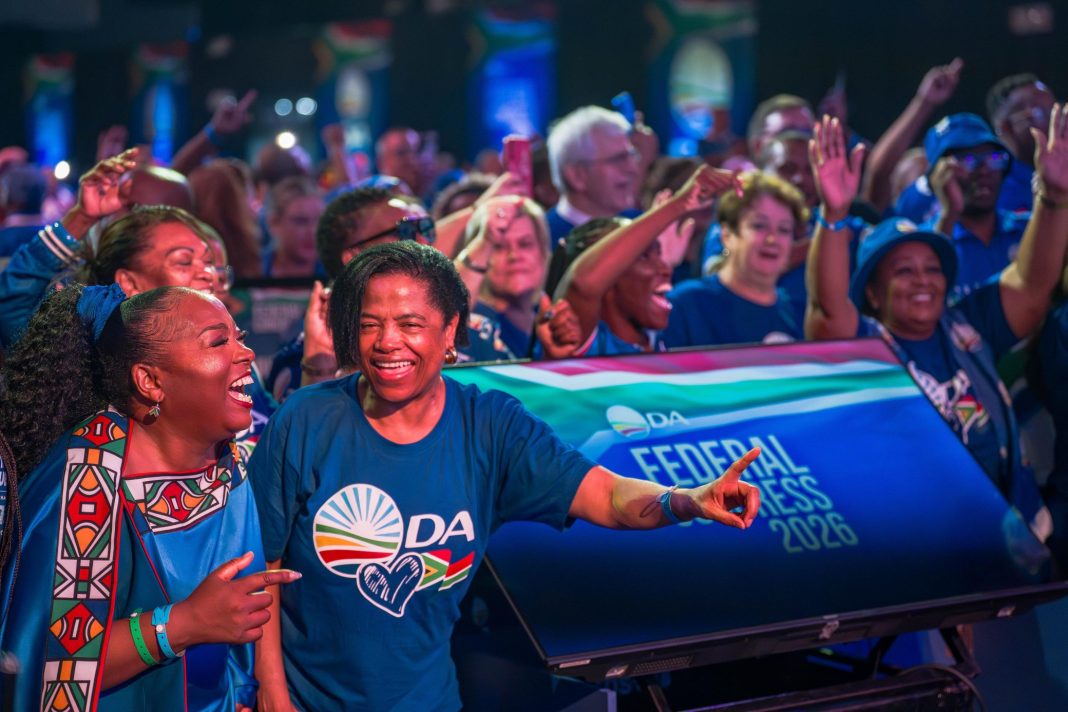
DA adopts child protection, education and governance reforms at Federal Congress

- Advertisement -

Must read

By Johnathan Paoli

The DA wrapped up its Federal Congress on Sunday with the adoption of a series of policy resolutions ranging from child protection and education reform to internal party communications, before building on a set of governance and social policy commitments passed the previous day.

Delegates on Sunday endorsed a resolution promoting inclusive and non-religious terminology in party communications, signalling a shift toward language the party says reflects South Africa’s constitutional diversity.

Proposed by Refiloe Nt’sekhe who said the move is aimed at ensuring that official messaging remains accessible and respectful across religious and cultural lines.

“The DA represents South Africans of all faiths and beliefs, and therefore must use language that is inclusive and respectful of religious diversity. The term ‘tithing’ carries explicit religious connotations, traditionally associated with particular faith practices, which may alienate members who do not share those beliefs,” Nt’sekhe said.

A major and emotive policy adopted by Congress was the commitment to legalise so-called “baby savers” and safe relinquishment mechanisms for infants.

The DA resolved to advocate for national legislation allowing babies to be safely and anonymously relinquished at designated facilities such as hospitals, police stations, and registered child protection organisations.

The policy proposes collaboration with government departments and NGOs to expand these facilities.

Motivating the resolution, proponent Alexandra Abrahams highlighted the scale of infant abandonment in South Africa, noting that for every infant found alive, two are found dead.

“By supporting this resolution, the DA affirms that every infant deserves a chance at life and vulnerable women in crisis have responsible and safe options. Let us ensure that in South Africa, no baby’s first breath is also their last,” Abrahams said.

In the education space, delegates passed a resolution calling for free sanitary products in all public schools.

Proposed by Nt’sekhe, the party committed to pushing for ring-fenced “Sanitary Dignity Budgets” to prevent the diversion of funds and ensure that girl learners directly benefit.

“Menstrual dignity is a human right, not a luxury, it promotes equality, attendance and empowerment,” she said.

The party also resolved to partner with private sector actors and NGOs to roll out menstrual health education and pad distribution programmes, arguing that lack of access continues to undermine attendance and academic performance.

Another education-focused resolution by Nt’sekhe centred on improving school safety.

Congress backed the introduction of comprehensive safety audits, the deployment of trained safety officers in high-risk schools, and the establishment of psychosocial support teams in every education district.

“Violence, bullying, and abuse in South African schools have escalated sharply, with recent incidents of fatal assaults, sexual violence, and intimidation eroding public confidence in the education system. Every child has a constitutional right to safety, dignity, and education in a secure environment,” she said.

The DA said it would also push for stronger cooperation between schools, parents, community policing forums and law enforcement, alongside stricter enforcement of disciplinary decisions by School Governing Bodies.

Delegates further adopted a resolution by Thamsanqa Mabhena to strengthen the party’s relationship with traditional leaders, including the establishment of a Traditional Leadership and Rural Communities Operational Directorate.

The structure, to be housed within the office of the Federal Council Chairperson, will coordinate engagements with traditional authorities and rural stakeholders, following consultations that reportedly showed openness to closer collaboration with the DA.

“Of the engagements that we conducted with traditional leaders, the sentiment was overwhelmingly positive. They indicated that they have lost faith in the ruling party. Our engagements centred mostly around service delivery challenges and the lack of development for rural communities, including poorly managed and unresolved traditional leadership succession processes,” Mabhena said.

In higher education, the party resolved to expand its proposed student funding model by adjusting income thresholds in line with inflation.

Proposed by Pogiso Mthumunye, the revised framework aims to widen access to funding across three income bands, with partial to full support for households earning up to R600,000 annually.

“The cost of living has left many households scrambling and surviving on basics. Education has become very expensive for poorer households. This resolution will expand access to higher education for even more families in South Africa,” Mthumunye said.

These resolutions follow policies adopted on Saturday, which focused more heavily on governance standards, social challenges, and internal party culture.

Among them was a commitment to ban the sale of vaping products to anyone under 18, with the DA warning that vaping is increasingly reaching children despite health risks.

Delegates also backed stronger regulation of online gambling, describing it as “out of control” and harmful to vulnerable communities.

Internally, the party adopted its Medi Pele (“Roots First”) principle, requiring public representatives to remain closely connected to the communities they serve rather than becoming detached within political institutions.

This was complemented by an Ethical Governance Charter mandating honesty, transparency, and accountability from all DA representatives.

The party also addressed labour market discrimination by committing to promote fair employment opportunities for people over the age of 35, arguing that many South Africans are unfairly excluded from jobs due to age.

Recognising the pressures of political office, Congress further resolved to introduce wellness and mental health support systems within party structures, acknowledging the demands placed on public representatives.

Congress organiser Werner Horner described the resolutions adopted over the two days as reflecting the DA’s attempt to balance internal reform with policy positioning on key national issues, as the party seeks to sharpen its platform ahead of the local elections.

INSIDE POLITICS

More articles

LEAVE A REPLY

Please enter your comment!
Please enter your name here

AVBOB STEP 12

Inside Education Quarterly Print Edition

Inside Metros G20 COJ Edition

JOZI MY JOZI

QCTO

Latest article