
- Advertisement -

DA sets sights on Gauteng metros

- Advertisement -

Must read

By Johnathan Paoli

The Democratic Alliance (DA) has laid out an ambitious vision to govern Gauteng’s key metros, Johannesburg, Ekurhuleni and Tshwane, positioning service delivery, infrastructure investment and coalition reform at the centre of its campaign ahead of the upcoming local government elections.

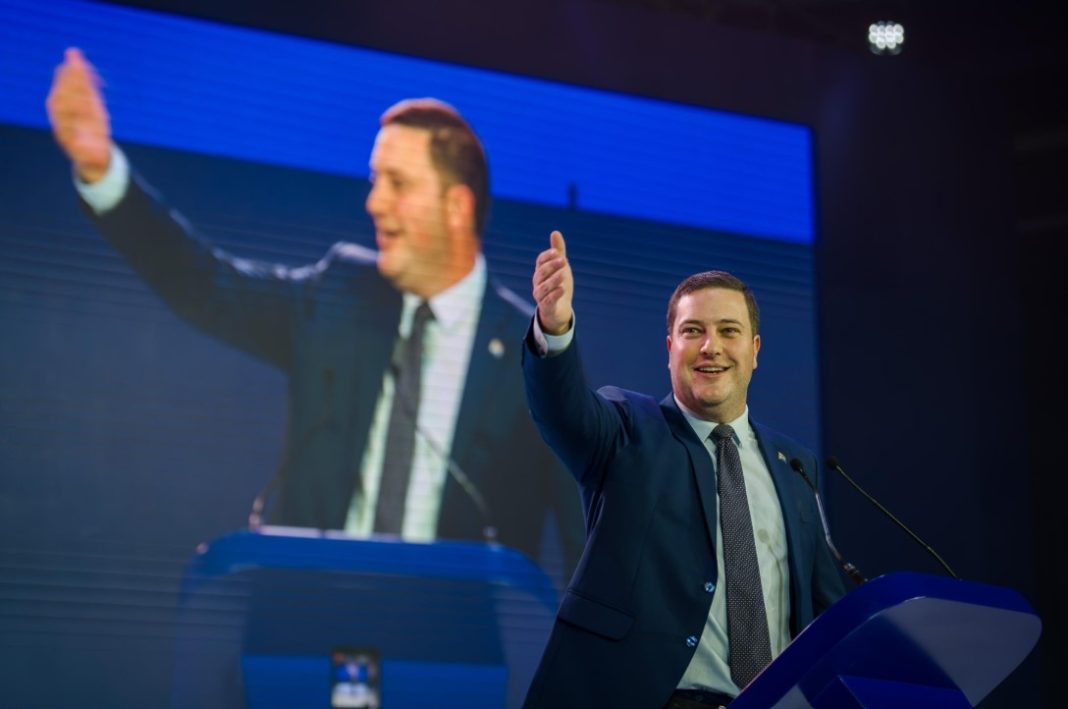
Speaking at the party’s federal congress over the weekend — where Cape Town mayor Geordin Hill-Lewis was elected new party leader — senior leaders framed the elections as a decisive moment for the country’s urban future, arguing that the DA’s governance model offers a clear alternative to what they described as failing ANC-led municipalities.

Newly elected third Deputy Federal Chairperson and Communications and Digital Technologies Minister Solly Malatsi set the tone by linking the party’s broader vision of “freedom with responsibility” to the lived realities in struggling metros.

“Unemployment, poverty, crime, and corruption are the lived realities of millions of South Africans. These are the consequences of betraying our country’s hard-won freedom,” Malatsi said.

He criticised the state of basic services in Johannesburg, highlighting water shortages as a symbol of governance failure.

“Freedom comes with responsibility, but it also demands that we do not turn a blind eye to the human suffering around us, unlike those who ignore the water shortages experienced by Joburg residents simply because they enjoy the comfort of a shower in a luxury hotel,” he said.

Malatsi said the DA’s approach to governance is rooted in expanding opportunity, including through digital access and economic reform, adding that rebuilding municipalities would require sustained effort.

“Our national, provincial, and local government institutions have been destroyed by decades of corruption and incompetence. So rebuilding what is broken will not happen overnight. It will take resilience. It will take discipline,” he said.

Former Tshwane mayor and the party’s mayoral candidate for the metro, Cilliers Brink, focused on coalition instability in the capital, warning that smaller parties have undermined governance and enabled the ANC to retain influence.

He pointed to what he described as a collapse in service delivery following the loss of DA control in Tshwane.

“In the year that [current Tshwane mayor from ActionSA Nasiphi] Moya took office as mayor, spending on water tankers for formalised areas, places that are meant to have water in their taps, increased from 140 million to 777 million. Today, Tshwane spends more money on carting water than on fixing pipes,” he said.

Brink argued that electoral reform, including a minimum threshold for representation, is necessary to stabilise coalitions.

“If a 1% threshold is introduced ahead of 2026 [elections], it can stabilise coalitions and it can help build governments that deliver,” he said

In Ekurhuleni, DA mayoral candidate Khathutshelo Rasilingwane delivered a scathing assessment of the metro’s finances and infrastructure, promising a turnaround focused on service delivery and accountability.

“Our homes are running without water, our streets are in darkness, and our brothers and sisters wait in corners for a job opportunity that never comes,” she said.

She cited mounting debt and failing infrastructure as evidence of decline.

“We see through the one billion of water literally leaking into the ground. We see through the 3.4 billion that is owed to Eskom. We also see through the 13 billion that is owed to its suppliers, which compromises the service delivery on the ground,” Rasilingwane said.

She pledged to restore Ekurhuleni as an economic hub.

“When I get elected as the next mayor in the city of Ekurhuleni, it will be my mission to remove the barriers that we have been subjected to, to bring about a city which is a city of peace, and we’ll experience that peace through the services that we will be getting,” Rasilingwane said.

Meanwhile, Greenside ward councilor Kyle Jacobs, speaking for the party in Johannesburg, framed the municipal elections as central to addressing youth unemployment and economic stagnation.

“The future of our country will be decided where our cities and towns work, where the water flows through our taps, where the streets are safe, where the opportunity exists,” Jacobs said.

He contrasted job creation trends between DA-run and ANC-run metros.

“The city of Cape Town created 96,000 jobs, while Joburg lost 49,000. That is the difference between progress and decline,” Jacobs said.

He outlined the party’s municipal blueprint, centred on infrastructure investment, capable governance and enabling economic growth.

“We must protect and invest in infrastructure. We must build a capable local government. We must enable economic growth by creating conditions where businesses can invest with confidence and create jobs,” Jacobs said.

INSIDE POLITICS

More articles

LEAVE A REPLY

Please enter your comment!
Please enter your name here

AVBOB STEP 12

Inside Education Quarterly Print Edition

Inside Metros G20 COJ Edition

JOZI MY JOZI

QCTO

Latest article



