



By Thapelo Molefe
Johannesburg residents have called for an end to poor service delivery, political power struggles and corruption, saying the newly elected city council must prioritise residents’ needs over political interests.
Speaking to Inside Politics at Hyde Park High School voting station in Sandton on Wednesday, residents said reliable water and electricity, better roads, refuse collection and improved public safety should be among the first priorities of the incoming administration.
Their concerns came as President Cyril Ramaphosa and his family also cast their ballots at the voting station, where he promised a new era of better governance and improved service delivery following the local government elections.
Poggy Tau, from Sandhurst, north of Johannesburg, said corruption and immigration were the two biggest issues influencing her vote, describing tender-related corruption as a major obstacle to service delivery.
She said residents across Johannesburg continued to experience water shortages, electricity problems and deteriorating roads, regardless of where they lived.
“I’m here, I have water. I go to Soweto, my mother doesn’t have water. My friend in Roodepoort doesn’t have electricity. Me, I drive and there are potholes, so everyone is being affected by this thing,” Tau said.
She criticised coalition governments, saying political parties spent too much time fighting for power instead of addressing residents’ problems.
“Now we see there’s no delivery, they sabotage each other, they are busy fighting politics without considering the residents and fixing our things. It’s a power struggle,” she said.
Tau said she was opposed to the ANC, arguing that the party had been given more than 30 years to govern but had failed to deliver on its promises.
“Yeah, they made no difference, and that’s why we are voting and we want to take them out. We know that they were given a chance, and they didn’t deliver. So I don’t want them,” she said.
She also rejected the prospect of another coalition government, saying she wanted voters to give one party an opportunity to govern with a clear majority.
“I don’t want GNU, I think it’s delaying things to be fixed. GNU is not a good thing,” Tau said.
She said the incoming council should prioritise refuse collection, reliable water and electricity, road maintenance and greater police visibility.
Mpho Mokoena, from Tembisa, Ekurhuleni, also questioned whether coalition governments made it difficult for residents to hold political parties accountable for poor service delivery.
He said parties often blamed one another for failures instead of taking responsibility, adding that Johannesburg needed a party with a clear majority.
Mokoena was critical of the ANC’s more than 30 years in government, saying it had been given an opportunity to improve people’s lives but had failed to deliver the expected changes.
He said he did not want the ANC, DA, EFF or MK Party to lead the country, arguing that voters should consider giving newer political formations an opportunity.
He also questioned the political histories of the DA and Freedom Front Plus, saying these should be considered when voters assessed their suitability to govern.
“The DA failed, Freedom Front Plus failed, because of the history we know. Let us give out the new kids on the block a chance so that we can see,” he said.
Mokoena also criticised political leaders for making promises in their manifestos without following through on them.
“Manifesto is nothing without practising it. You should practise what you’re saying,” he said.
He said voters should look beyond racial considerations when choosing political parties and instead assess whether their leaders understood the challenges facing communities, particularly townships and informal settlements.
“Most of the people who are doing not well are the ones who are staying in informal settlements, at townships, not the ones who are staying in Sandton, not the ones in Midrand,” he said.
Mokoena said local government elections provided an opportunity to assess political parties’ ability to address grassroots challenges ahead of the 2029 national elections.
Another resident, who asked to remain anonymous, said poor service delivery was a major concern in Johannesburg and would influence how residents judged the incoming administration.
“I think, like every other South African, it’s service delivery. Especially in Johannesburg, service delivery is unprovided for. That was the main influence of my vote,” the resident said.
He questioned whether any Johannesburg resident was genuinely satisfied with the state of service delivery in the city.
“I think if you can find one South African in Johannesburg that is satisfied 100% with service delivery, I would be very surprised,” he said.
He said the possibility of an ANC-DA coalition in Johannesburg was not necessarily a concern but warned that such an arrangement could be fragile.
“I think it could be a bit fragile, which is a little bit concerning. But regardless, in Johannesburg, it’s going to be a coalition,” he said.
The resident called for improvements to public services, including police, ambulance, fire and rescue services.
Gwen Mathebula, from Hyde Park, said her decision to vote was driven by a desire for political change and an opportunity to see whether other parties could govern differently.
“I think it’s wanting to do something different. Our parents’ generation was kind of like, do the same thing, hope for the same thing, expect different results. But it was looking for that change,” she said.
Mathebula identified service delivery and accountability as the most important issues influencing her vote.
She said she wanted a municipality that prioritised residents and ensured reliable access to basic services.
“I would just like to see us have water frequently. I would like to see us have less power cuts. I’d like to see us have roads that actually work, systems that work, a city that works,” she said.
Lindo Mbalati, also from Hyde Park, said the condition of Johannesburg’s roads was among her biggest concerns, particularly the dangers posed by potholes and poorly maintained infrastructure.
She said she had recently been involved in an accident and believed delays in addressing infrastructure problems could have serious consequences for residents.
“I’m not happy with the state of service delivery, but it has come a long way recently. It took long, and I think that’s where we get it wrong sometimes. How many lives get lost in that space? How many lives get impacted and affected by just service delivery?” Mbalati said.
She called for fewer potholes, functioning traffic lights and cleaner public spaces, identifying road maintenance as her biggest priority.
On the possibility of an ANC-DA coalition, Mbalati said the arrangement could be difficult but hoped it would work in the interests of residents.
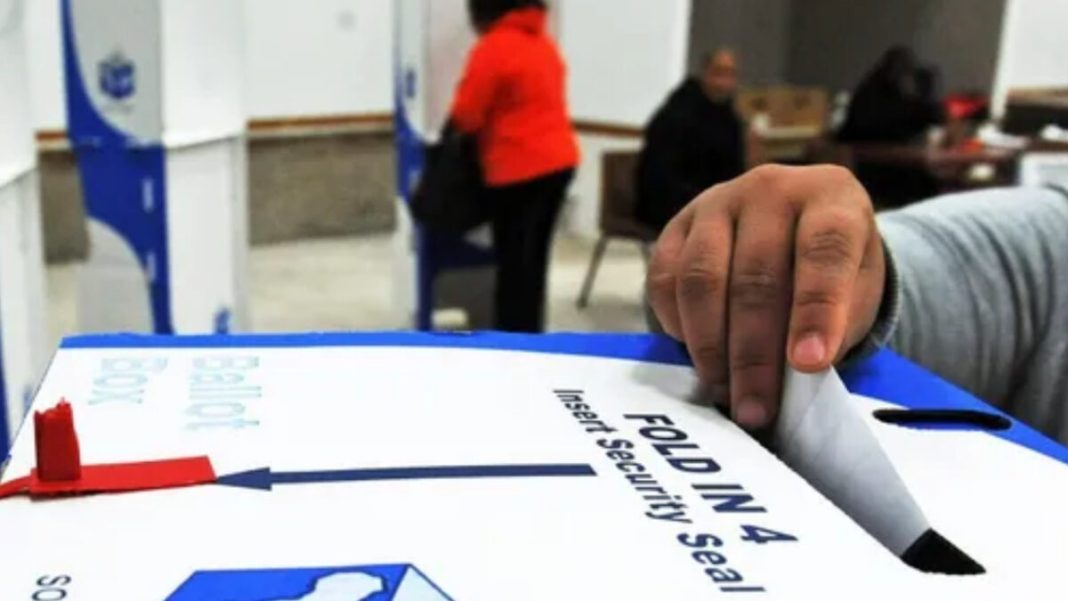
Despite their differing political views, voters at Hyde Park High School generally described the voting process as smooth and efficient.
Mathebula said she spent no more than five minutes voting and praised the organisation of the process, including the online system that allowed voters to check their registration details and voting stations.
The anonymous resident also described the process as efficient, saying volunteers helped direct him to the correct station after he initially went to the wrong one.
INSIDE POLITICS






