
By Akani Nkuna
Deputy President Paul Mashatile has warned that unequal access to artificial intelligence (AI) tools risks widening inequality, with affluent communities benefiting while township and rural schools lag behind.
“AI is reshaping how we think and solve problems… but access and opportunity are not equitably distributed,” he said, adding that many communities remain excluded from its benefits.
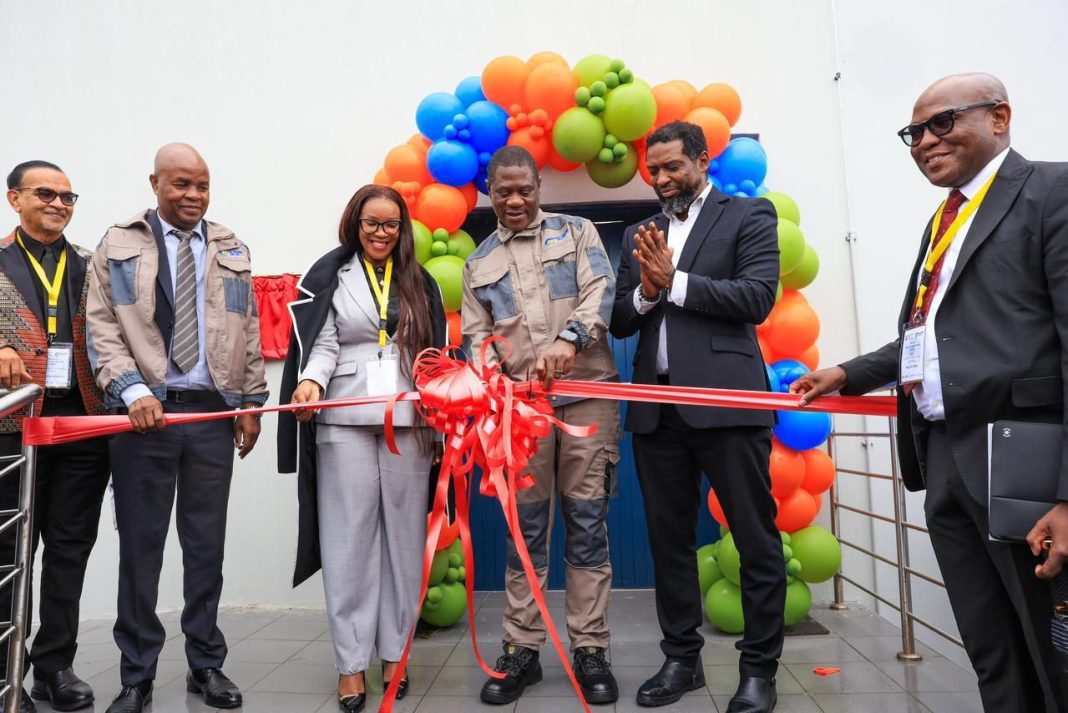
Mashatile was speaking at the launch of a cutting-edge Fourth Industrial Revolution (4IR) laboratory and Centre of Specialisation at Gert Sibande TVET College in Standerton, Mpumalanga, on Tuesday.
He was accompanied by the Minister of Higher Education and Training, Buti Manamela, and Mpumalanga premier Mandla Ndlovu.
The centre aims to bridge the gap between education and industry by equipping young people with future-ready skills.
The initiative also forms part of a broader effort to strengthen the capacity of the Technical and Vocational Education and Training (TVET) college system.
Mashatile said the facility would serve as an innovation hub to address societal needs through research, but stressed that digitisation efforts must prioritise rural investment.
“Access, opportunity, and ability are not equitably distributed. The benefits of AI remain concentrated in centres of excellence, while rural schools, township innovators, and many communities remain excluded,” said Mashatile.
“If AI is to serve humanity, it must be inclusive, bridging divides, empowering the many, and ensuring South Africa’s voice is influential in shaping global progress.”
He also urged a human-centred approach to AI adoption to mitigate potential job losses and social disruption.
“The World Economic Forum’s Future of Jobs Report 2025 projects that by 2030, tasks will be nearly evenly divided between humans and machines. AI may displace 92 million roles but create 170 million new jobs globally, a net gain of 78 million,” said Mashatile.
“For South Africa, however, unemployment, inequality, and poverty, compounded by the digital divide, risk deepening exclusion. New jobs will arise in skilled sectors, leaving unskilled workers vulnerable to automation. Access to digital tools, affordable internet, and advanced skills remains inconsistent, limiting adaptation.”
Manamela said the initiative would help align South African students with global technological standards and improve workplace readiness.
“This investment is intended to match global standards and expose students to these technologies,” he said.
INSIDE POLITICS



