

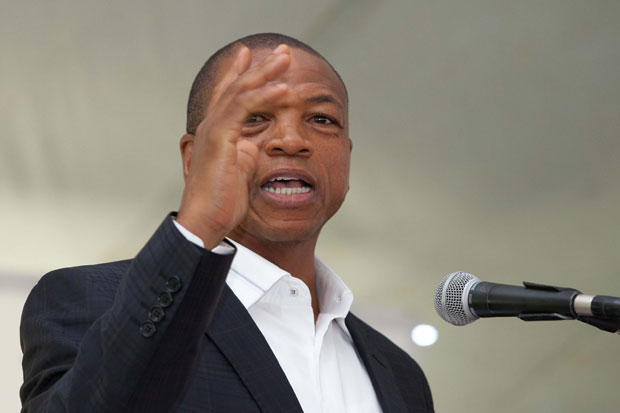


By Supra Mahumapelo
The re-election of Luiz Inácio Lula da Silva as President of Brazil marked an important moment, not only for the people of Brazil, but also for countries across the Global South. His return to office signalled a renewed commitment to social inclusion, democratic institutions, multilateral cooperation and the pursuit of a fairer international system.
For South Africa, Brazil’s political direction carries particular significance because our two countries share a history of inequality, a commitment to democratic governance and a common interest in ensuring that developing countries have a stronger voice in global affairs.
South Africa and Brazil have long enjoyed close political and diplomatic relations.
ALSO READ: IEC confirms special voting to begin Monday ahead of Election Day
Through platforms such as the India-Brazil-South Africa Dialogue Forum (IBSA); Brazil, Russia, India, China and South Africa (BRICS) and the Group of 20, both countries have advocated for a more representative global order – one in which the concerns of Africa, Latin America and other developing regions are treated as more than secondary considerations.
Lula’s presidency creates an opportunity to give fresh momentum to this agenda and to strengthen cooperation on issues ranging from trade and investment to climate change, food security and international peace.
South Africa’s relationship with Brazil should be understood as more than a traditional bilateral partnership. It is also a strategic connection between two influential democracies in the Global South.
Our countries can work together to advance reform of the United Nations Security Council, improve the fairness of international financial institutions, and promote development policies that respond to the realities of developing economies.
A stronger South Africa-Brazil partnership can help ensure that global decision-making reflects the interests of a wider share of humanity.
Lula’s emphasis on reducing poverty and inequality also resonates deeply with South Africa’s own national priorities. While our circumstances are different, both countries continue to confront the effects of historical exclusion, uneven development and economic vulnerability.
There is scope for practical cooperation in areas such as social protection, public health, skills development, rural development, agriculture and the creation of decent work. The exchange of policy experience should be grounded in honesty: neither country has all the answers, but both possess valuable lessons that can inform the other’s efforts.
Economic relations deserve particular attention.
ALSO READ: Ramaphosa says ANC set to prove critics wrong at polls
Brazil is a major agricultural and industrial economy, while South Africa serves as an important gateway to markets across the African continent.
Our governments and private sectors should seek to expand trade in a manner that is balanced, sustainable and beneficial to ordinary citizens.
This requires closer engagement between businesses, development finance institutions, universities and research bodies. It also requires that we address barriers to trade and ensure that economic cooperation supports local production, value addition and employment.
Climate change and food security offer another important field for collaboration. Brazil’s role in protecting the Amazon Basin and South Africa’s experience of water stress, energy transition and climate-related vulnerability place both countries at the centre of global debates about sustainable development.
Cooperation must recognise the principle of common but differentiated responsibilities: developing countries must contribute to addressing the climate crisis, but they also require adequate finance, technology and policy space to pursue development.
Lula’s election further strengthens the prospects for constructive engagement within BRICS. The grouping has the potential to promote practical cooperation among emerging economies and to support a more balanced international system.
At the same time, South Africa must approach this partnership with clarity and principle. Our foreign policy should remain guided by the peaceful resolution of disputes, respect for international law, human rights and the sovereignty of states. Cooperation with Brazil and other partners should advance these values rather than reduce international relations to competition among powerful blocs.
Parliament has an important role to play in deepening this relationship. Parliamentary diplomacy can complement the work of governments by creating space for frank dialogue, sharing legislative experience and strengthening people-to-people ties.
The South African Parliament’s Portfolio Committee on International Relations should encourage regular exchanges with their Brazilian counterparts, while also promoting engagement among civil society, organised labour, women’s organisations, young people and academic institutions.
The election of Lula should therefore be viewed as an opportunity, not a guarantee. Strong relations require sustained political attention, clear priorities and measurable programmes of cooperation. South Africa must engage with Brazil with confidence and purpose, identifying areas where partnership can deliver tangible benefits while contributing to a more peaceful, inclusive and equitable world.
As South Africa continues to advance its national interests and its commitment to African solidarity, the relationship with Brazil remains strategically important. Lula’s return to the presidency offers renewed scope for the two countries to work together in shaping a global order that places development, democracy and human dignity at its centre.
Our task now is to translate shared principles into practical action.
Supra Mahumapelo is the Chairperson of the Portfolio Committee on International Relations and Cooperation.






