



By Bhekizenzo Zonele
Police have reported 20 murders involving political representatives, party members and supporters ahead of Wednesday’s local government elections, substantially fewer than the 53 deaths documented by independent researchers this year.
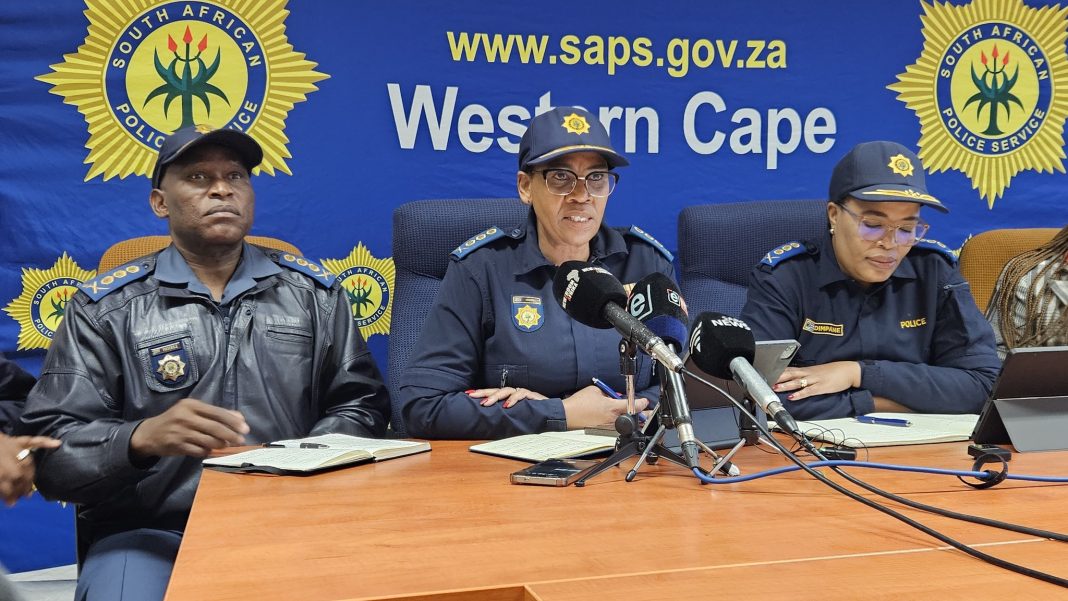
Deputy National Police Commissioner Lieutenant General Tebello Mosikili disclosed the figures during a security briefing in Pretoria on Sunday, saying seven suspects had been arrested in connection with the killings.
Mosikili did not specify the period covered by the police tally.
The Global Initiative Against Transnational Organised Crime (GI-TOC) has recorded 43 deaths between January and September and a further 10 during October.
ALSO READ: IEC confirms special voting to begin Monday ahead of Election Day
Police also reported 139 election-related criminal dockets and 48 arrests nationally, while assuring voters that security structures were ready for the 4 November elections.
“We remain particularly concerned about incidents involving the loss of life during the election period. Twenty murders with seven arrests have been recorded in incidents involving political representatives, party members and supporters,” Mosikili said.
According to the police figures, Gauteng recorded seven murders, KwaZulu-Natal six, the Western Cape three and the Eastern Cape two, while the Free State and North West recorded one each.
Police said the investigations had been prioritised, with the Political Killings Task Team working alongside provincial and national detectives.
GI-TOC’s report, Ballots and Bullets, published on 2 October, documented 43 deaths in 45 suspected political attacks between 1 January and 30 September.
Senior adviser Julian Rademeyer subsequently reported another 10 deaths in six incidents during October, bringing the organisation’s total to at least 53.u
The first nine months of 2026 had already exceeded the organisation’s full-year totals of 30 political killings in 2021, 33 in 2024 and 31 in 2025.
A separate investigation published by the Institute for Security Studies (ISS) on 30 October recorded 34 deaths in 26 attacks between 1 May and 28 October.
The ISS found that the killings occurred in three periods corresponding with voter registration in June, candidate selection in August and September, and the final weeks of campaigning in October.
The organisation also found that KZN and Gauteng accounted for 56% of the political deaths it recorded.
The ISS includes attacks based on the victim’s political or civic role and the circumstances of the killing. It stresses that inclusion reflects the victim’s role and the circumstances, not a finding that the killing was politically motivated, and says that excluding three borderline cases would reduce its count to 30 deaths in 23 events.
GI-TOC uses a database of suspected targeted killings, including attacks involving political figures, civic activists and traditional leaders. The ISS says its own monitor probably under-records rural killings, particularly of traditional leaders and civic figures, and that it found no updated official figure.
ALSO READ: ‘You can’t serve ANC when you have a criminal record’ – Kubayi
Police have not published a case-by-case breakdown of the 20 murders cited on Sunday, making it difficult to determine which incidents are included or excluded from the official count. The ISS has recommended that the Political Killings Task Team publish an updated case-by-case count of investigations and arrests.
Among the killings documented by researchers were the deaths of four ANC Youth League members following a memorial service in Katlehong, Ekurhuleni, on 13 October.
Two victims died at the scene and another two subsequently died in hospital. A suspect was arrested, but a political motive has not been established. The ISS notes that one killing is missing from its own monitor: that of ANC member Jeanette Magugu, reported to have been shot dead at her home about a week before the attack. The Katlehong victims were returning from her memorial service.
In KZN, ANC councillor and Ward 98 coordinator Lungani Makhathini and party activist Nokuthula Mavundla were shot dead while campaigning in Umgababa, south of Durban, on 15 October.
The ISS found that many of the attacks occurred outside formal political gatherings, including at victims’ homes, constituency offices and while campaigners were travelling.
Its research also identified a lack of publicly reported arrests in most cases, with arrests or charges recorded in only four of the 26 attacks it documented.
Meanwhile, Mosikili said the 139 election-related criminal dockets registered nationally included 72 alleged offences under the Electoral Act, 14 assault cases, 10 murders, 10 intimidation cases and eight cases of malicious damage to property.
Of the 139 cases, 21 were registered during the first voter registration weekend in June, 13 during the second registration weekend in August and 105 outside those periods.
A total of 48 suspects had been arrested, while 69 cases remained under investigation. Another 25 cases had been enrolled in court and eight referred to a senior public prosecutor for a decision.
Police did not clarify how the 10 murder cases recorded among the election-related dockets related to the separately reported 20 murders involving political representatives, party members and supporters.
Despite the violence, Mosikili said the National Joint Operational and Intelligence Structure (NATJOINTS) and provincial security structures had activated security arrangements across all nine provinces.
“Our state of readiness is informed by sustained interdepartmental planning, intelligence assessments, security inspections and lessons drawn from previous electoral processes, undertaken in collaboration with the Electoral Commission of South Africa and other relevant stakeholders.
“As we approach the commencement of special voting, the necessary security arrangements are in place across all provinces, metropolitan municipalities, districts and policing precincts. Voting stations have undergone security assessments, with deployments informed by identified threats, vulnerabilities and operational requirements,” Mosikili said.
Police deployments will be based on security assessments, with specialised units, mobile teams and contingency plans available to respond to threats.
The South African National Defence Force (SANDF) will also support police operations in identified hotspots where necessary.
Security assessments have identified potential risks arising from service delivery protests, anti-foreigner sentiment, community tensions and labour disputes.
In KZN, police are monitoring compliance with an interim Durban High Court order restricting demonstrations by the anti-immigration movement March and March during the election period.
The order, granted on Friday, 30 October, restricts the movement’s demonstrations until after Wednesday’s vote, with protests permitted to resume from 7 November subject to conditions.
Police have also warned political parties, candidates and supporters against intimidating voters or interfering with the electoral process.
Political campaigning must end at midnight on Tuesday, 3 November, with no campaigning or political persuasion permitted on election day.
Mosikili said increased security deployments would not affect ordinary policing services, with police stations remaining operational throughout the electoral period.
NATJOINTS will conduct daily security briefings as special voting takes place on Monday and Tuesday, ahead of the main election on Wednesday.






