
By Johnathan Paoli
President Cyril Ramaphosa has announced a five-point government strategy to tackle illegal migration, strengthen border security, crack down on corruption, and reform immigration laws, while warning that only the state has the authority to enforce immigration regulations.
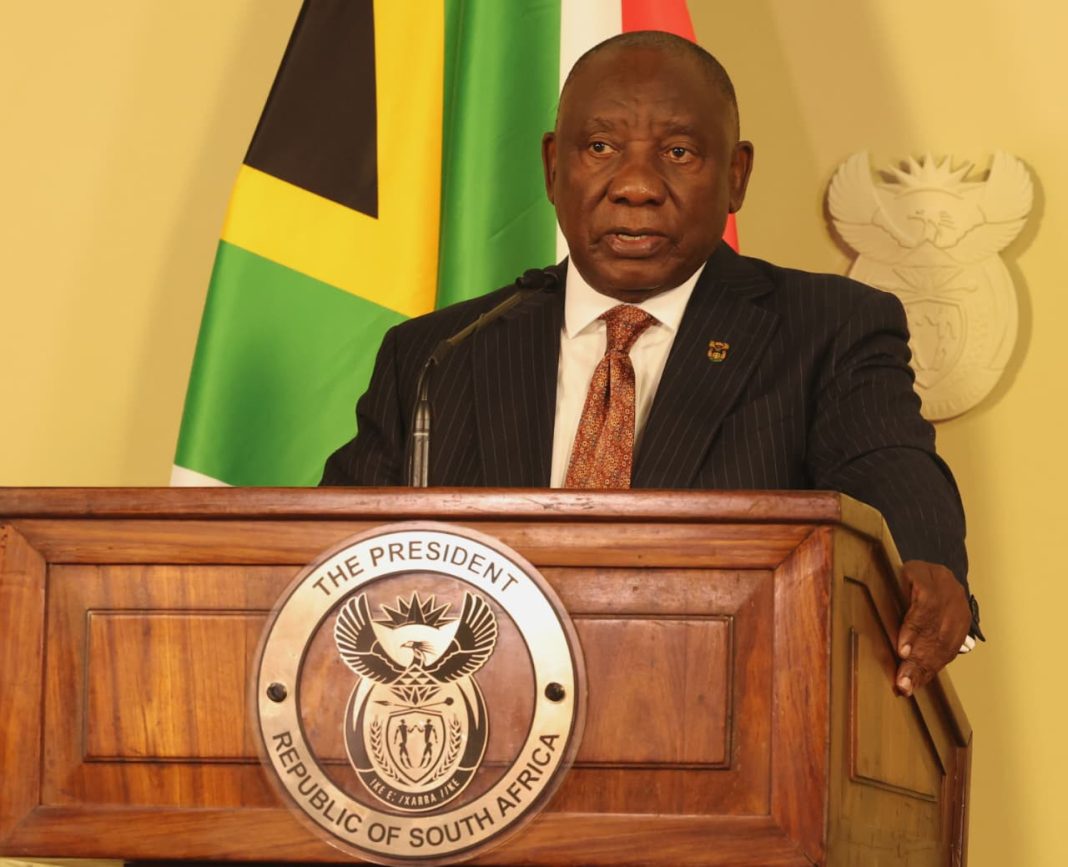
Addressing the nation on Sunday evening from the Union Buildings in Tshwane, President Ramaphosa said cabinet has adopted a “comprehensive approach for migration management” in an effort to restore public confidence in the country’s immigration system amid concerns over undocumented migrants, pressure on public services, and unemployment.
ALSO READ: WATCH LIVE: Ramaphosa to address nation on migration as tensions rise over undocumented migrants
“We accept that responsibility and we are taking decisive action to correct these shortcomings. South Africans have a right to expect a state that is effective, professional and capable of enforcing its own laws. Government will accordingly take action to address the expectations of our people in dealing with the challenge of the violations of our immigration laws,” Ramaphosa said.
The president outlined five key measures: intensified enforcement of immigration and labour laws; stronger border controls; a crackdown on corruption within the immigration system; reforms to immigration legislation and policies; and increased cooperation with African countries and regional partners.
“We want a South Africa where every person who enters the country does so lawfully. A South Africa where immigration laws are respected and enforced. A South Africa where businesses compete fairly. A South Africa where communities feel safe and secure,” he said.
The first pillar of Ramaphosa’s strategy focuses on stricter enforcement against undocumented migrants and employers who hire them illegally.
He said the Home Affairs department, the Border Management Authority (BMA), the South African Police Service and other law-enforcement agencies would intensify operations to identify and deport undocumented foreign nationals.
ALSO READ: Hawks seize R 36m of Cocaine at Durban harbour
Ramaphosa announced that the BMA had intercepted more than 450,000 people attempting to enter South Africa illegally over the past year.
He said the government intends to establish dedicated immigration courts to accelerate deportation processes and expand workplace inspections targeting companies employing undocumented migrants.
The president said employers exploiting undocumented workers would face harsher penalties.
“We are going to increase the penalties, including imprisonment, for employers who violate the Immigration Act. We cannot have a situation where employers who, after being charged and found guilty of violating our laws, merely pay a fine and continue employing undocumented foreign nationals whom they exploit,” he said.
Ramaphosa also announced that the Employment and Labour Department had launched the phased recruitment of 10,000 labour inspectors during the current financial year to strengthen enforcement capacity.
The second pillar centres on securing the country’s borders.
Ramaphosa said the government would continue investing in technology, infrastructure, and personnel to prevent illegal border crossings while facilitating legitimate travel and trade.
Among the measures announced was the phased relocation of refugee reception centres to border posts, beginning with the Tshwane refugee reception centre.
“The relocation of refugee reception centres closer to our borders is intended to ensure that asylum applications are processed more efficiently, more securely and more fairly,” he said.
ALSO READ: WATCH: Ramaphosa meets World Bank Group President Ajay Banga alongside Godongwana
The third element of the plan targets corruption within the immigration system.
Ramaphosa acknowledged that corruption had enabled illegal migration and pledged action against officials involved in document fraud and unlawful entry schemes.
“Officials who sell documents, facilitate unlawful entry or abuse public office for personal gain betray the trust of the South African people. We will pursue these cases relentlessly. Those responsible are facing dismissal, criminal prosecution and the full consequences of the law,” he said.
The president announced the creation of an Intelligent Population Register containing biometric data for every person in the country, forming the basis of a future Digital ID system.
The fourth component involves legislative reform.
Ramaphosa said existing immigration laws were fragmented and contained loopholes that were being exploited.
ALSO READ: Hawks seize R 36m of Cocaine at Durban harbour
He said the government has finalised the National Labour Migration Policy and approved the Employment Services Amendment Bill for introduction to Parliament.
The legislation would empower the Employment and Labour Minister to set quotas for the employment of foreign nationals in specific sectors.
He stressed the government’s drive to complete the registration of informal businesses and provide support to South African-owned enterprises through initiatives such as the Spaza Shop Fund.
The final pillar focuses on regional and continental cooperation.
Ramaphosa stressed that migration was a global and continental challenge that could not be solved by enforcement measures alone.
“South Africa cannot address migration challenges alone. Migration is a continental and global phenomenon,” he said.
He announced that South Africa would dispatch envoys to several African countries to explain the measures announced and seek cooperation on addressing the root causes of migration.
While acknowledging public frustration over illegal migration, Ramaphosa cautioned against xenophobia, vigilantism and anti-foreigner sentiment.
“The responsibility for enforcing immigration laws rests with the state and the state alone. No other person is allowed, for example, to confront someone in the street to demand proof of nationality,” he said.
Ramaphosa warned that the government would act against individuals and groups seeking to exploit public concerns about migration to incite violence or advance political and criminal agendas.





